


Electromobility – Future-oriented research for connected, sustainable mobility
Electromobility refers to the use of electric drive technologies for the transport of people and goods in road traffic and urban transport networks. It encompasses electric drive systems, energy storage, charging infrastructure, and integration into smart energy systems.
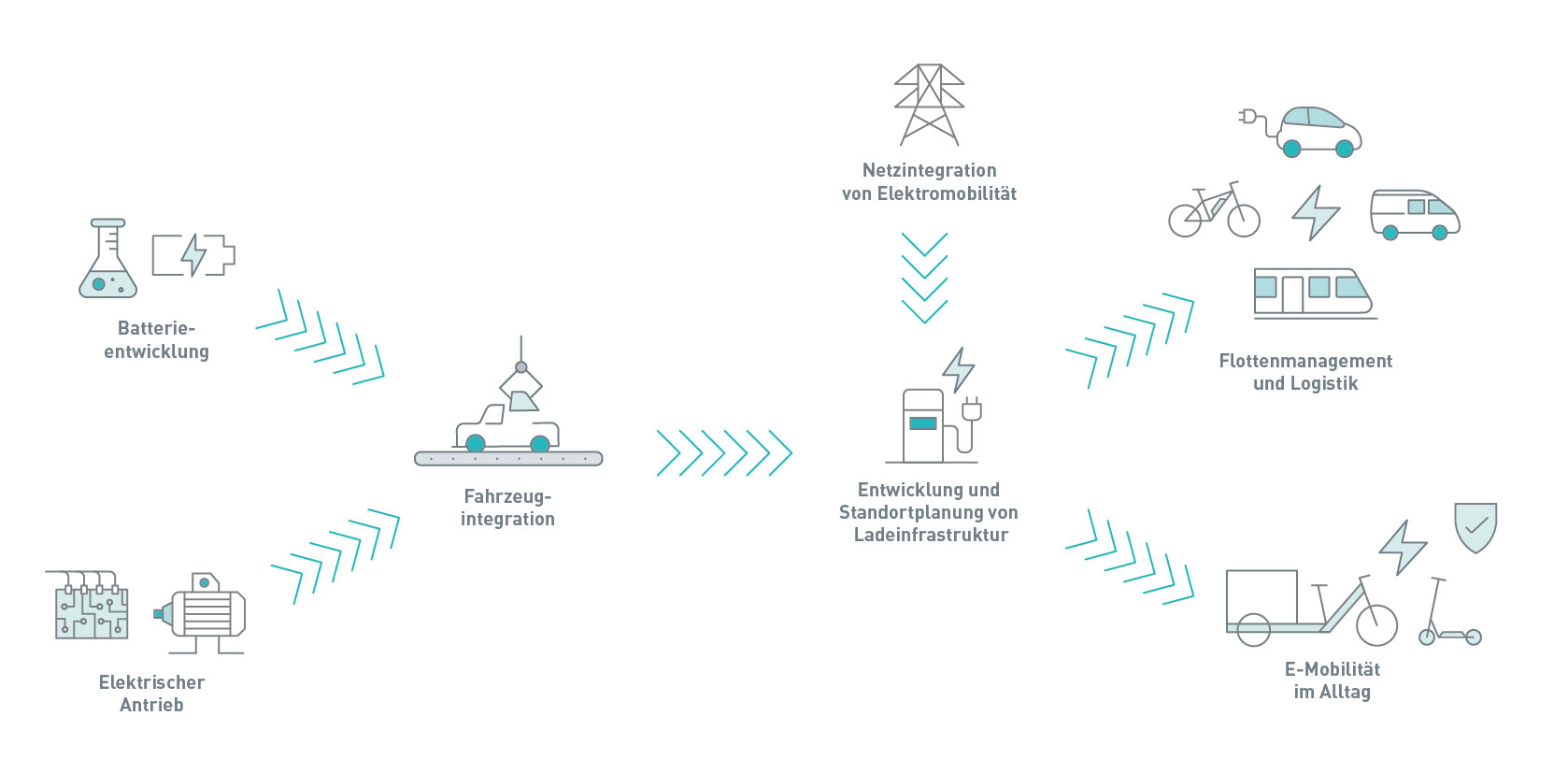
As Austria's largest non-university research institution, the AIT Austrian Institute of Technology develops practical, industry-oriented, and systemic solutions for the challenges of electromobility—from battery and charging infrastructure to grid and traffic analyses to integration into energy systems.
Charging infrastructure for e-mobility
As a partner, AIT provides significant support for the design, development, and simulation of charging infrastructures for electric vehicles. In close cooperation with industry, operators, local authorities, and decision-makers, we work on solutions that enable the development of a powerful and intelligent charging infrastructure. This includes, among other things, the planning, optimization, and integration of charging stations into existing energy networks.
Location planning for charging stations
As a leading expert, AIT analyzes the challenges and offers customized solutions in the field of location planning and other aspects of electromobility.
Battery research along the entire value chain
As a reliable research and development partner, AIT offers an integrated service portfolio covering the entire battery value chain. From model-based development and optimization of innovative battery materials to industry-oriented electrode and cell manufacturing and comprehensive physical and electrochemical characterization.
Power electronics for electric vehicles
AIT develops, builds, and tests power electronics for electric vehicles with a focus on efficiency, power density, reliability, and safety.
Integration & Simulation
Das AIT unterstützt Industriepartner bei der Entwicklung umweltfreundlicher Fahrzeuge mit einem ganzheitlichen Ansatz für Integration und Simulation. Das Leistungsportfolio reicht vom virtuellen Fahrzeug- und Systemdesign über multiphysikalische Modellierung bis hin zu Prüfung, Validierung und Betriebsüberwachung.
Understanding electric mobility – key terms explained
- Elektroauto (BEV)
Ein batterieelektrisch angetriebenes Fahrzeug, das ausschließlich elektrische Energie nutzt. - Ladeinfrastruktur & Wallbox
Stationen und Ladestationen zur Versorgung von E-Fahrzeugen mit elektrischer Energie – vom öffentlichen CCS-Schnelllader bis zur privaten Wallbox. - Batteriesystem / Akkumulator
Elektrochemische Energiespeicher im Fahrzeug, verantwortlich für Reichweite und Leistung. - Rekuperation
Rückgewinnung von Bremsenergie zur Verlängerung der Reichweite. - Netzintegration
Koordination zwischen E-Mobilität und Stromnetz, einschließlich Lastmanagement und Versorgungssicherheit.
Why electric mobility is relevant for the economy and society
- Sustainability & climate protection: Reduction of CO₂ emissions in the transport sector through electrification.
- Integration into energy systems: Electromobility as flexible load storage in the context of renewable energies.
- Economic innovation: New value chains in battery, charging, and energy management systems.
Benefit from AIT's expertise in electromobility:
research cooperation, industrial consulting, or innovation projects—contact our team of experts today.