


Analysis, strategic planning, and monitoring for a sustainable energy supply
Our approach is based on the analysis of integrated urban energy systems using spatio-temporal energy data models, the development of holistic energy concepts for cities and neighborhoods, and KPI-based monitoring to evaluate integrated energy solutions.
Our USP lies in the combination of domain expertise and innovative approaches that enable in-depth insights into the energy transition and sustainable urban transformation. We provide robust decision-making frameworks for decarbonization strategies and help cities efficiently implement climate-neutral energy systems
Integrated Concepts for Urban Energy Systems
The energy system is evolving toward greater efficiency, sustainability, and lower CO₂ emissions. Cities play a central role in this transition, as many European municipalities and cities are pursuing ambitious energy and climate goals. Local governments need a secure, clean, and efficient energy supply—supported by decarbonization measures such as improved energy efficiency, sector coupling, electrification, and the transition to renewable energy.
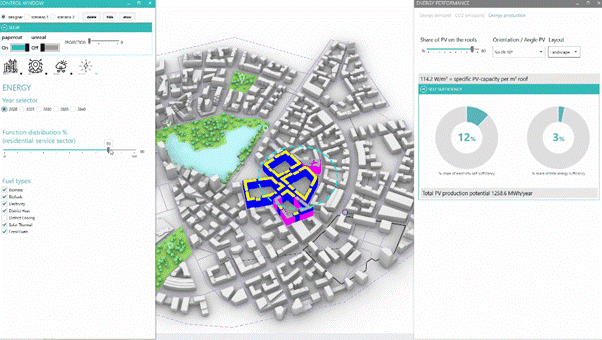
We support municipalities, cities, and project developers in planning their energy future at the neighborhood, urban, and regional levels. We combine state-of-the-art spatiotemporal energy modeling concepts with 3D urban information models and visualize these for experts and the general public.
We provide added value for stakeholders who are developing sustainable energy supply concepts and wish to implement well-founded measures to reduce CO₂ emissions and optimize energy efficiency.
Climate neutrality roadmaps for towns and local authorities
Strategies, scenarios and concrete measures on the path to climate neutrality
We support cities and local authorities in developing scientifically sound climate neutrality roadmaps. Based on comprehensive energy and greenhouse gas inventories, we analyse the current status quo, develop robust future scenarios and identify key areas for action as well as concrete measures for a successful transition towards climate neutrality. In doing so, we create a reliable basis for decision-making to enable local authorities to systematically achieve their climate targets and implement regulatory requirements – such as those of the revised Energy Efficiency Directive (EED III) – in a targeted manner.
Our services include:
- Stakeholder engagement and co-creation process
- Energy and greenhouse gas accounting
- Development of climate neutrality and transition scenarios
- Creation of a 3D simulation model at building level for the entire municipal area
- Identification and evaluation of measures in relevant areas of action
- KPI-based monitoring to track progress
- Development of concrete recommendations for action and implementation pathways
Damit schaffen wir belastbare Entscheidungsgrundlagen für eine integrierte und umsetzungsorientierte Klimastrategie auf kommunaler Ebene.
Analysis of Urban Energy Systems - The City as a Whole: An Integrated System
We provide comprehensive analyses of integrated urban energy systems at the city and neighborhood levels to enable a sustainable and efficient energy supply. By conducting a detailed energy demand analysis and projecting future energy needs while taking into account socioeconomic and technological developments, we establish a solid foundation for planning.
Building on this, we assess the spatial potential of local renewable energy sources, evaluate existing energy infrastructure, and assess future-proof flexibility technologies and sector coupling. Finally, we optimize energy supply strategies from a techno-economic perspective by incorporating constraints such as resource availability, financial, and regulatory frameworks. In this way, we support cities in developing resilient and sustainable energy systems.
As an interdisciplinary research team, AIT integrates energy issues with urban planning, mobility, and climate resilience. A holistic approach enables a qualified assessment of interactions and performance, leading to a sustainable orientation for the future.
The potential of district heating in the context of decarbonizing the energy system, building technologies (heat pumps), and energy storage (both electrical and thermal) is explained in more detail here.
Innovative energy concepts for (energy-positive) neighborhoods and cities
We develop innovative energy concepts for new neighborhoods and cost-effective energy retrofit roadmaps for existing neighborhoods.
The combination of energy modeling for spatio-temporal analyses with the technological expertise at AIT enables a well-founded demand and supply analysis as the basis for a sustainable energy concept.
What is an energy-plus neighborhood?

An energy-plus neighborhood is a district or residential area that generates more renewable energy over the course of a year than it consumes. Buildings, infrastructure, and energy supply are planned and integrated in such a way that energy needs for electricity, heating, and transportation are met as efficiently as possible—using solar panels, heat pumps, energy storage systems, and smart control systems. The goal is to combine climate protection, quality of life, and economic efficiency while contributing to the energy transition at the local level.
Digital 3D city models (digital twins) and interaction via augmented reality (AR) make it possible to visualize results in a way that is tailored to specific audiences and to discuss them with experts and the general public.
We support decision-makers in cities on their path to climate neutrality and achieving their set goals with scientifically sound methods and recommendations based on project experience. Projects at AIT include the development of studies, the simulation of complex energy-related issues, and the identification of areas for action and concrete recommendations for action. Energy communities can help create local incentives to exchange energy locally. Therefore, we are examining the extent to which energy communities can support net-zero energy neighborhoods. In doing so, we contribute our expertise in developing operational concepts for net-zero energy neighborhoods and energy communities and evaluate technical and economic implementation options while taking regulatory and financial frameworks into account.
From planning to operation: Consulting for project developers and property owners
Project developers and property owners play a key role in the transition of the energy system toward a more sustainable future. We are happy to advise you during the early stages of project development, throughout the planning process, and during operations to help you find the best solution for your project site.
Monitoring Strategies for Neighborhoods and Cities
We support cities and developers with customized monitoring strategies to lay the groundwork for sustainable planning and implementation, make these efforts measurable, and enable informed decision-making. By defining and analyzing relevant key performance indicators (KPIs), we can assess the effectiveness of measures in a targeted manner and make adjustments as needed.
This not only leads to targeted energy savings and a corresponding reduction in CO₂ emissions, but also to long-term cost reductions through the optimization of energy use and consumption. At the same time, our monitoring creates greater transparency, ensuring that the impact of the measures remains traceable and supporting efficient management. Through a holistic assessment, we actively contribute to sustainable urban development and help make decisions that are both ecologically and economically sound.