

Project PLENTY-Life
Institutionalised cross-sector PLanning and dedicated capacity building to ENable small and medium-sized municipalities to develop and monitor sustainable strategies for the Transition to clean energY
PLENTY-Life is an EU-funded LIFE project focused on institutionalizing cross-sectoral planning and capacity building to support small and medium-sized cities and towns (SMCTs) in developing and monitoring sustainable clean energy transition strategies. The project introduces HISTEP (Holistic Integrated Spatio-Temporal Energy Planning)—an innovative stakeholder-driven methodology that integrates energy system planning with urban and spatial planning to formulate long-term strategies for climate neutrality by 2050.
A bottom-up energy modelling framework (comprising MAED-City, CEA, MESSAGEix) assesses cities’ energy demand and supply, constructing clean energy transition pathways aligned with expected socio-economic and technological developments. Additionally, the project strengthens local capacity in energy, urban, and spatial planning, empowering SMCTs to design and monitor tailored long-term energy strategies.
PLENTY-Life’s methodology is being demonstrated in seven pilot cities across four European countries: Eggenburg and Horn (Austria), Castelfranco and Dolo (Italy), Lugoj and Sânnicolau Mare (Romania), and Fundão (Portugal). The project directly contributes to the deployment of integrated solutions supporting the implementation of EU policies and legislation on the Clean Energy Transition.
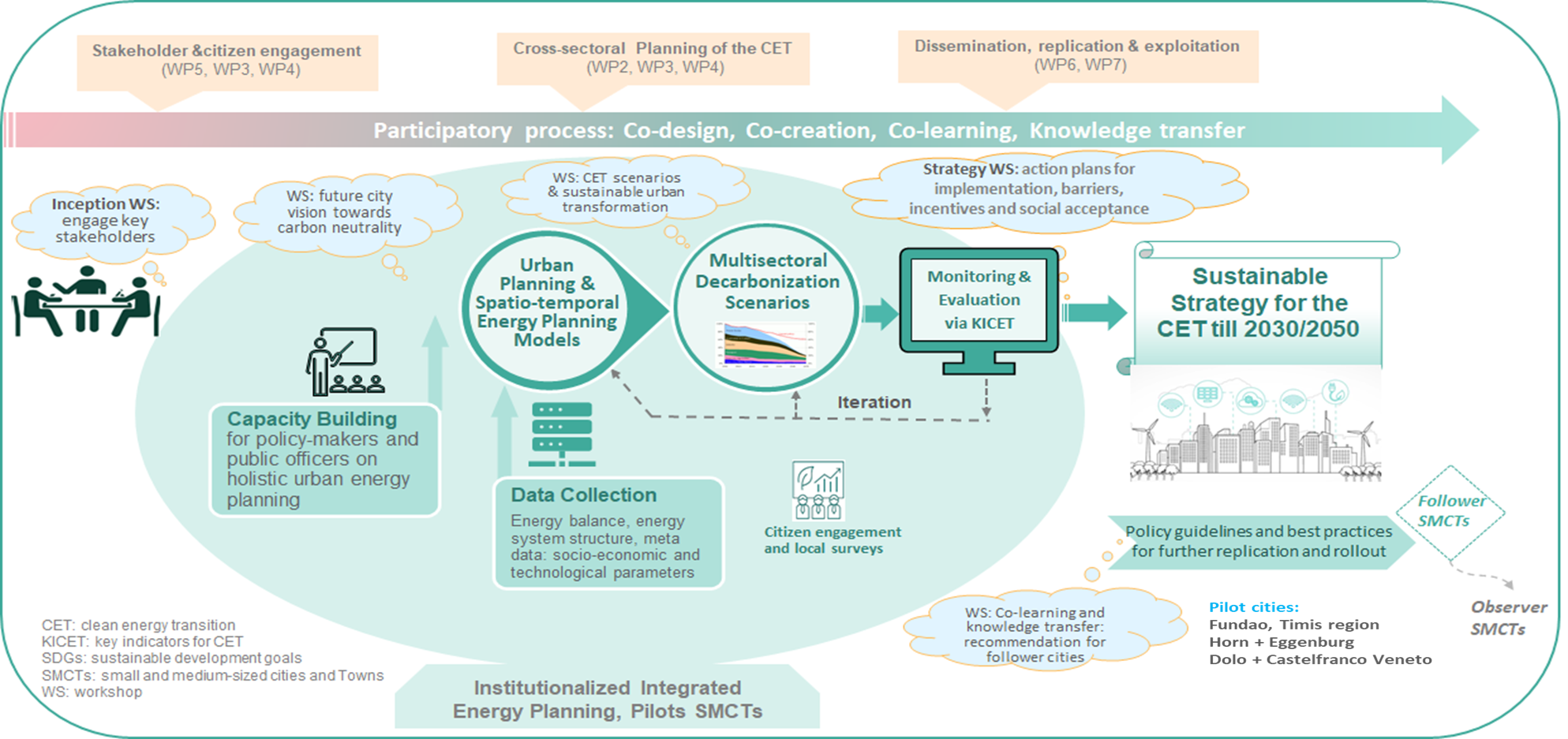
Figure 1: Holistic Integrated Spatial-Temporal Energy Planning methodology applied in Plenty-Life project to deliver clean energy transition (CET) strategies in co-creation with city stakeholder
Projektziele
- Support small and medium-sized cities in preparing clean energy transition strategies
- Equip SMCT’s local authorities with the capacity to deliver and monitor sustainable clean energy transition plans through a comprehensive capacity-building program.
- Institutionalize t a holistic integrated spatio-temporal energy planning (HISTEP) methodology, combining energy and urban development planning to facilitate CET by 2050.
- Establish local pilot SMCTs in four EU countries to demonstrate innovative, integrated planning processes in municipalities lagging in clean energy transition.
- Offer systematic training for policymakers, public officers, and spatial planners in integrated planning for the clean energy transition.
- Standardize city case study preparation to develop sustainable energy strategies using scientifically sound modeling tools for long-term clean energy transition.
- Create guidelines for planning and implementing the clean energy transition, aligned with local development and urban planning, through a co-creation process with stakeholders and citizens.
- Develop a monitoring and evaluation approach beyond traditional KPIs, using the KICET (key indicators for clean energy transition) framework to track socio-economic and environmental impacts aligned with SDGs 7, 11, and 13.
- Provide guidelines, lessons learned, and best practices from pilots to inspire follower SMCTs to deliver their clean energy transition strategies using the PLENTY-Life methodology.
Role of AIT
AIT is deputy project coordinator, lead two Work Packages (WP) -WP4 on clean energy strategy development and WP7 on sustainable deployment- beside key contribution to capacity building in urban energy planning.
WP4 – Development of clean energy strategy
In WP4, AIT leads the development of pilot city case studies and formulate related long-term clean energy transition (CET) strategies using a standardized five-step approach:
- Collecting data on energy balance, local RES potential, demographics, socio-economic and technological status, and future development plans.
- Modelling the city energy system and calibrating the base year.
- Co-creating future visions and CET scenarios with local stakeholders.
- Identifying sectoral priorities for action based on CET strategy outcomes.
- Establishing a KPI-based monitoring framework to track the CET strategy
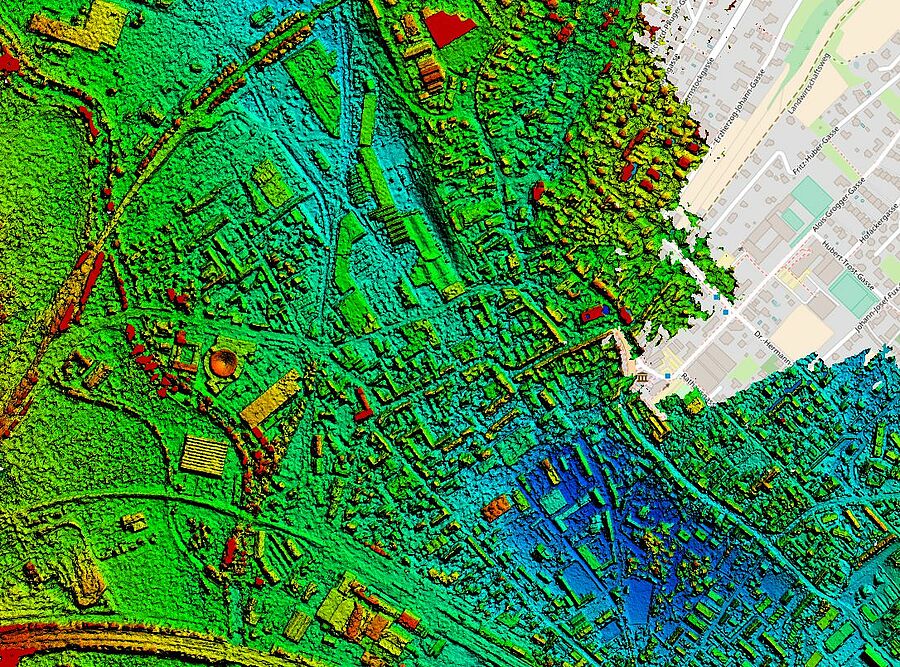
Additional factors like micro wind turbines and urban heat islands are also considered.
AIT further leads the capacity-building program for integrated energy planning and its deployment in pilot cities.
AP7 – Sustainability, replication, and exploitation of project results
In WP7, AIT leads the effort to ensure sustainability, replication, and exploitation of project results. Based Best-practices and experiences gained and lessons-learned from pilots will inform an exploitation plan and policy guidelines. The devised guidelines will facilitate the deployment of the project methodology to support follower and observer cities in adopting CET strategies.
The exploitation plan offers a flexible and adaptable HISTEP methodology, supported by a modelling portfolio to help cities develop and monitor their CET strategies. It will also drive further development of energy planning tools and methods tested in the pilot demonstrations. The proof of concept will provide insights into planning challenges and local barriers, leading to methodological improvements that will ultimately benefit municipalities adopting the approach after the pilots.
Project results
Results of the constructed BAU (Business-as-Usual) scenario as part of the CET strategy are presented in Figure 1 for the case study of the Fundão city. The evolution show that the energy demand is primarily driven by fossil fuel consumption in the transportation sector, as well as in agriculture and construction. Hence, to reach climate neutrality by 2050, the municiplaity of Fundão should implement effective decarbonistaion measures in the transportation sector. Strategies include transitioning from fossil-fueled vehicles to EV, promoting a shift from individual to public transportation, and encouraging active modes of transport such as biking and walking within the city. This are part of the decarbonisation measures considered in the CET scenario.
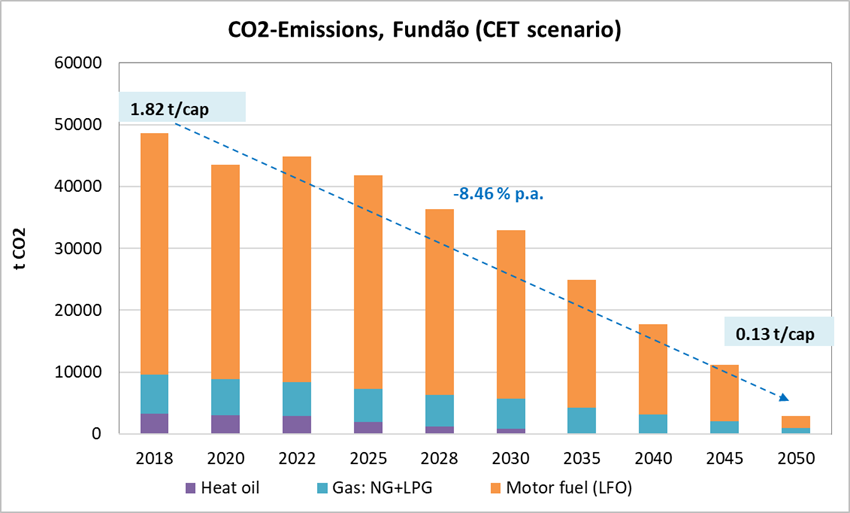
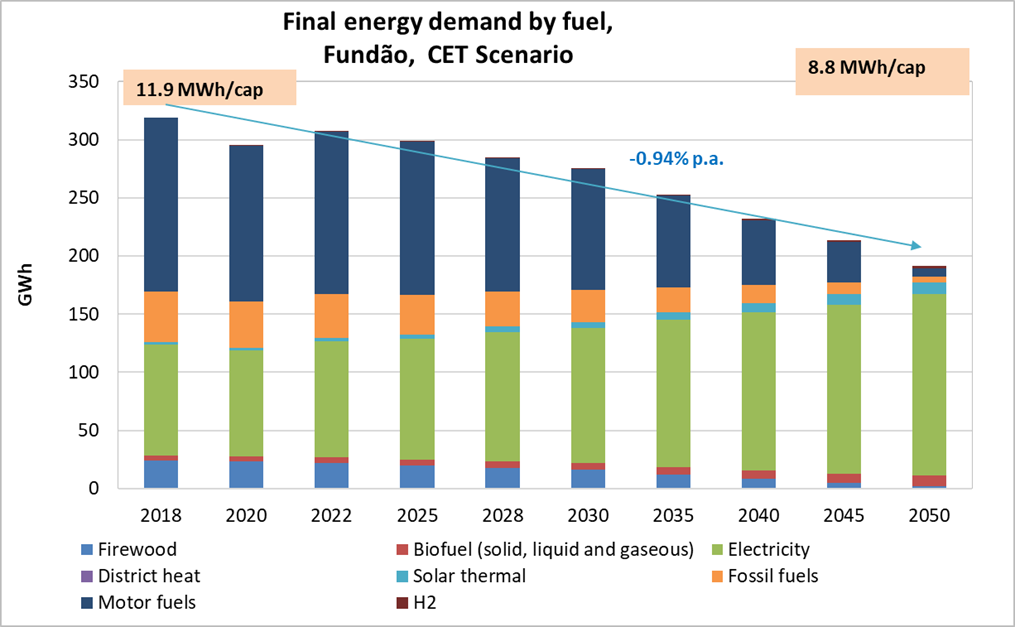
CET scenario aligns with the city energy and climate goals and is being developed based on the results of BAU scenario, employing significant enhancements in energy efficiency, electrification of end-uses and a shift to clean fuels across all sectors beside increasing the share of local RES to decarbonize power and heat supply. As a result, significant shifts will occur in city’s final energy demand and supply structure, the technological landscape of energy production and consumption, and the changes in related socio-economic and technological determinants. Figure 4 illustrates the key decarbonization drivers considered for developing the CET scenario.
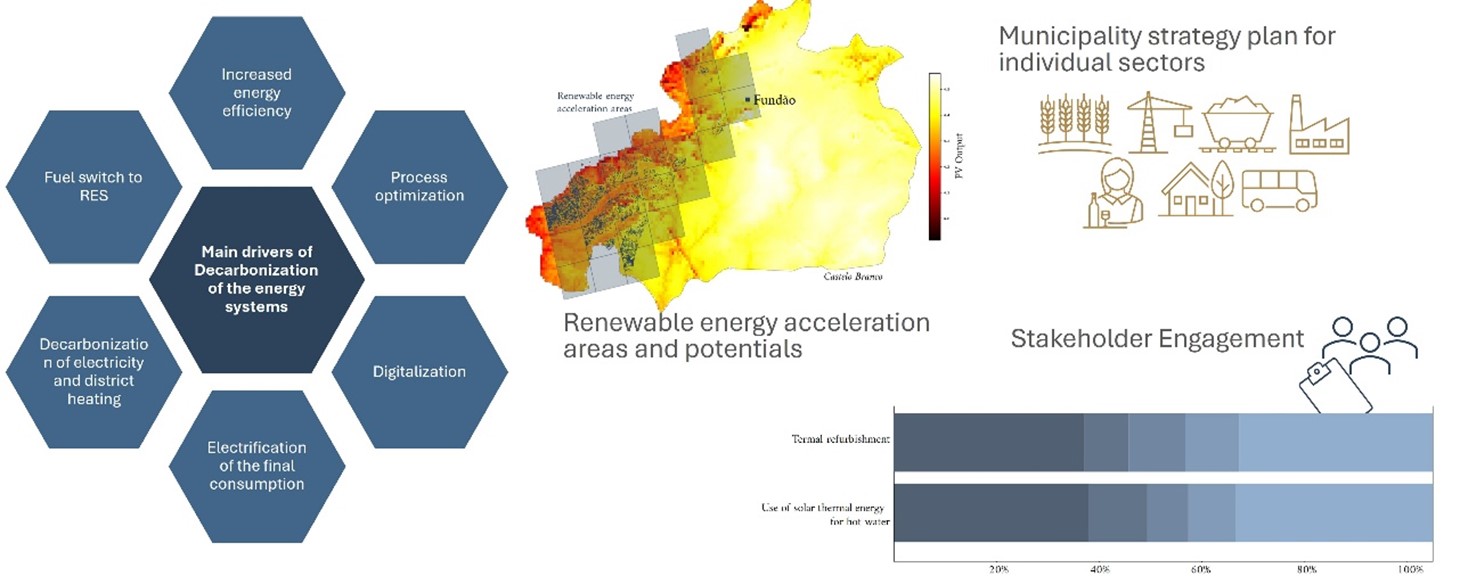
Figure 4: Framework for Modeling CET scenarios in Fundão.