


Intelligent Driver Assistance Systems Aim to Make E-Scooters Safer
TU Wien and AIT Austrian Institute of Technology investigate the potential of active braking systems for micromobility in the FANFARE research project
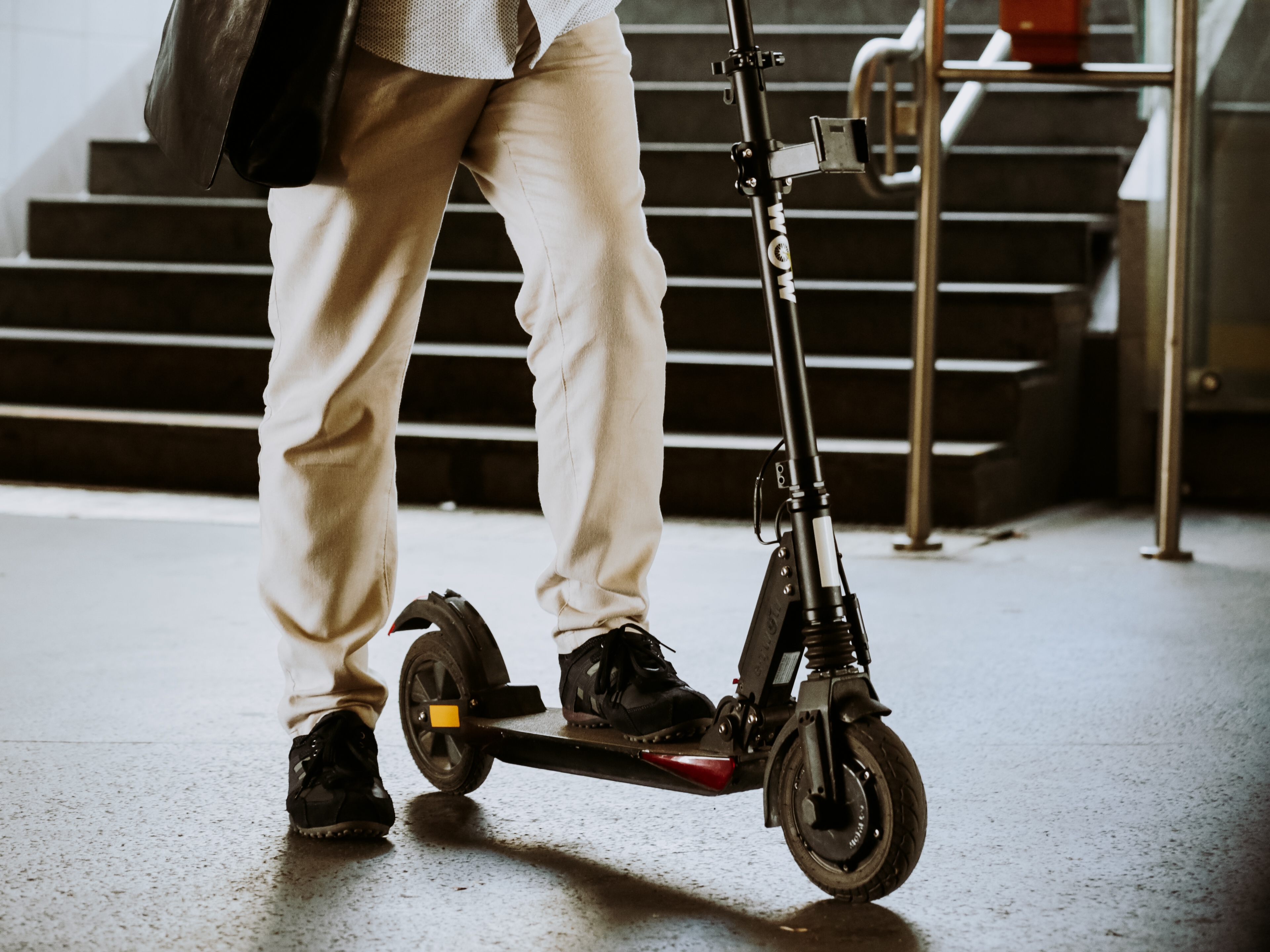
E-scooters have become an established part of urban mobility in recent years. At the same time, however, the number of accidents is increasing, particularly in emergency braking situations and under challenging road conditions. The FANFARE research project (Forschung über die Auswirkungen von Fahrer:innen-Assistenzsystemen für Fahrrad und E-Scooter) is therefore investigating, for the first time, the effects of active driver assistance systems for micromobility vehicles in a systematic way.
At the heart of the project is an electronic braking assistance system for e-scooters developed by TU Wien. The system is being tested under realistic conditions in riding trials at AIT Austrian Institute of Technology. The aim of the project is to scientifically assess the potential of intelligent assistance systems to improve road safety and to develop new approaches for safer micromobility.
Rising accident numbers highlight the need for action
E-scooters have become an integral part of the urban landscape in many European cities. However, their growing popularity also brings increasing safety challenges. Particularly critical situations can arise during braking manoeuvres, for example on wet roads or when unexpected obstacles appear. Long braking distances, an unfavourable distribution of braking force, and the risk of skidding or overturning can significantly increase the risk of accidents.
In passenger cars and motorcycles, driver assistance systems such as ABS and electronic stability control have been contributing to improved road safety for many years. Comparable technologies, however, are still largely unavailable in the field of micromobility. This is precisely where the FANFARE research project comes in.
FANFARE investigates active driver assistance systems for E-Scooters
The project investigates an innovative electronic braking assistance system specifically developed for e-scooters. The so-called brake-by-wire system replaces the mechanical connection between the brake lever and the brake mechanism with electronic control.
Based on various parameters – including vehicle speed, the rider’s weight and standing position – the system calculates the optimal distribution of braking force between the front and rear wheels in real time.
The aim is to mitigate critical riding situations, shorten braking distances, and reduce the risk of falls, wheel lock-ups and overturning. The project also examines to what extent established driver assistance concepts from the automotive and motorcycle sectors can be transferred to micromobility vehicles.
As part of a user study, participants test the system under controlled conditions. In addition to objective measurements such as braking performance and riding stability, the researchers analyse user acceptance, perceived safety and human–machine interaction. This is done using on-board systems and the Mobility Observation Box.
AIT provides the research basis and scientific evaluation
AIT Austrian Institute of Technology contributes its extensive expertise in road safety, driving behaviour research and micromobility to the project. In the preceding SEED project, AIT conducted extensive riding trials with different e-scooter models and collected important baseline data on vehicle dynamics.
These findings provided the basis for the development of the assistance system by TU Wien. Within FANFARE, AIT is responsible for the scientific planning and implementation of the test series, as well as for analysing the data collected. The riding trials are being conducted on AIT’s premises, enabling a detailed assessment of the system’s safety benefits under realistic conditions.
“Safety potential for a growing form of mobility”
“E-scooters are now an important part of the mobility chain and are used by many people every day. At the same time, accident statistics show that critical riding situations continue to pose a significant safety risk. FANFARE provides an opportunity to scientifically investigate, for the first time, the contribution that active driver assistance systems can make to preventing accidents in micromobility. The findings will not only be relevant to the further development of intelligent vehicle systems, but will also provide important foundations for making future mobility services safer and more sustainable”, explains Paul Rosenkranz, project manager at AIT Austrian Institute of Technology.