

Microorganisms cannot be seen with the naked eye, yet they shape almost every area of our lives. As part of the Vienna Children’s University, AIT researchers explained the roles that bacteria, fungi and other microorganisms play in nature and in the human body. The Center for Health and Bioresources took part both in the opening of this year’s Children’s University and with its own lecture on the world of microorganisms.
To mark the opening, Angela Sessitsch, Head of the Center for Health and Bioresources at AIT and an internationally recognised microbiome researcher, and Michael Wagner from the University of Vienna delivered the opening lecture on microbiomes. Both conduct research within the FWF Cluster of Excellence “Microbiomes Drive Planetary Health”, which investigates how microbial communities in humans, animals, plants and different ecosystems interact and influence planetary health.
A hidden world with far-reaching significance
Microorganisms are often associated primarily with pathogens. In fact, however, only a small proportion of them are harmful. Many perform essential functions: they keep nutrient cycles running, support plant growth, contribute to the production and preservation of food, and influence digestion, metabolism and the immune system.
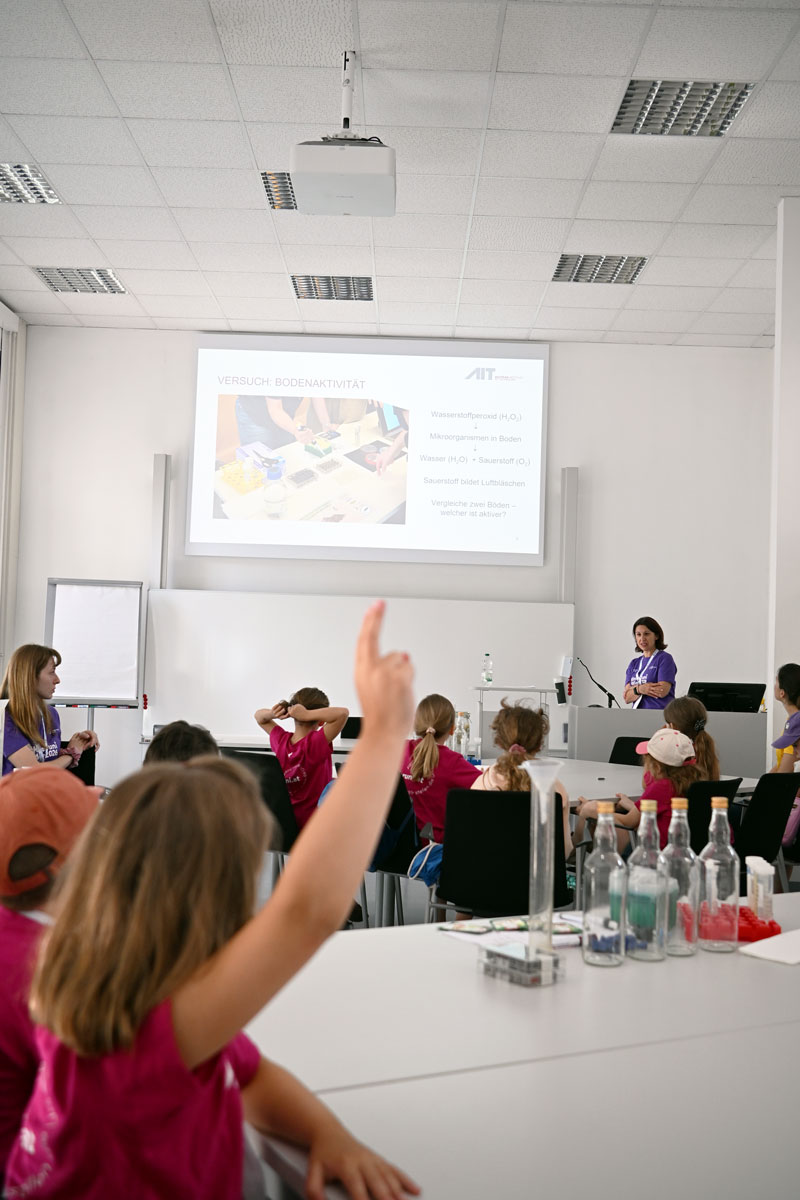
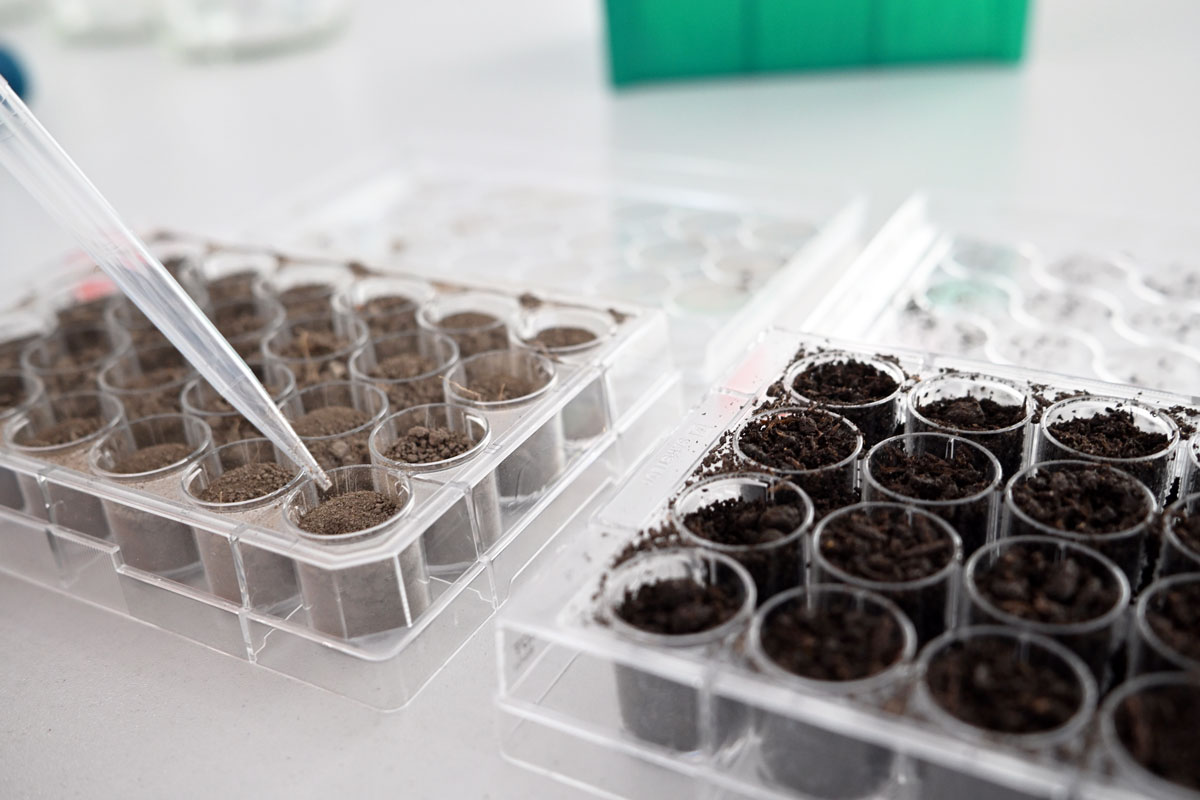
Tanja Kostic, Head of the Competence Unit Bioresources at AIT, together with AIT researchers Clara Pogner and Lisa-Carolin Bilz, illustrated the scale and diversity of this invisible world in the lecture “The Secret Rulers of the World – The Invisible Helpers in Nature, in Food and in You”. One gram of soil can contain several billion bacteria, tens of thousands of different bacterial species and an extensive network of fungal filaments. The human body also provides a habitat for a wide variety of microorganisms, the majority of which are found in the gut.
“Microorganisms do not live in isolation, but form complex communities. What matters, therefore, is not only which species are present, but also how they interact with one another, with their environment and with their host organisms,” explains Angela Sessitsch. “Understanding these interactions is an essential prerequisite for using microbiomes in a targeted way in the future to support healthy people, resilient plants and sustainable food systems.”
Making research tangible and verifiable
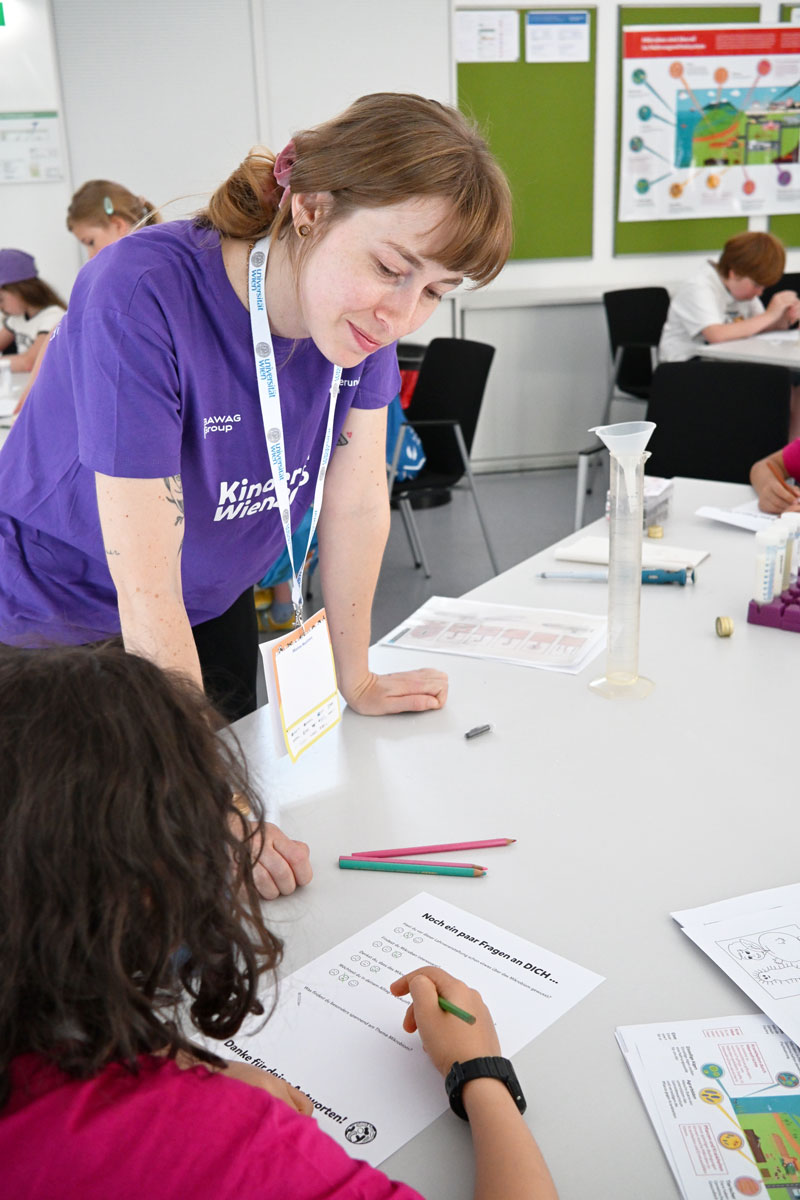
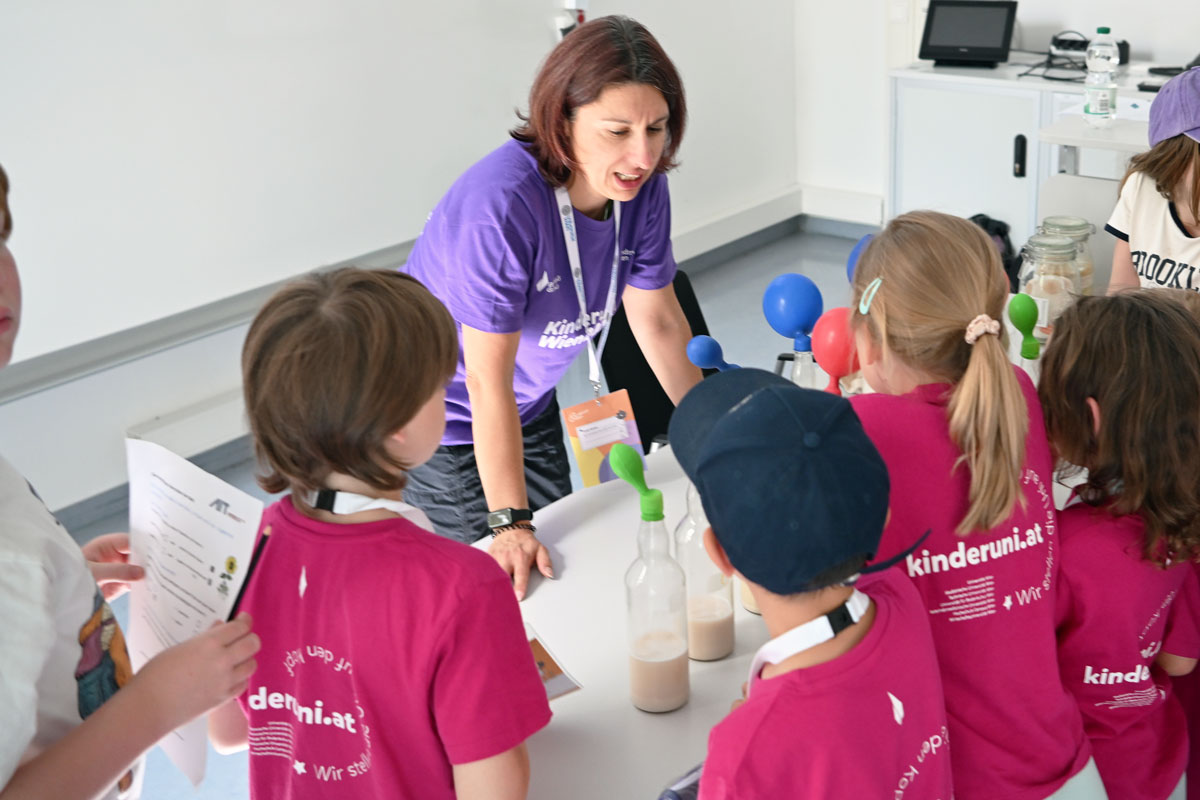
During the lecture held at the University of Vienna campus on 21 July 2026, the seven- to nine-year-old participants learned from concrete examples why yeast makes bread rise, how bacteria are involved in the production of yoghurt and why microorganisms in the soil are essential for plants. The children also gained insights into scientific methods: microorganisms can be cultivated, observed under a microscope, examined on the basis of their DNA and tested for their biological activities.
The lecture demonstrated that microbiomes are interconnected across individual habitats. Microorganisms are exchanged between soils, plants, bodies of water, animals, food and humans. Changes in one of these areas can therefore also affect other areas.
Through its involvement in the Vienna Children’s University, AIT introduces current research to young people and shows how scientific knowledge is generated. Exploring microorganisms provides direct access to fundamental questions: how ecosystems function, what influences health and which biological processes lie behind everyday foods.
The AIT Competence Unit Bioresources will also take part in the Tulln Children’s University in August.
Opening and photos of the Kinderuni Wien: https://www.ots.at/presseaussendung/OTS_20260713_OTS0057/kinder-begegnen-wissenschaft-kinderuniwien-findet-zum-24-mal-statt
AIT lecture “The Secret Rulers of the World”: https://www.kinderuni-anmeldung.at/event.php?event_id=6983
KinderUni Tulln: https://www.naturimgarten.at/kinderuni2026.html