


Anyone who had cancer in childhood or adolescence often remains dependent on reliable medical follow-up care for many years afterwards. This is not only about possible late effects of treatment, but also about how previous therapies can be documented in the long term and made available to future treating physicians. With the Survivorship Passport, St. Anna Children’s Hospital, supported by AIT, has now become the first centre in Europe to fully implement a digital instrument for this long-term follow-up care and integrate it into the electronic health record ELGA. For this purpose, the AIT Digital Health team developed a technical solution with the SUPA app that structurally integrates this information into the existing health telematics infrastructure.
When information about previous therapies is missing in everyday care
Follow-up care after childhood cancer does not end when acute treatment is completed. Many treatment-related late effects do not appear until years or decades later, often only in adulthood. Patients as well as treating physicians therefore face the same challenge time and again: what treatment was carried out at the time, what risks arise from it, and which preventive or follow-up examinations make sense in the long term?
Especially at the interfaces of the healthcare system, such as during the transition from paediatric to adult medicine or when changing treatment location, such information is often not readily available in everyday care. This makes continuous and personalised follow-up care more difficult.
Digital follow-up care within the existing healthcare infrastructure
The Survivorship Passport bundles individual therapy data, risk profiles for possible late effects, as well as evidence-based recommendations for follow-up care and prevention in a structured format. The aim is to keep medically relevant information available in the long term and make it accessible both to healthcare providers and to those affected themselves.
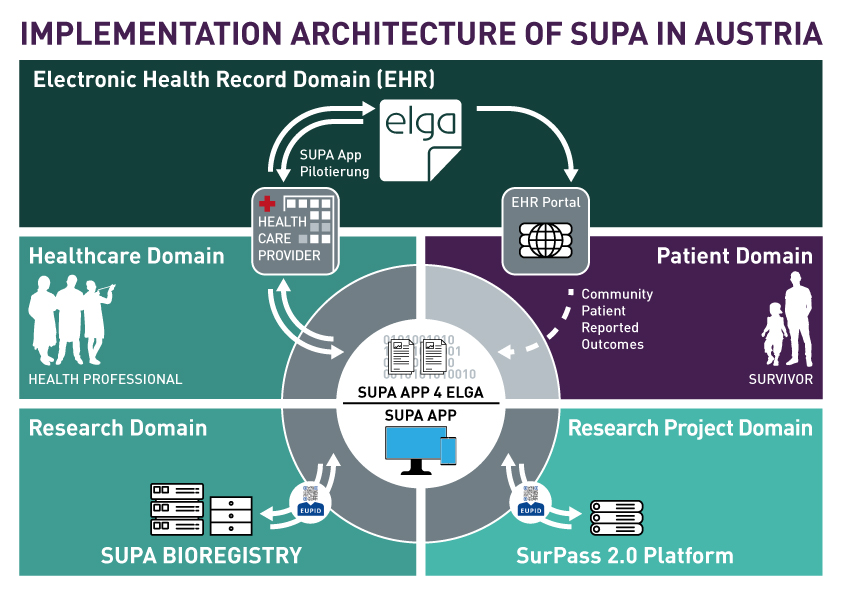
The Austrian implementation goes beyond an isolated standalone solution. St. Anna Children’s Hospital integrated the Survivorship Passport into ELGA with the support of AIT, thereby embedding it into the existing health telematics infrastructure. The technical basis for this is the SUPA app developed by AIT, which generates a Level 3 HL7 CDA document and thus enables the structured and searchable provision of the information within ELGA.
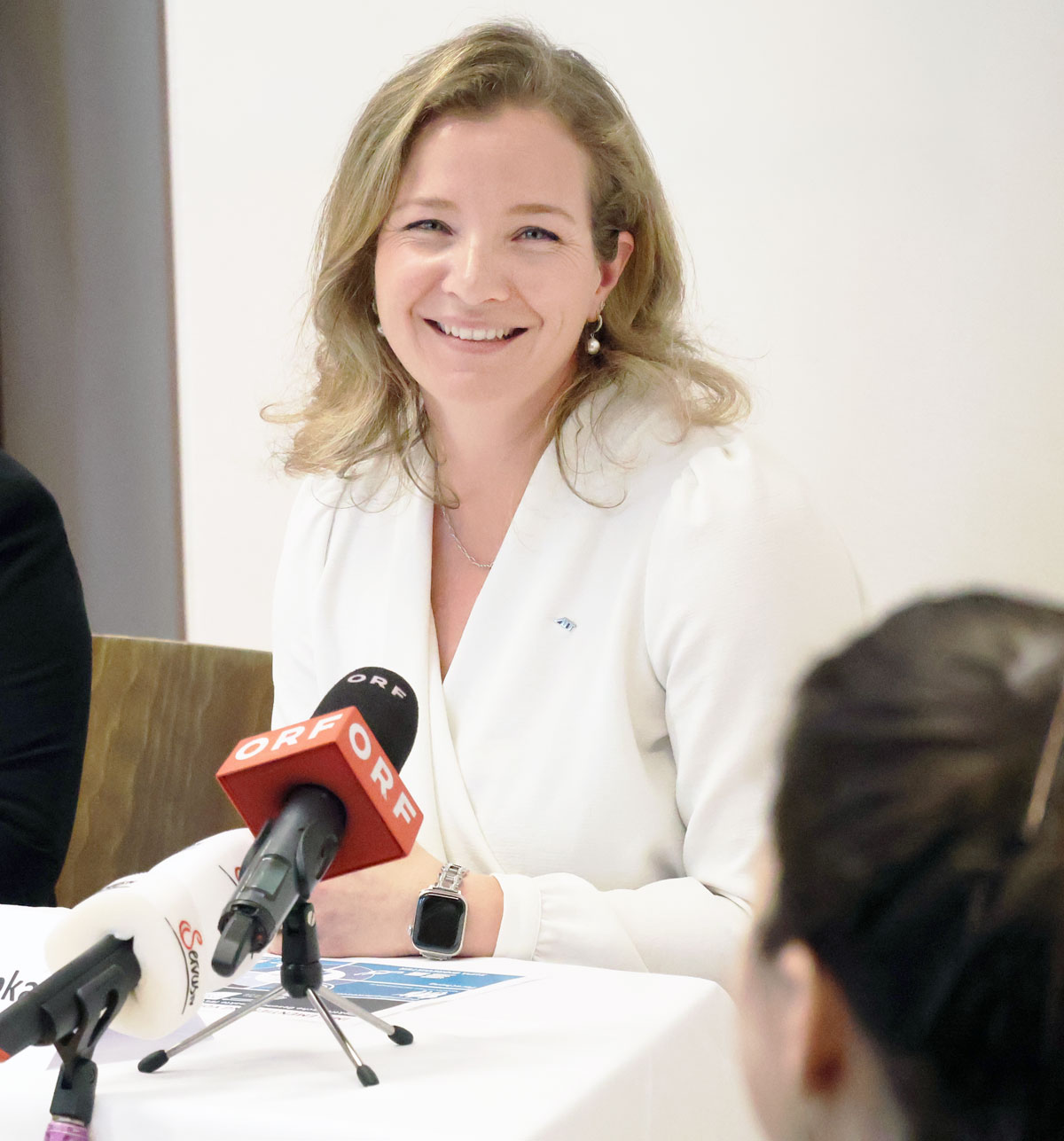
“The SUPA app developed by AIT integrates into the existing health telematics infrastructure and generates a Level 3 HL7 CDA document, which can now be viewed via ELGA both by the survivors themselves and by all other healthcare providers. Through the now available high-quality information and follow-up recommendations, this improves follow-up care outside the paediatric departments in the hospital,” explains Angelika Rzepka, Senior Research Engineer in the Competence Unit Digital Health Information Systems at the AIT Center for Health and Bioresources. According to St. Anna Children’s Hospital, around 5,000 childhood cancer survivors in Austria are expected to benefit from this kind of structured long-term follow-up care in the future. The first patients are already using the system.
European development, national implementation
The professional basis for the Survivorship Passport was developed over many years in European networks and projects, particularly in the context of PanCare, ERN PaedCan, PanCareSurPass and PANCIA. The Austrian implementation builds on this international groundwork and translates it into the practice of a national healthcare system.
St. Anna Children’s Hospital and St. Anna Children’s Cancer Research have supported the development scientifically and strategically over many years. AIT supported the technical implementation and the connection to ELGA. Other partners included the IT and application management team at St. Anna Children’s Hospital, the hospital information system provider PCS, as well as actors in the national health IT environment. The Ministry of Health supported the implementation with funding.
Further centres are to be connected
The solution that has now been implemented is regarded in the European context as an important practical test of how digital follow-up care instruments can be embedded in regular healthcare systems. While comparable approaches in other countries have so far often been limited to individual institutions or document-based solutions, the Austrian model shows how structured long-term follow-up care can be made available across the system.
For those affected, this primarily means more continuity in medical support. For the healthcare system, it opens up the possibility of organising follow-up care after surviving cancer in a more reliable, more standardised and more sustainably connected way. Further centres in Austria are now to be connected to the solution.
More: https://www.ots.at/presseaussendung/OTS_20260421_OTS0054/lebenslang-begleitet-st-anna-kinderspital-startet-europaweit-einzigartigen-survivorship-passport
St Anna Children's cancer Center: https://kinderkrebsforschung.at/survivorship-passport-fuer-ein-besseres-leben-nach-krebs-im-kindes-und-jugendalter/