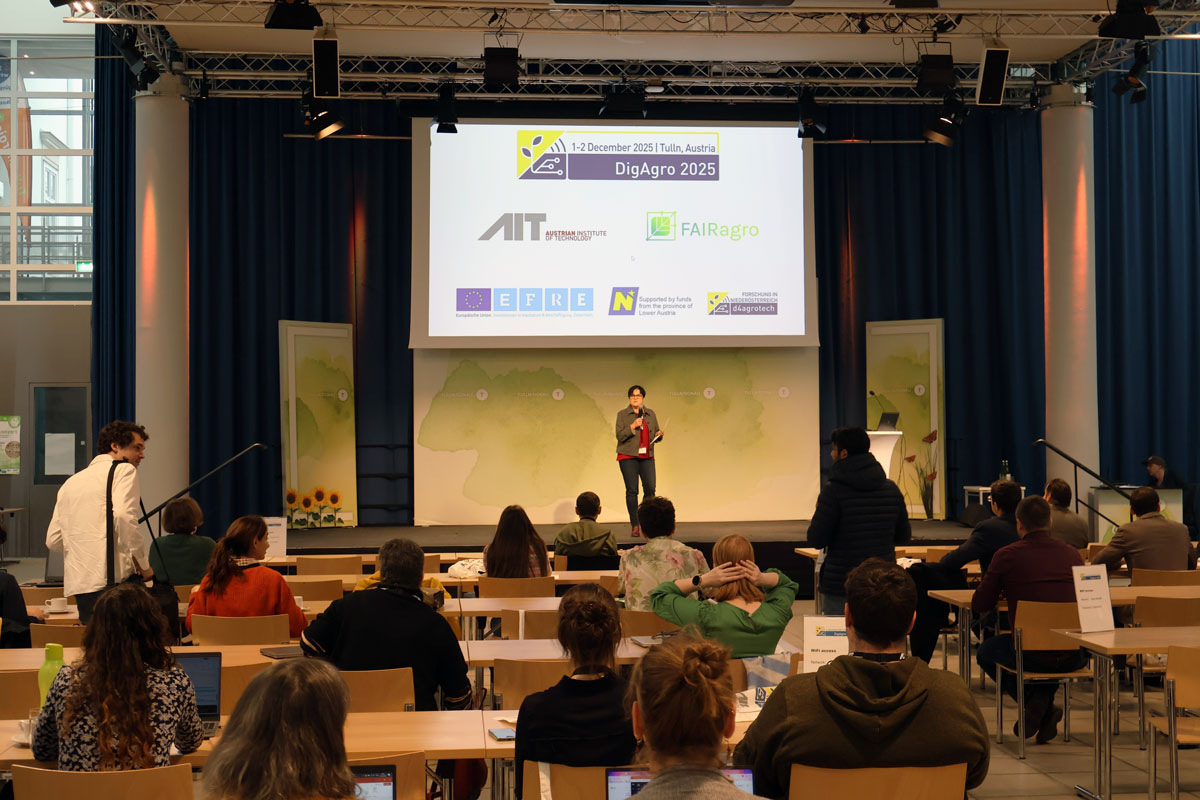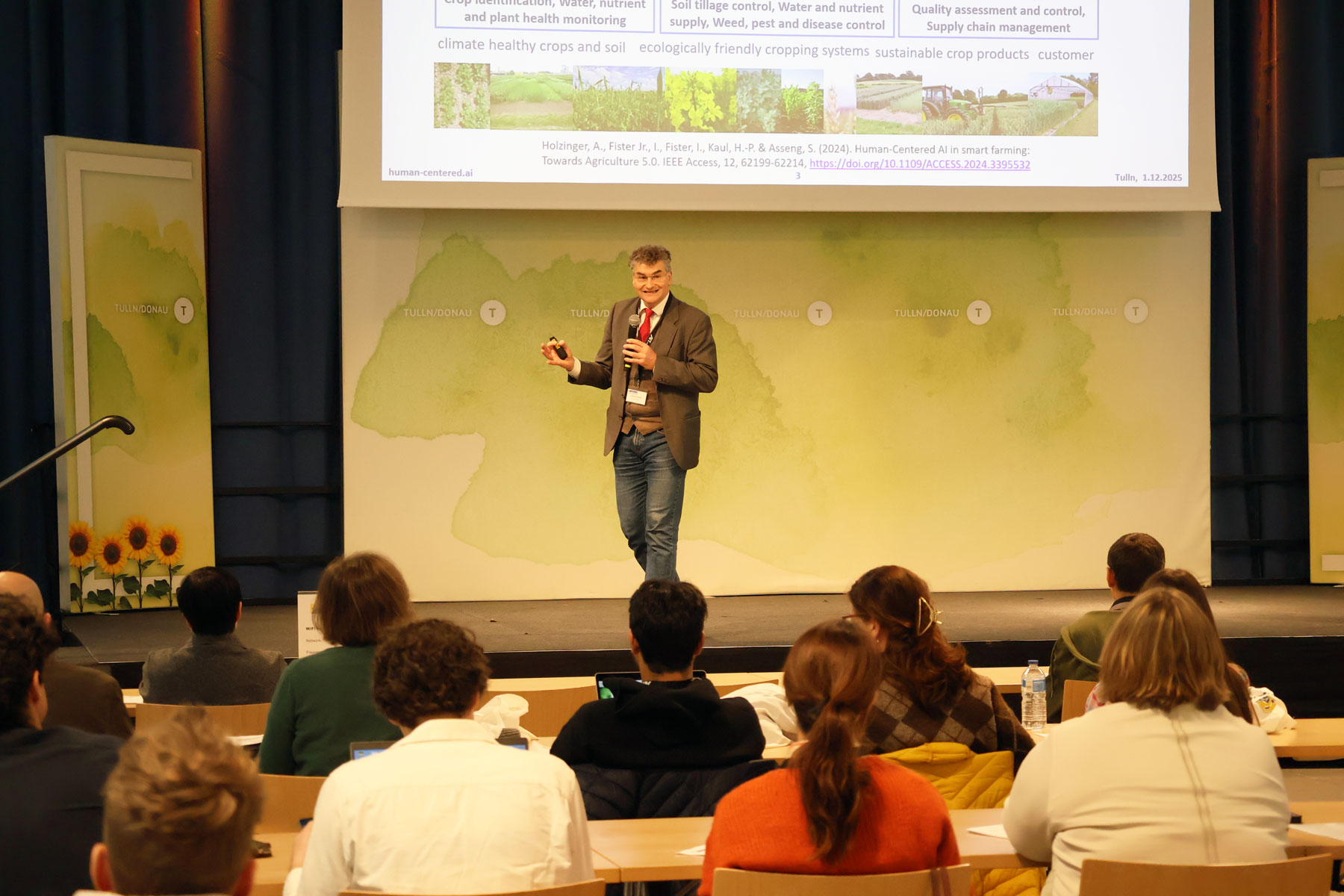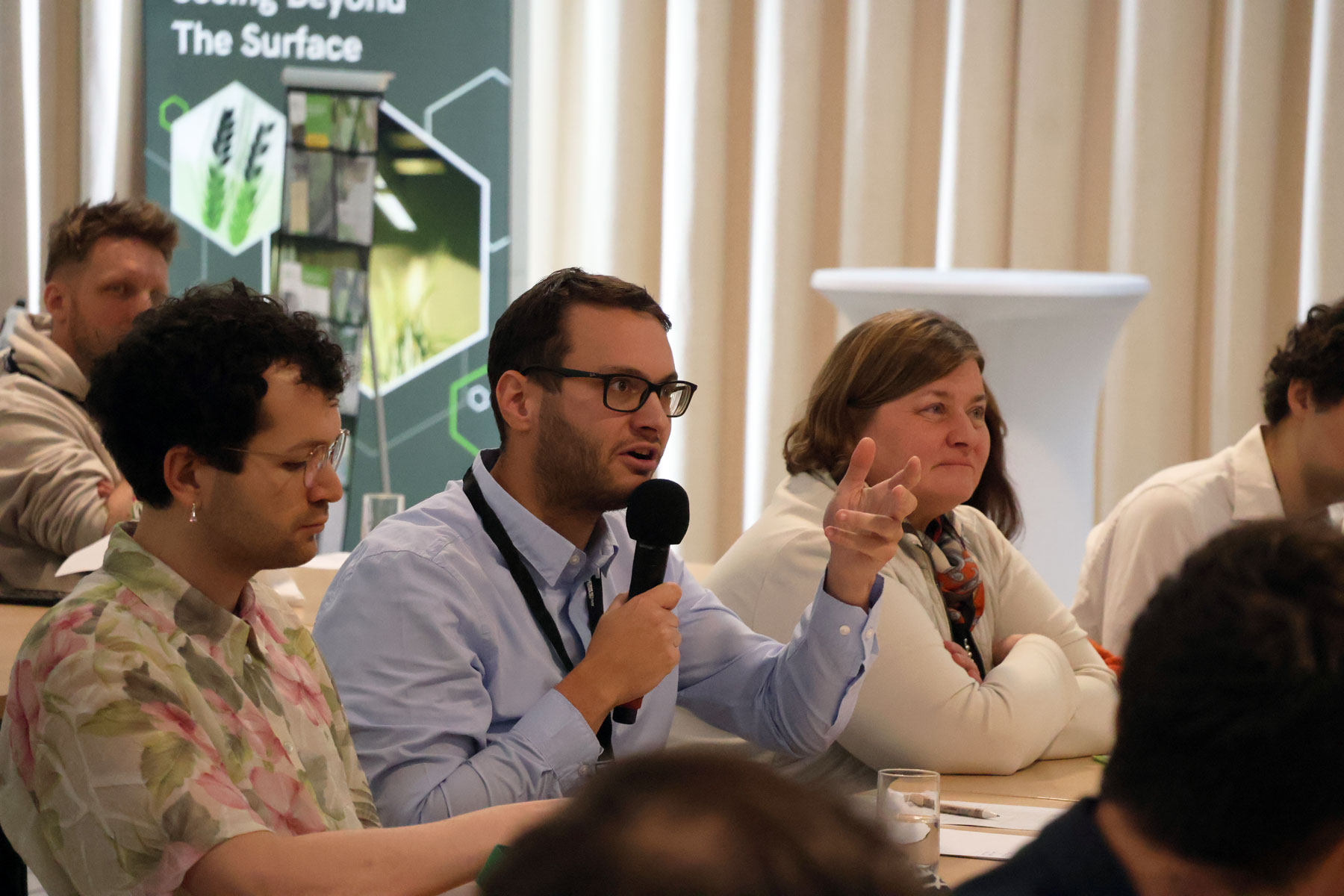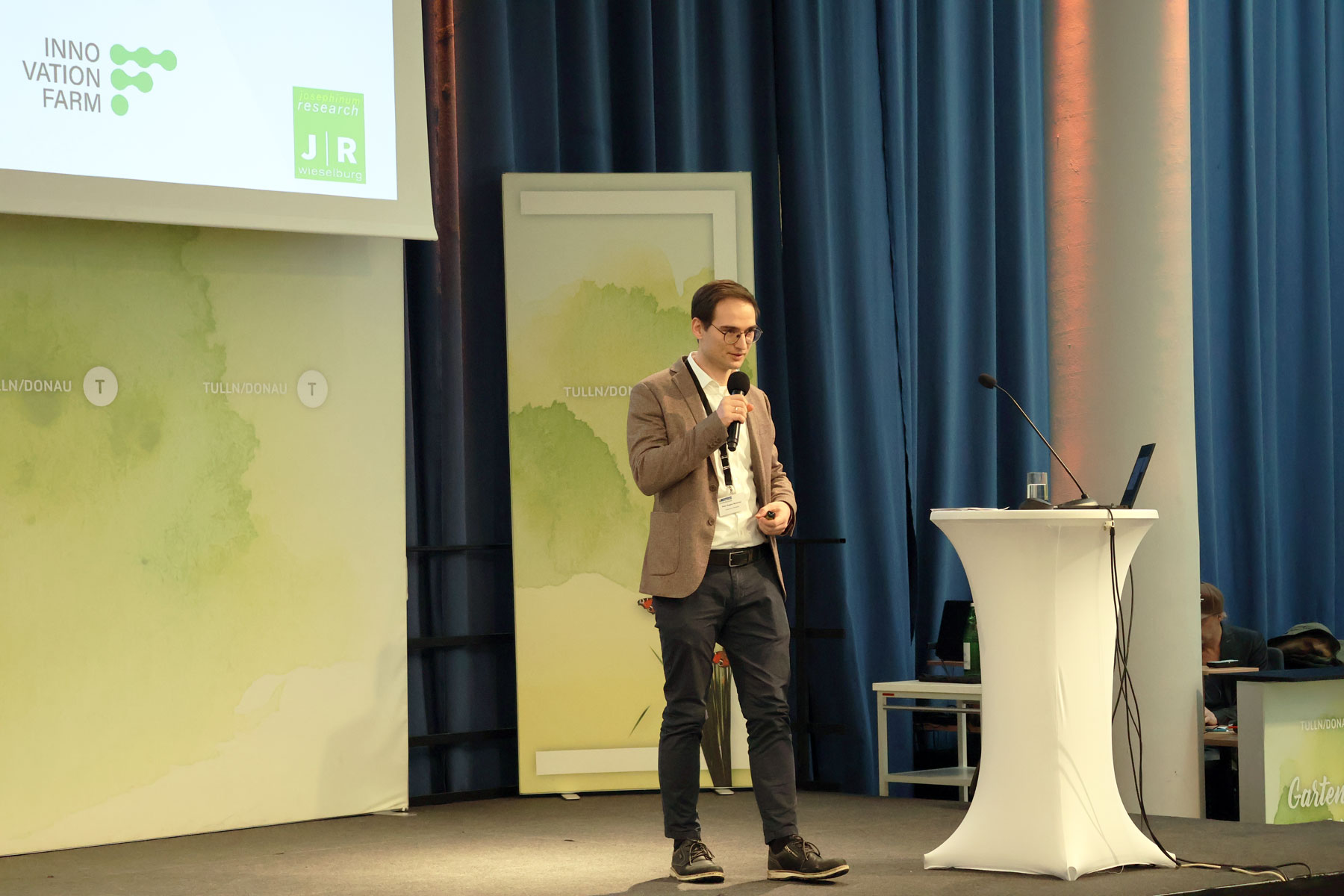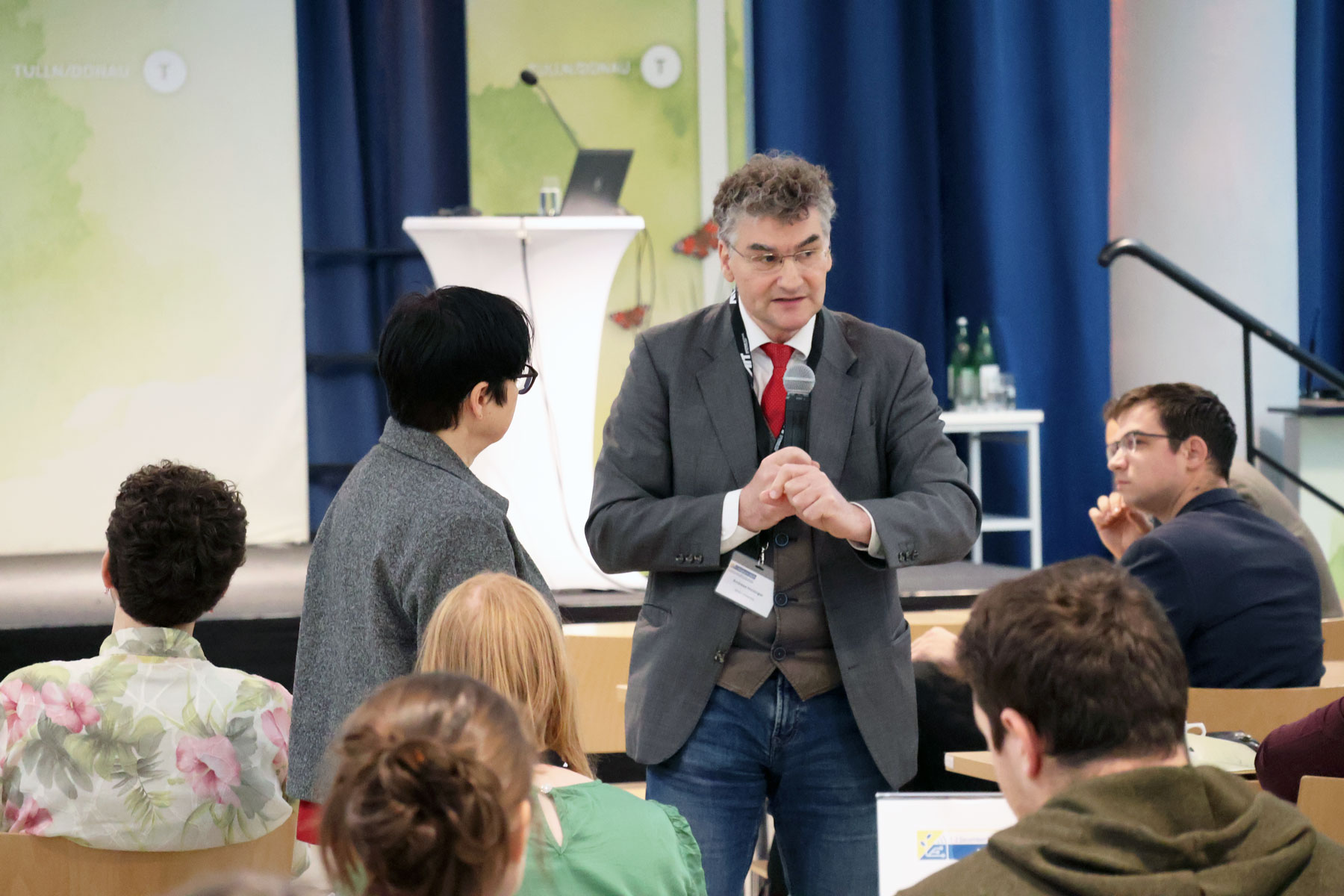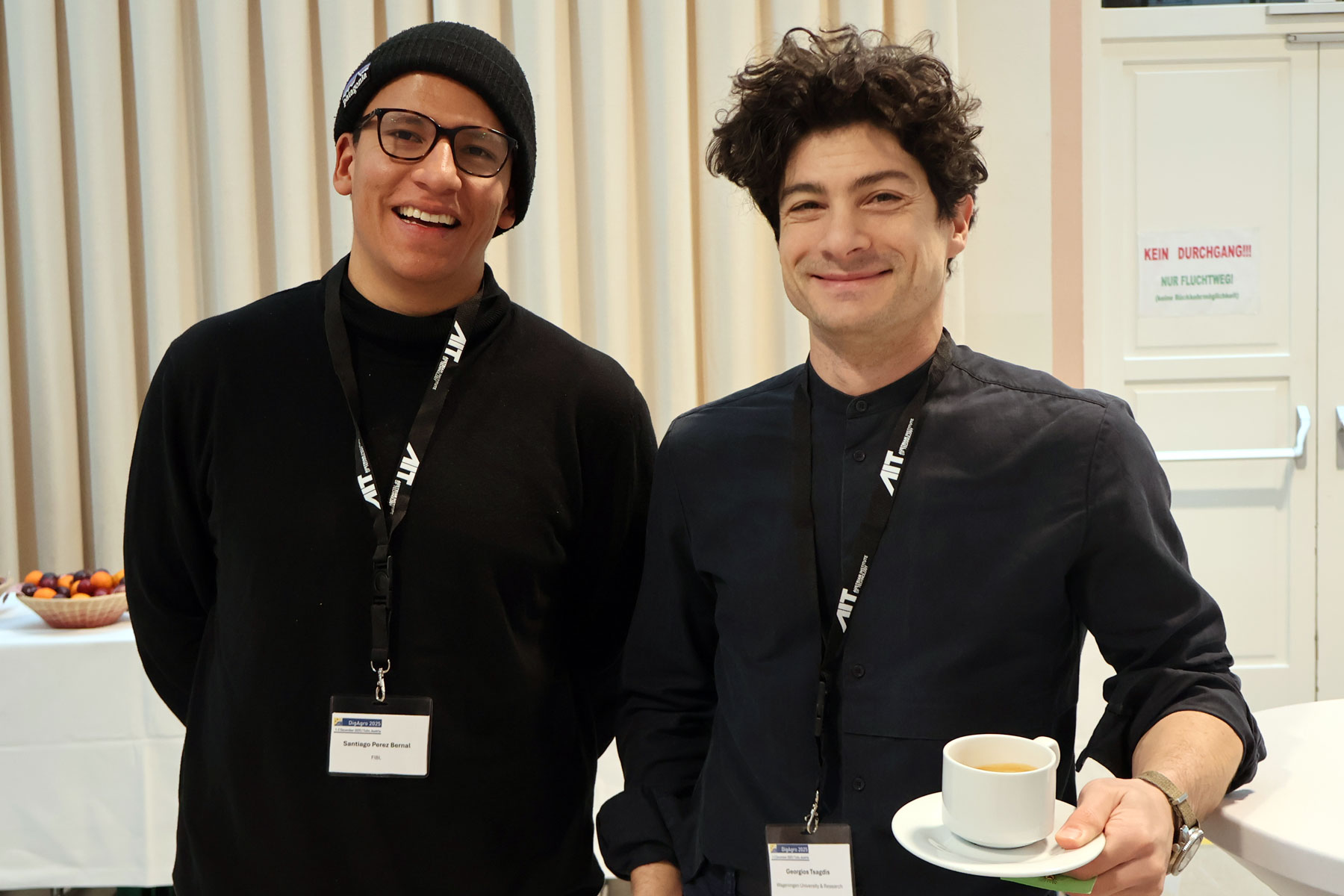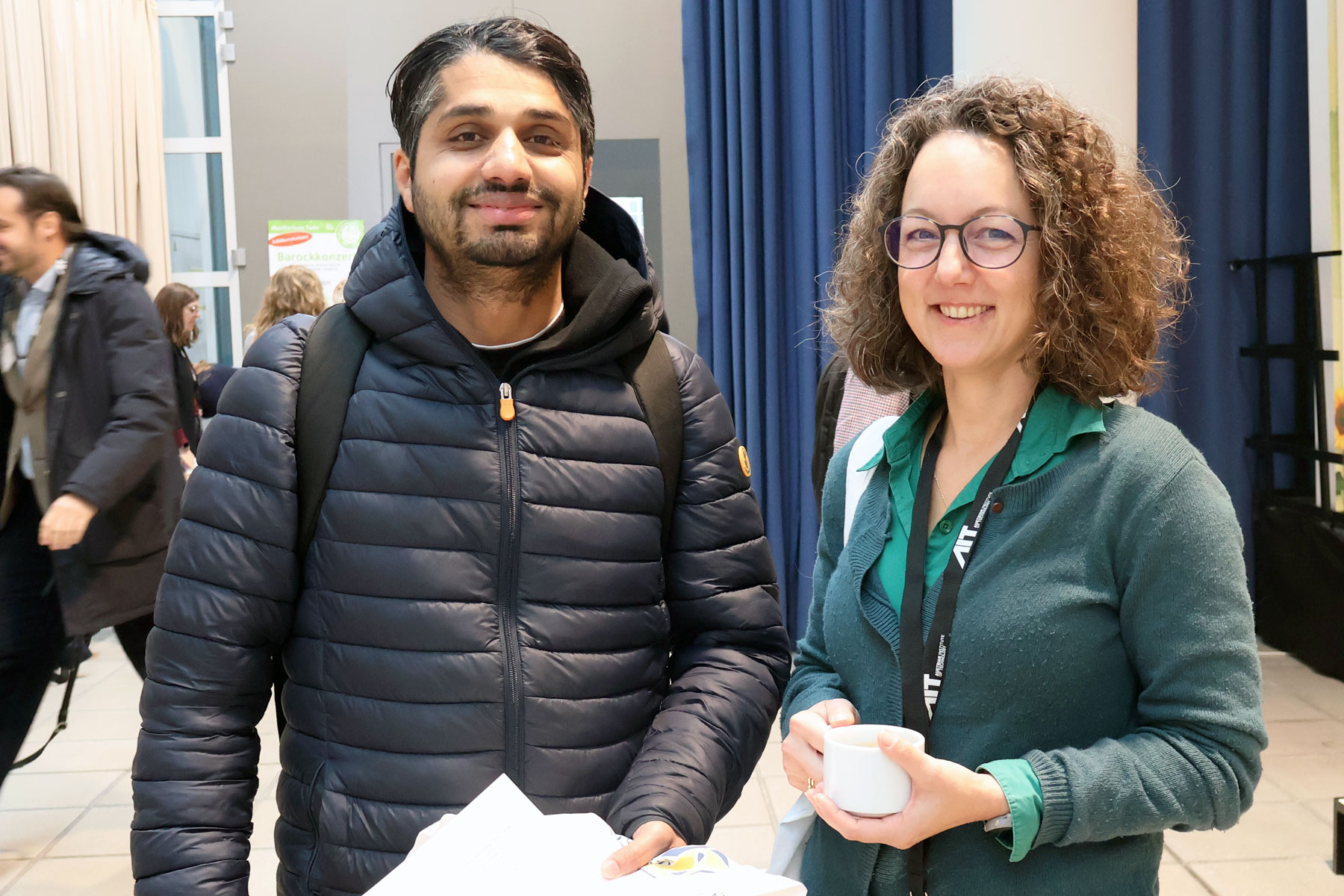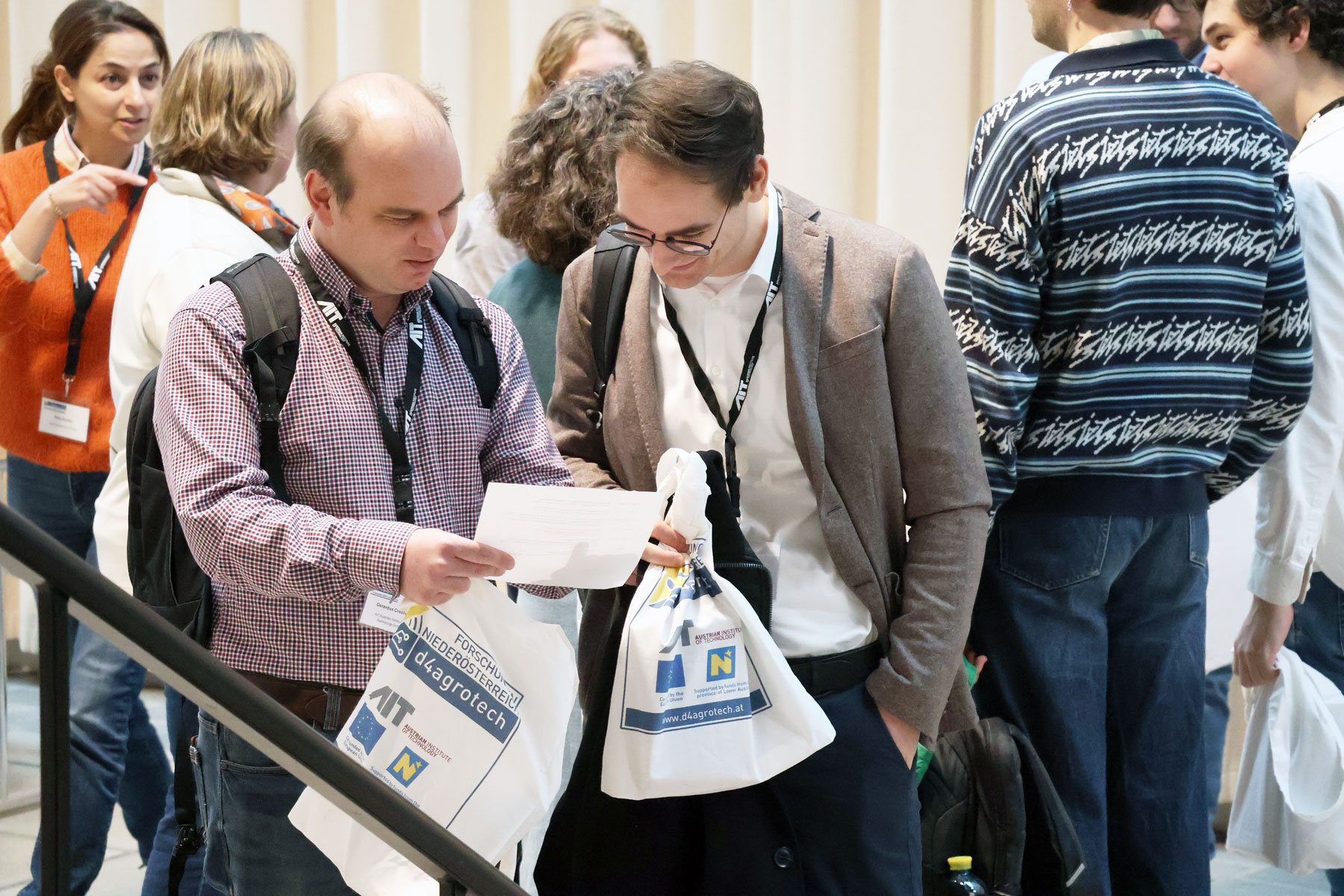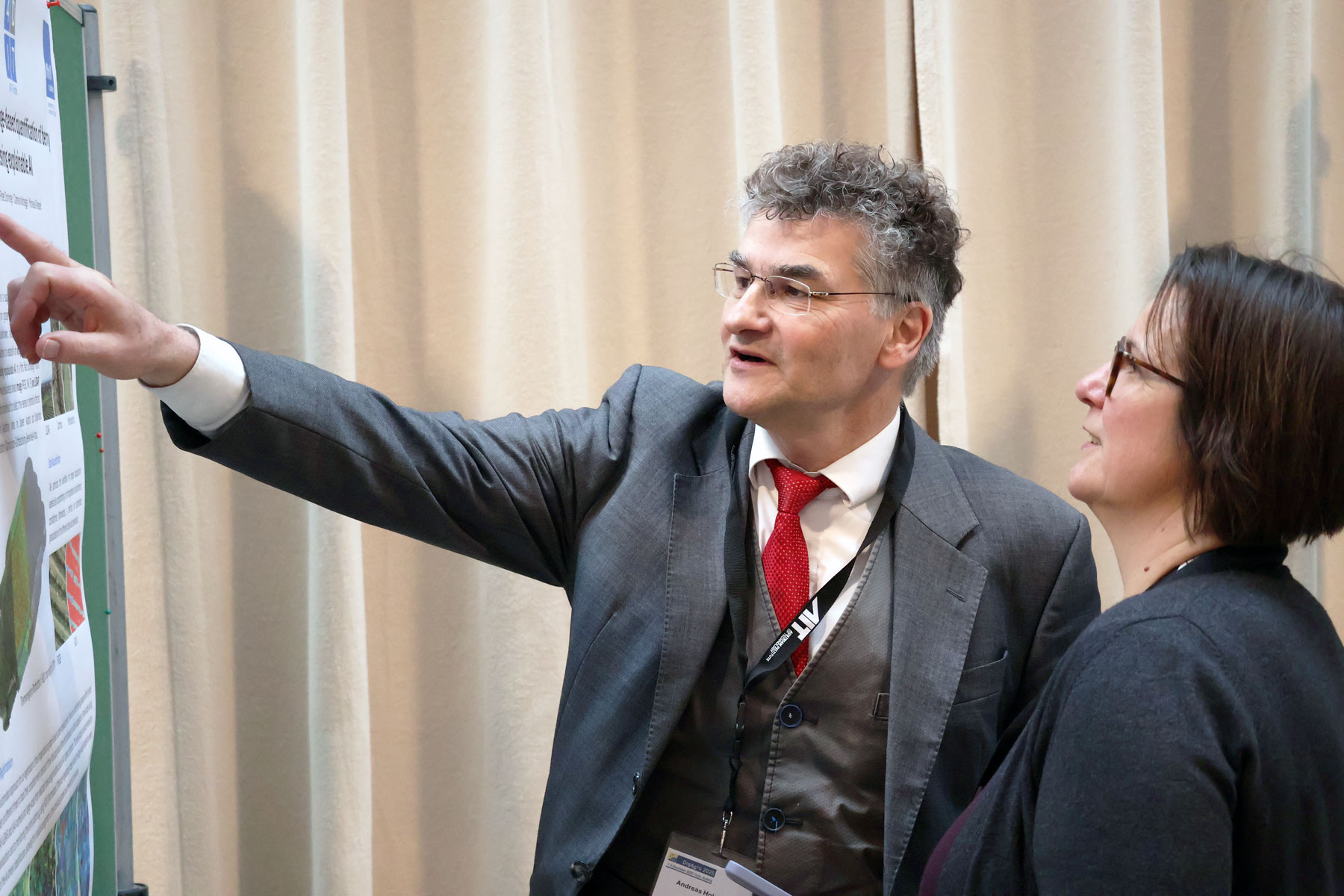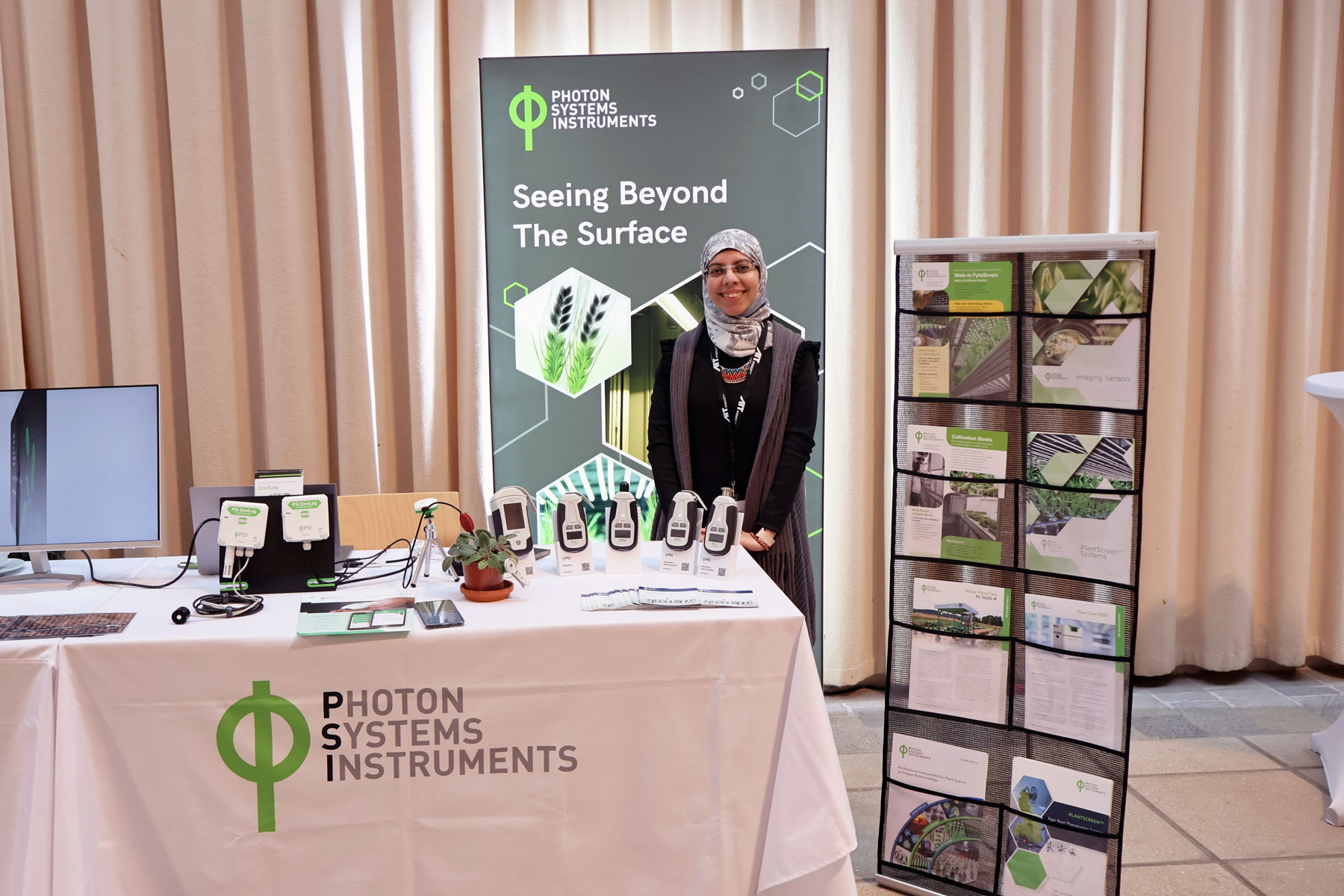


On 1 and 2 December 2025, the conference DigAgro 2025 – Digitalization in Agroecology and Crop Production took place at the historic Minorite monastery in Tulln an der Donau. Around 70 experts from research, technology development and agricultural practice discussed how digitalisation supports agroecosystems, crop production and microbiome research – from smart farming applications and digital plant phenotyping to data-driven models for agroecological systems. DigAgro 2025 was organised by AIT’s Bioresources Unit as part of the Lower Austrian research and innovation initiative d4agrotech. In addition to 22 talks and 23 poster presentations, interactive and practice-oriented formats were key elements of the programme, including a panel discussion on “Promises and challenges for digitalization in agriculture” as well as a workshop by the FAIRagro consortium on FAIR research data and digital management systems for agricultural research.
Agriculture is simultaneously facing rising demands for productivity and resilience, as well as for climate and resource protection. Extreme weather events, new pests, the loss of biodiversity and the pressure to use inputs more efficiently are making decisions in the field increasingly complex.
Digital technologies can be an important lever here: sensors, remote sensing, modelling and AI provide relevant information on soils, plants, pests and weather, which can be condensed into decision-making bases for farms, breeding and advisory services. In particular, the automated acquisition and rapid, reliable assessment of crop phenotypes under complex field conditions – i.e. interactions with environmental conditions, soil and biological factors such as the microbiome – play an important role. In addition to indications of crop status and pointers to possible management measures, this approach is highly relevant for accelerating breeding programmes and for developing innovative products to strengthen and protect crops in the field, such as biological and microbial products. In practice, however, data and applications often remain fragmented, with different formats, platforms and standards. Without coordinated data spaces and clear principles for data quality and use, a patchwork of individual solutions can easily emerge that burdens farms rather than relieving them.
DigAgro 2025: direct exchange between research, industry and users
Against this background, DigAgro 2025 relied on a compact format with intensive interaction. Over two days, the conference covered technologies for smart farming, digital tools for plant phenotyping, digital innovations in agroecology, and the integrative collection and utilisation of multi-omics data for microbiome research. In four thematic sessions, high-level expert talks and poster presentations discussed (1) developments in sensor technology, robotics, automation and data-driven decision support systems, (2) methods and platforms for high-resolution and automated plant monitoring, (3) digital solutions for sustainable cropping systems, biodiversity monitoring and ecological management strategies as well as the relevance of stakeholder interactions, and (4) the integration of high-throughput biological data to analyse plant–microbe interactions and to model them.
The approximately 70 participants used expert talks, posters, discussion rounds and the round table to discuss requirements, limitations and application possibilities of digital tools in concrete terms – from trial plots and breeding programmes through to operational application. The manageable size created a direct basis for dialogue: developers, researchers and users were able to discuss very concretely which data, interfaces and functions are actually needed in practice.
A key focus was on data quality and data management. The FAIRagro workshop on “FAIR research data and digital management systems for agrosystems research” showed how research data can be organised so that it is findable, accessible, interoperable and reusable. It became clear that technical solutions must always be closely linked to questions of governance, standardisation and user training.
AIT and the d4agrotech initiative made these topics tangible through ongoing projects. WheatVIZ, for example, uses UAV-based remote sensing, machine learning and genomic data to support the breeding of drought-tolerant wheat varieties. PredictBeetWeevil develops data-based models to predict the beet weevil in sugar beet cultivation. Both projects illustrate how digital methods, agronomy and data spaces interlock to create decision-support tools that can be translated into agricultural practice. These examples underline the relevance of crop phenotyping and of combining multi-layered data to support improvement approaches in practice, ranging from breeding and agricultural management methods to the development of new solutions to support crop production, such as biological/microbial products.
“Through DigAgro, we are creating a space in which agroecology, digitalisation and practice come together on an equal footing. The key is that data and models arrive in the field, as tangible support for farms, breeding and policy. The discussions in Tulln have shown how strongly this connection between technology, biology and application is already in focus,” explains Angela Sessitsch, Head of Center for Health & Bioresources at AIT and Head of Conference DigAgro 2025.
From Tulln to projects, data spaces and applications
The discussions in Tulln made it clear that digitalisation in agriculture is no longer viewed as an isolated technology topic. Questions around data infrastructure, AI models and digital tools are an integral part of agricultural innovation processes – and they help determine whether agroecological and economic goals can be achieved at the same time.
For AIT, the d4agrotech initiative and its partners, this means taking the topics discussed in Tulln forward in concrete collaborations: further developing digital phenotyping approaches, building robust data spaces for agricultural research and practice, and developing predictive models that support farms in climate- and resource-efficient decision-making.
With DigAgro 2025, AIT created a framework in which these issues could be discussed openly, critically and in a practice-oriented manner – on a direct basis of dialogue between all those shaping the digital future of sustainable agriculture.
More information:
https://www.digagro2025.com/
https://www.d4agrotech.at/