


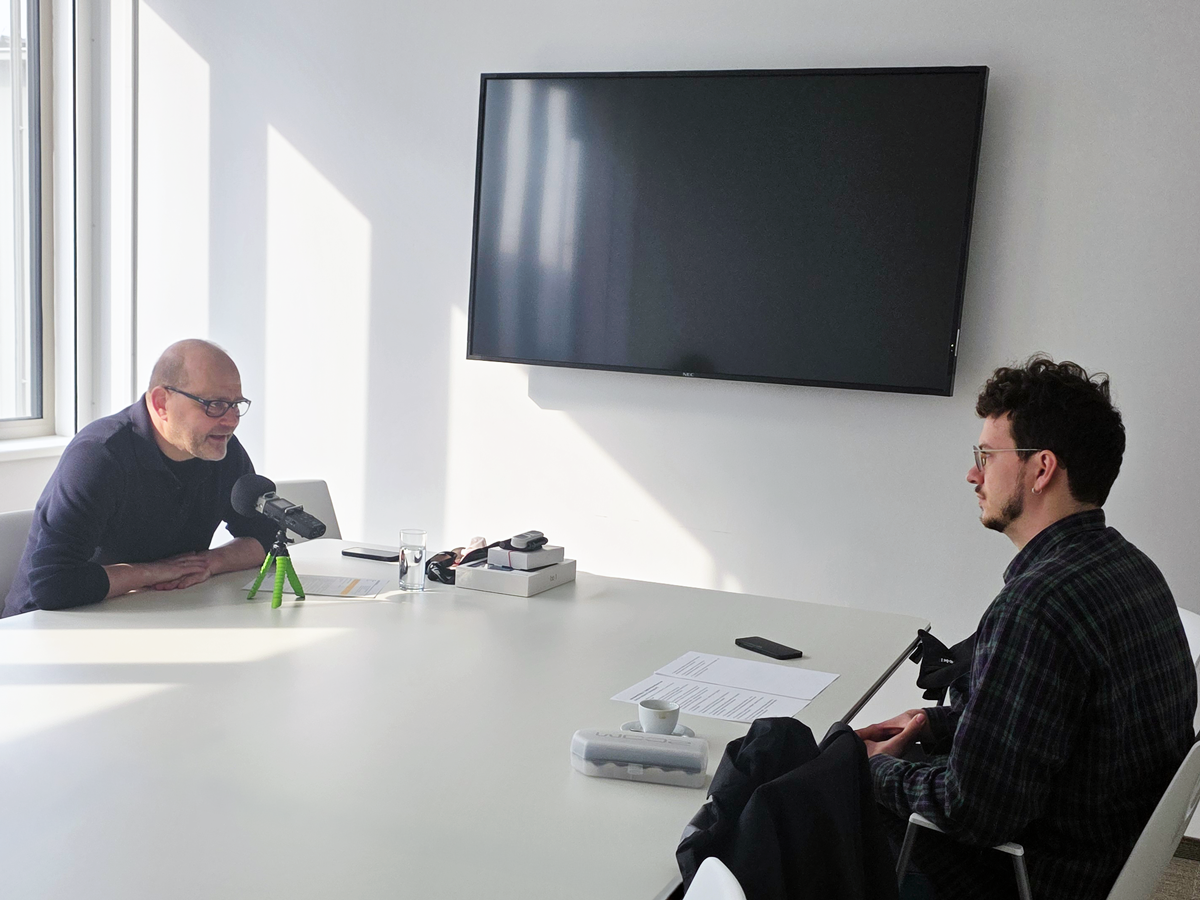
Smartwatches have long since moved beyond measuring only steps and pulse. They also record sleep, heart rate, heart rhythm and patterns of exertion, bringing them increasingly into focus for medicine as well. In the Ö1 programme Dimensionen on 13 April 2026, AIT pulse wave expert Siegfried Wassertheurer explained why wearables are becoming more important for prevention and long-term monitoring, while not being able to replace medical diagnostics. The segment also addresses data protection, inaccurate measurements and the question of how such data can be meaningfully integrated into healthcare.
High expectations, limited informative value
As wearables become more widespread, expectations are also rising that they will provide reliable information about one’s own health. That is precisely where a field of tension emerges. These devices generate continuous data and thereby create the impression of constant monitoring. However, these values cannot be equated with a medical diagnosis. Even if individual functions may be medically relevant, wearables remain supplementary measuring instruments whose informative value depends on the context of use, the quality of the signal and professional interpretation.
In addition, constant self-monitoring can be not only motivating, but also unsettling. The Ö1 segment explicitly describes wearables as occupying a space between medical progress, technical feasibility and the protection of privacy. This makes the framework clear: the benefit of these devices does not arise from data collection alone, but from the quality of the analysis and their responsible use.
Relevance for prevention and monitoring in everyday life
Wassertheurer classifies wearables as mobile measuring devices that are particularly valuable wherever health data is not considered selectively, but over longer periods of time. This is exactly what makes them interesting for prevention and progress monitoring. Unlike a brief measurement in a doctor’s practice, they can make physical strain, recovery or unusual patterns visible in everyday life.
This is especially relevant in applications where trends and recurring patterns are more important than individual values, such as data on heart rate, heart rhythm and exertion. Wearables can provide additional indications here, for example when irregularities occur only sporadically or become apparent only over time. Their added value therefore lies less in acute situations than in longer-term observation. “The wearable is generally intended to show trends and is not a tool for acute diagnostics,” explains Siegfried Wassertheurer. The sentence identifies the key point: wearables can make developments visible, but medical interpretation remains the responsibility of healthcare professionals.
Potential exists, but standards are still lacking
For the future role of wearables in the healthcare system, Wassertheurer sees clear development potential. The decisive factor will be whether high-quality applications emerge that are not only attractive for the consumer market, but also meet medical technology requirements and remain practical in real-world use. The ORF segment emphasises that benefits are particularly plausible in prevention, chronic diseases and widespread conditions, while work still remains to be done in data exchange, data presentation, data protection and clinical guidelines.
The programme thus draws a clear picture: wearables are neither mere lifestyle accessories nor independent diagnostic devices. Their potential lies where they provide quality-assured long-term data, are interpreted in a medically meaningful way and are embedded in a clear regulatory and data protection framework.
Link: https://oe1.orf.at/programm/20260413/828912/Gesundheit-am-Handgelenk