


(c) BMI - Karl Schober
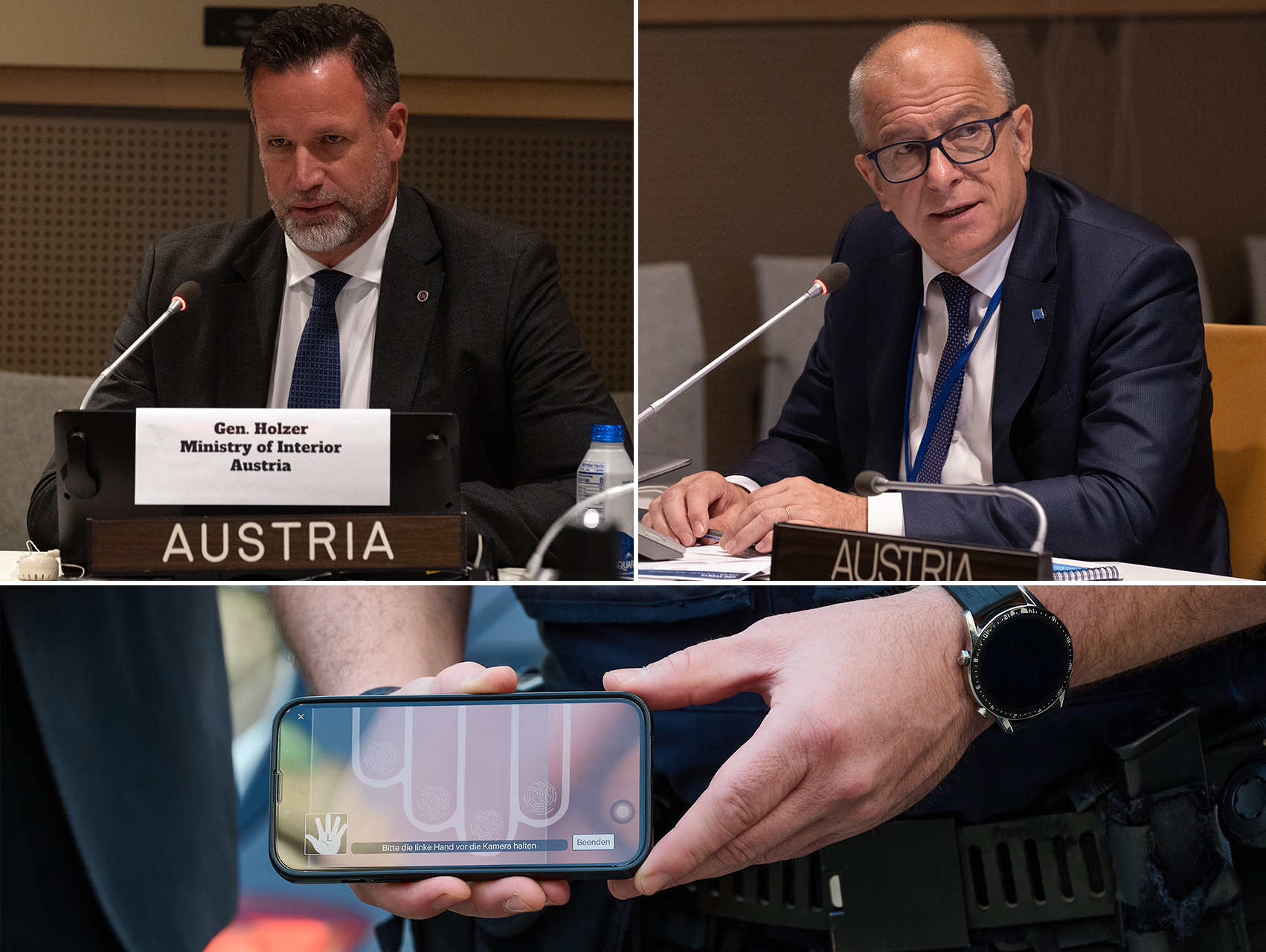
In future, the Austrian police will be using the innovative ‘BioCapture’ technology nationwide to verify identities. Mobile fingerprint scanners enable police officers to identify individuals on the spot within a matter of minutes. The new technology significantly speeds up immigration checks and search operations in particular, and represents a further important step towards modernising police work.
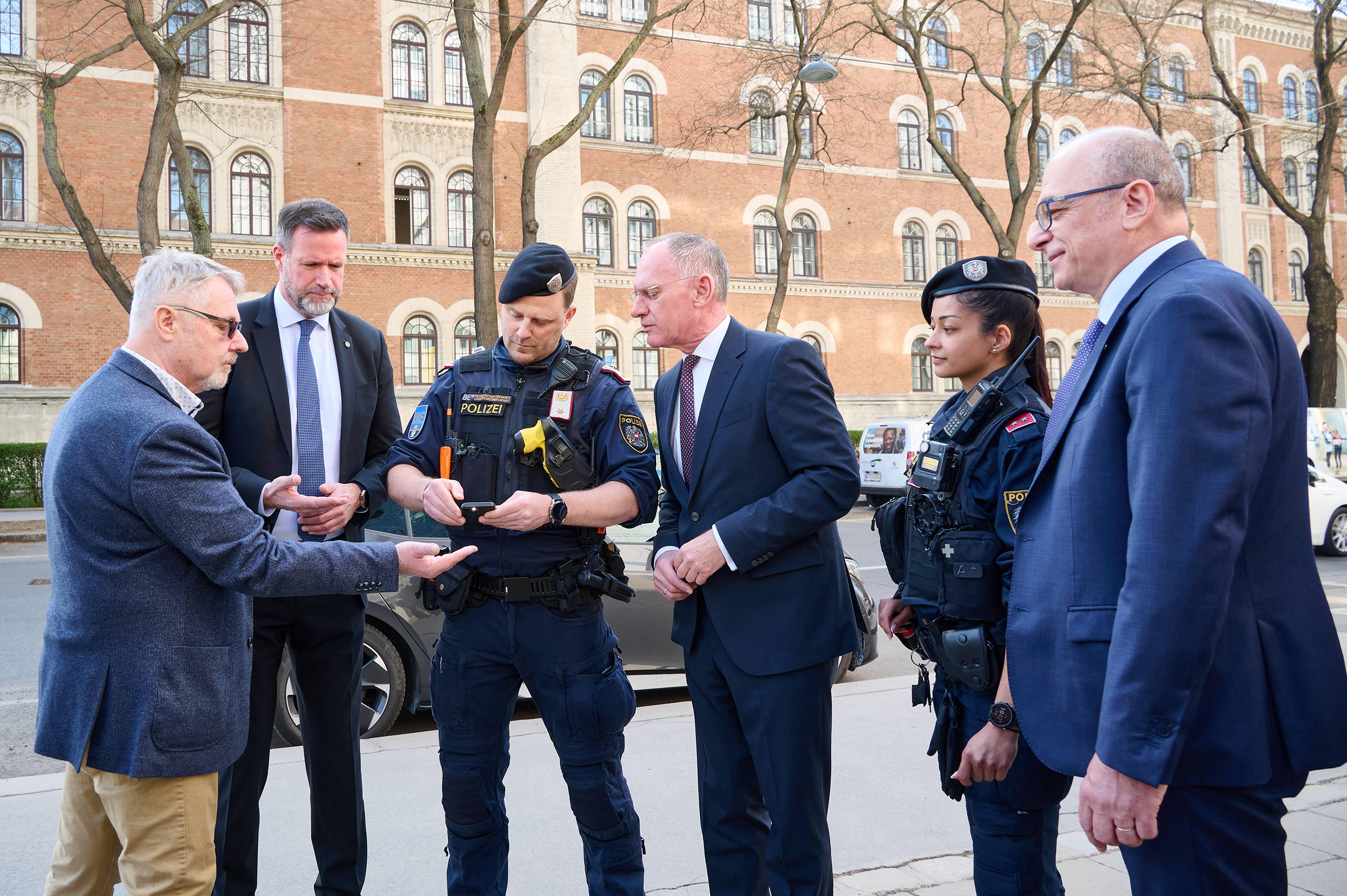
On 3 November 2026, Interior Minister Gerhard Karner and the Deputy Chief of the Vienna Provincial Police, Dieter Csefan, provided information on the nationwide roll-out of the technology and its practical applications during a site visit to immigration checks at Vienna’s Westbahnhof station.
“With this new technology, the search for criminals will become even more modern, faster and more efficient. Austria is taking on an international pioneering role in the development and application of mobile fingerprint scanning. We have thus achieved a significant technological advance that makes the work of our police officers considerably easier whilst further enhancing security in Austria,” emphasised Interior Minister Gerhard Karner.
Fast, efficient and secure on-site checks
With ‘BioCapture’, fingerprints can be matched against existing databases within a few minutes. This enables wanted individuals to be identified and their lawful residence to be verified immediately on the spot. This saves time, reduces administrative burden and, in many cases, eliminates the need to transport individuals subject to checks to a police station. The fingerprints taken are used exclusively for matching purposes and are subsequently deleted.
Since August 2025, the technology has been in use by selected police units, including the immigration police. At the beginning of March 2026, the Vienna Rapid Response Unit was also incorporated into the trial. During the trial period, which lasted around one year, the approximately 600 police officers carried out 2,514 searches using the fingerprint scanner.
Nationwide, the application went into full operation at the end of October 2026. Since then, all police officers have been able to access and use the application on their work mobile phones (after completing training). The development was funded as part of a KIRAS security research project.
Data matching with existing registers
Under certain conditions, offenders undergo ‘identification procedures’, which means that their fingerprints and personal data (as well as, for example, their DNA) are stored in a central register. Foreign nationals and asylum seekers are also subject to identification procedures under certain conditions, and their fingerprints are stored in a separate central database. During checks, officers scan fingerprints on the spot using their mobile phone camera and receive feedback via the app as to whether the fingerprints are already stored in a database and can be matched to a person.
International interest in Austrian technology
‘BioCapture’ was developed by the Federal Criminal Police Office in collaboration with the Austrian Institute of Technology (AIT) and other research partners. This Austrian innovation is also attracting considerable international interest. Integration with European biometric systems is planned from 2027. This is intended to provide access to a database of up to 400 million individuals and further strengthen cross-border police cooperation.
https://on.orf.at/video/14345837/16180683/polizei-scannt-fingerabdruecke-jetzt-mobil