

Microorganisms can break down certain pollutants in soil and groundwater. The European research projects MIBIREM and BIOSYSMO are investigating how such natural processes can be harnessed in a targeted manner and used reliably to remediate contaminated sites. At a joint meeting in Florence on 23 June 2026, the project partners brought together their findings to date. The AIT Bioresources team is responsible for the scientific coordination of MIBIREM.
Industry, mining, landfills and the former use of certain chemicals have left numerous contaminated sites across Europe. Problematic substances include petroleum hydrocarbons, cyanides and hexachlorocyclohexane, or HCH for short. This group of substances includes lindane, which was used as an insecticide for many years and is difficult to break down in the environment.
Conventional remediation methods are often technically complex. Contaminated soil, for example, has to be excavated, transported and treated, or groundwater has to be pumped out and purified over an extended period. This entails costs, disrupts the affected sites and can cause additional greenhouse gas emissions.
Bioremediation, by contrast, makes use of the metabolic processes of microorganisms. These can break down certain pollutants and convert them into less problematic compounds. However, the effectiveness of such a method depends on several factors: the composition of the microbial community, the type of contamination and the respective environmental conditions. A method that achieves good results at one site cannot therefore necessarily be transferred to another.
Complementary research across project boundaries
MIBIREM and BIOSYSMO examine these interrelationships from different, complementary perspectives. Among other areas, BIOSYSMO focuses on the design and modelling of biological remediation systems. These include plant–microbe approaches, microbial communities and bioelectrochemical systems. MIBIREM develops methods for identifying, cultivating and characterising suitable microorganisms and using them specifically to remediate contaminated soils and water.
In addition to the scientific results, the meeting in Florence focused on technology validation, field trials, regulatory requirements and the involvement of future users. Particular attention was paid to contamination with HCH and chlorinated ethenes.
The analyses conducted to date show that microbial communities with different compositions can develop similar capacities to break down pollutants. Whether they actually realise these capacities at a specific site, however, is largely determined by the conditions prevailing there.
“The collaboration shows that we can better contextualise the results of individual projects and make them usable in practice by bringing together microbiological data, cultures and technical knowledge across project boundaries,” explains Thomas Reichenauer, scientific coordinator of MIBIREM at AIT. “In biological remediation in particular, success depends on the interaction between the microorganisms present and the conditions at the site.”
More than 320 bacterial strains for research and application
The MIBIREM toolbox developed within the project now comprises more than 320 fully genome-sequenced bacterial strains. They were selected based on their potential suitability for breaking down petroleum hydrocarbons, HCH and cyanides. From 2027 onwards, the strains are also expected to be made available for further research and application projects.
The collection is complemented by molecular biological monitoring methods. These can be used to investigate which microorganisms are present at a contaminated site, what degradation capacities can be expected from them and how the microbial communities change during remediation.
With MiBiPret, the project is also developing a digital prediction tool for planning microbiome-based remediation measures. The first modules are already available. In future, the tool will bring together information on pollutants, microorganisms and site conditions, thereby supporting the selection of suitable methods.
Another result of the collaboration is a joint scientific publication in the Journal of Hazardous Materials. In it, the researchers report on 64 enriched bacterial cultures capable of breaking down HCH. They also identified a previously unknown degradation pathway that operates independently of the already known lin metabolic pathway.
At the same time, partners from both projects are exchanging specialised microbial cultures and investigating their use in bioelectrochemical systems for treating contaminated groundwater. Combining microbial degradation processes with technical methods opens up additional possibilities for controlling biological remediation more effectively.
Testing under real-world conditions
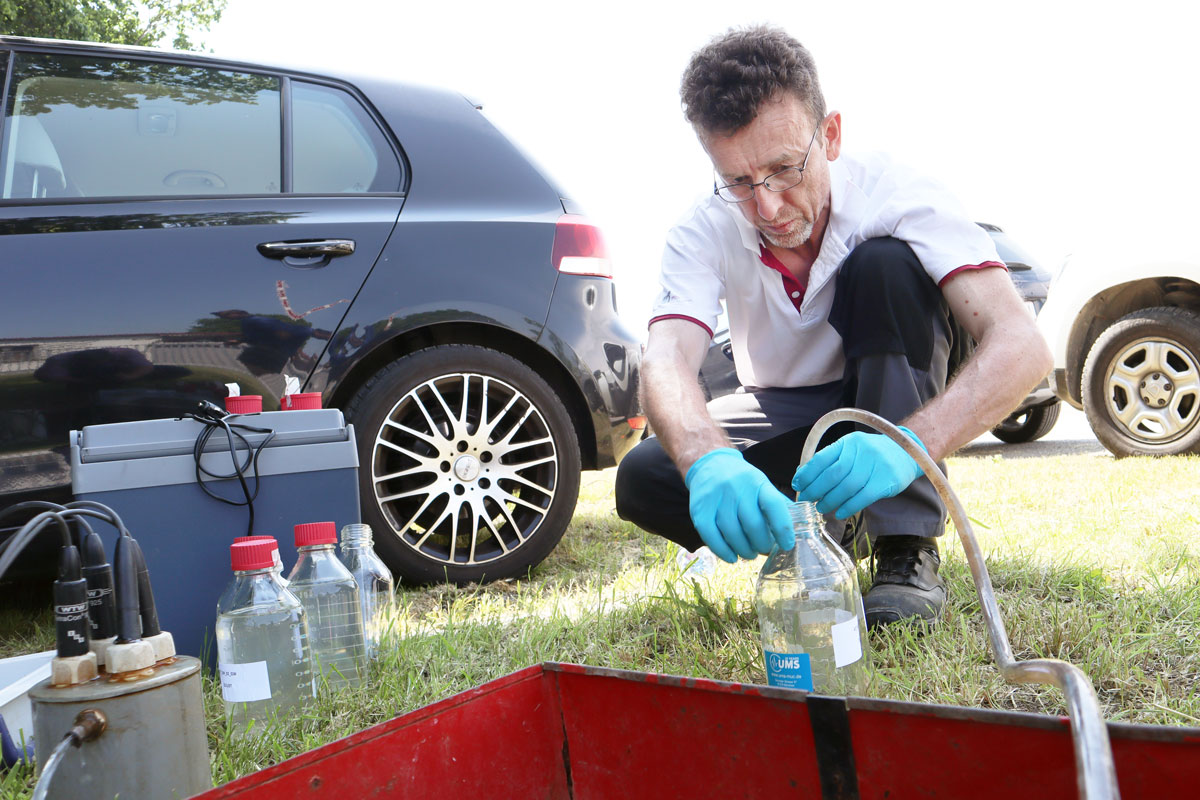
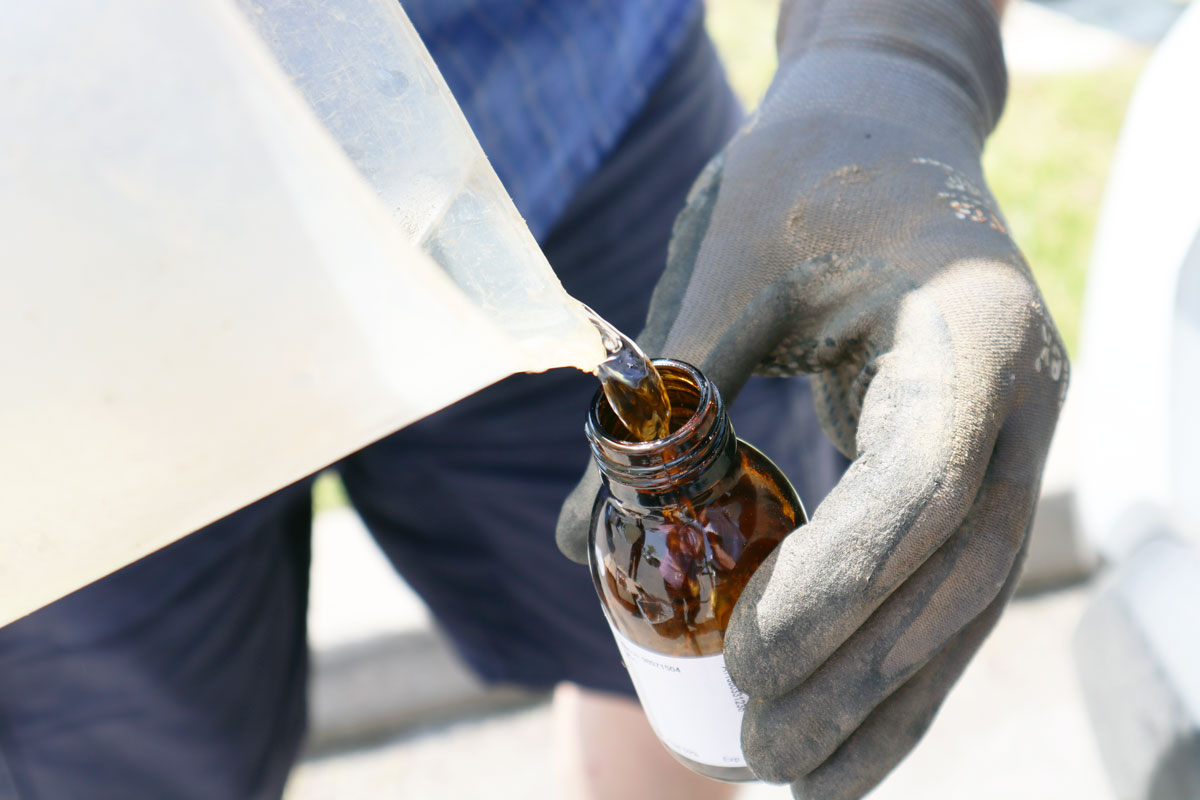
The next steps will increasingly focus on practical application. MIBIREM is already testing selected microorganisms and methods under real-world conditions at European pilot sites. In addition to the achievable reduction in pollutants, the stability and transferability of the methods and their environmental footprint are also being investigated.
The collaboration with BIOSYSMO will continue within the European ALL4BIOREM project cluster. The aim is to develop common methods and quality criteria and to prepare the research findings in such a way that authorities, site operators and remediation companies can make informed assessments of microbiome-based approaches for specific remediation projects. This should make biological remediation methods more predictable, easier to compare and more accessible for practical application.
Further information:
MIBIREM-Projektwebsite
Projektbeschreibung der Europäischen Kommission
Presseinformation von MIBIREM und BIOSYSMO