


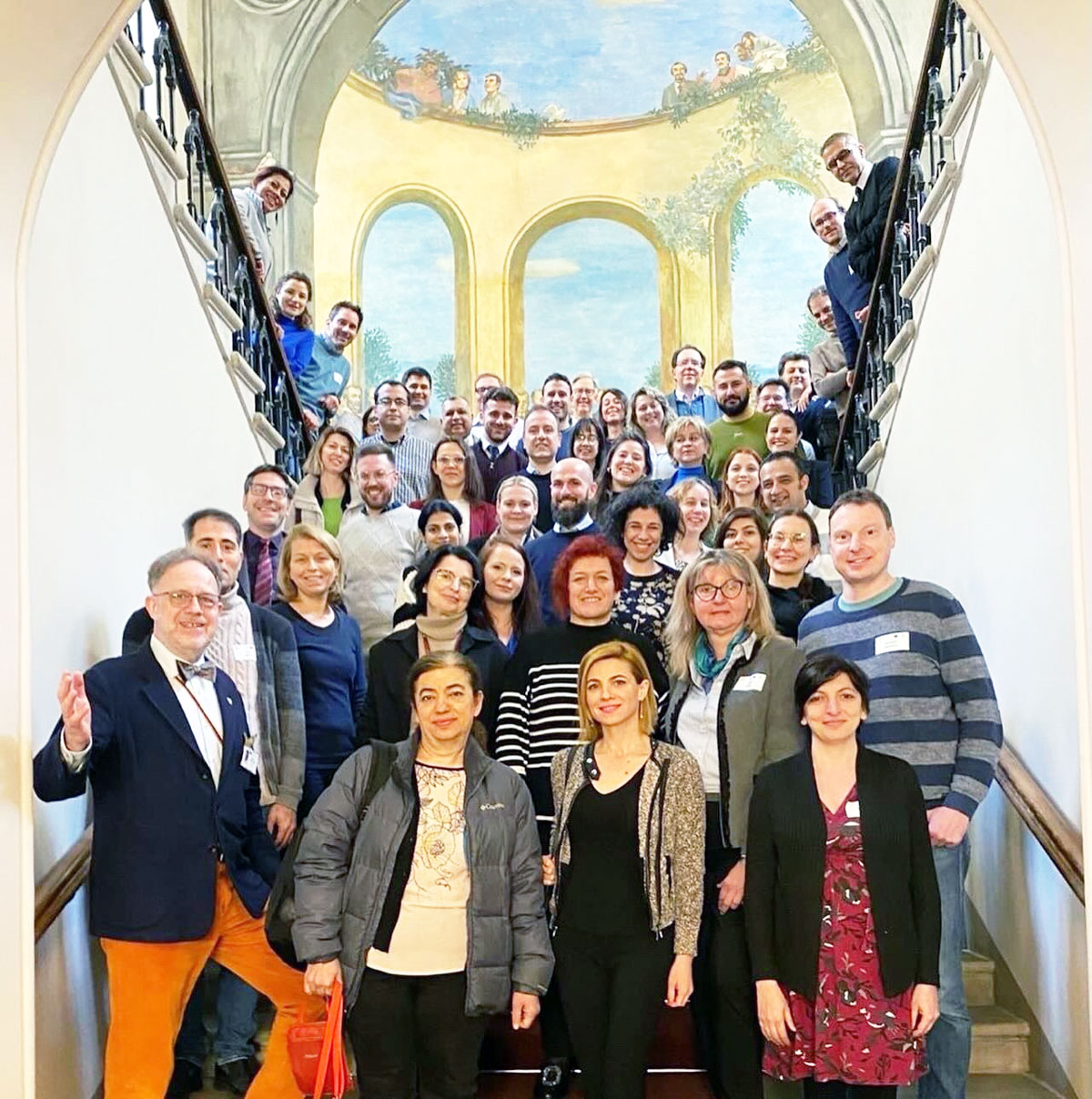
The Austrian Research Promotion Agency FFG presents the European research network VascAgeNet in a recent Success Story as an example of the long-term impact of a COST Action. COST Actions are EU-funded research networks that bring together experts from different countries and support exchange, the joint development of innovations and the preparation of further research projects. The “Network for Research in Vascular Ageing”, which ran from 2019 to 2024, brought together experts from research, medicine and industry to further develop methods for studying vascular ageing. The collaboration resulted in several European research projects in which AIT is also involved.
Cardiovascular diseases are among the most common causes of illness and premature death worldwide. One important research approach is therefore the concept of vascular age. It describes the condition of the blood vessels and can differ from a person’s biological age. Arterial stiffness plays a central role in this context. As stiffness increases, the arteries lose some of their ability to absorb pressure fluctuations in the blood flow. It is therefore considered an important component of vascular ageing and a relevant risk factor for cardiovascular diseases.
However, several obstacles remain in translating scientific findings into clinical practice: different and sometimes complex measurement methods, a lack of validation for specific clinical applications, fragmented expertise and a limited number of studies that directly compare different methods and treatment approaches.
Connecting European expertise
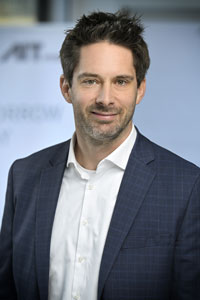
This is where the COST Action VascAgeNet came in. COST stands for “European Cooperation in Science and Technology”. VascAgeNet brought together experts from numerous European countries. AIT contributed its expertise in non-invasive pulse wave analysis in particular. AIT expert Christopher C. Mayer led the COST Action as Chair, while Bernhard Hametner was responsible for one of the working groups.
Together, the participants worked to further develop methods for assessing vascular age and make them more comparable. Knowledge and methods were harmonised and shared through Training Schools for early-career researchers, webinars, animations and information materials. In addition to scientific exchange, collaboration with industry also played an important role. “The value of a COST Action is not only reflected in the results achieved during its lifetime. It creates new networks from which joint methods, publications and new research projects can emerge,” says Christopher C. Mayer, AIT Center for Health and Bioresources, Chair of the COST Action.
New projects emerge from a network
The COST Action enabled the participants to learn about one another’s expertise, develop joint research questions and identify suitable partners for further initiatives. Many of the contacts established continued beyond the end of VascAgeNet. Projects that emerged from the network include the Horizon Europe project VITAL, the Eurostars projects NO-FUSS, AIVAS and PICTURE, and the TOGETHER project, funded under the European Partnership on Transforming Health and Care Systems. A substantial proportion of the members of these project consortia come from the VascAgeNet network. Further joint project proposals were also submitted, including ESCORT.
A concrete result was achieved in the now completed NO-FUSS project. An extension to the ARCSolver software (https://arcsolver.net/) was developed, enabling an additional measurement modality for the existing algorithms. These extensions were certified as a medical device. The project demonstrates how methodological collaboration within a research network can result in an application suitable for clinical use. In addition to the follow-up projects, VascAgeNet and the collaborations that developed from it also resulted in several scientific publications.
Collaboration beyond the project duration
Structures were also created to ensure the institutional continuation of the network. Parts of the VascAgeNet working groups were transferred to the Artery Society after the COST Action ended. The working group leaders, Christopher C. Mayer and other members of the former VascAgeNet Core Group serve on the Executive Committee of the professional society.
The Success Story published by the FFG thus highlights an impact that cannot be measured solely by the original project duration. VascAgeNet pooled fragmented expertise, supported the coordination of scientific methods and created trust among potential project partners. Christopher C. Mayer emphasises: “In addition to the institutional opportunities, the COST Action also offered all participants a major opportunity for personal development, whether in terms of greater visibility within the scientific community or the development of management and social skills.” This provided the basis for new research initiatives and lasting European cooperation structures.
FFG Success Story: https://www.ffg.at/success-stories/von-der-cost-action-zu-neuen-forschungsprojekten
COST Action - VascAgeNet: https://www.cost.eu/actions/CA18216/