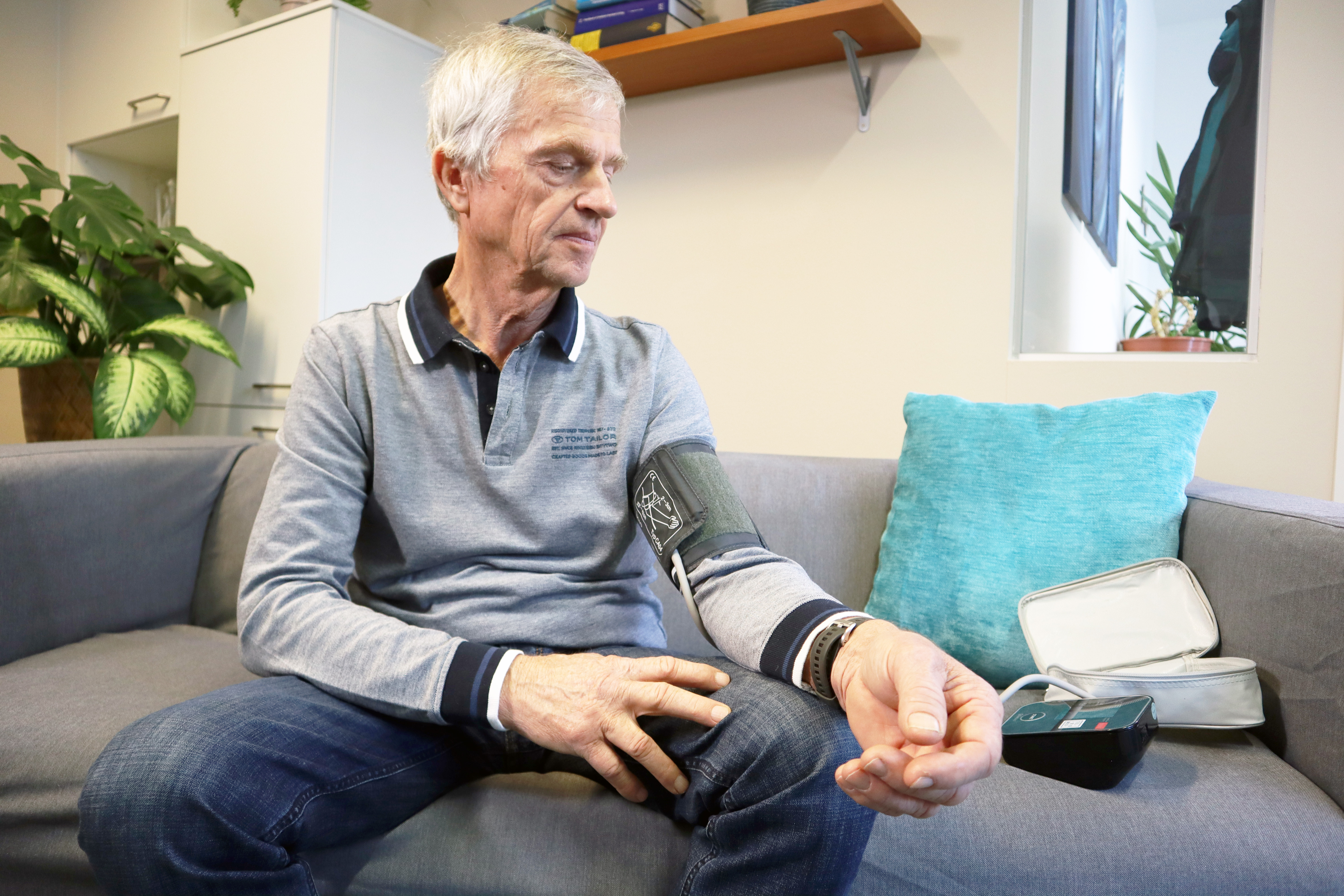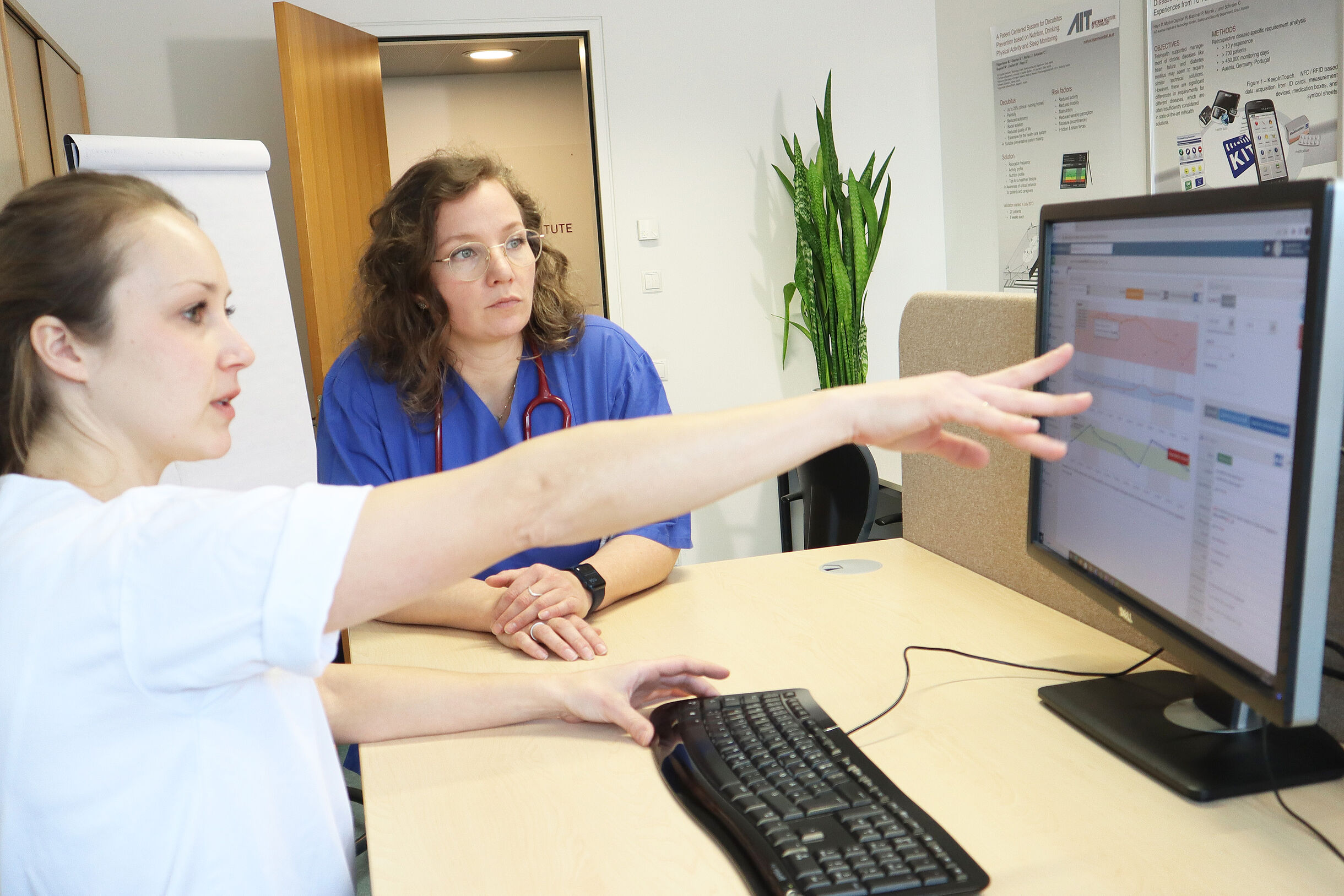
Modern healthcare faces the challenge of providing patients with high-quality care regardless of location and time. Continuous care is essential, especially for chronic illnesses, in order to improve adherence to treatment goals and reduce hospital stays. Digital solutions offer great potential here, but there has long been a lack of a standardised, modular platform that can cover different clinical diagnosis and is flexibly adaptable.
With the telehealth platform, the AIT has developed an innovative solution that enables efficient and patient-centred healthcare. It facilitates communication between patients and medical professionals and promotes better adherence to treatment through targeted interventions. The platform has proven particularly successful in the HerzMobil Tirol programme, which provides telemedical support for patients with heart failure. A study from 2021 showed impressive results: a 65 percent relative risk reduction for death within twelve months and a 39 percent reduction in hospital readmissions within six months.
The AIT spin-off Telbiomed has further developed the platform – with funding from the Austrian Research Promotion Agency (FFG) – and offers modular applications for various chronic diseases such as diabetes, heart failure, hypertension and so on. Improved care leads to savings in the healthcare system through reduced hospital stays. From a social perspective, the platform enables efficient medical care close to home, thereby improving the quality of life of many people. The solution has also been widely recognised scientifically. The AIT Digital Health team organises the annual dHealth conference, which serves as a central platform for the Austrian digital health community, and has already received the prestigious Living Standards Award from Austrian Standards twice.
For further development, there is close cooperation with national strategic partners, for example in Tyrol and Styria, as well as longstanding collaboration with organisations such as the Insurance Company for Public Employees, Railways and Mining (Versicherungsanstalt öffentlich Bediensteter, Eisenbahnen und Bergbau, BVAEB). International partnerships with institutions such as the Charité in Berlin and the UNSW in Sydney have also contributed to the further development of the platform and opened up new potential applications. The continuous expansion of the technology to other clinical diagnosis and applications, for example in telerehabilitation, is a central component of future development. The platform proved its adaptability during the COVID-19 pandemic in particular, when it was adapted at short notice for home quarantine and a digital health diary for medical staff. This shows its enormous potential for digital and sustainable healthcare.