With many years of experience in research and innovation, the LKR Light Metal Competence Center in Ranshofen is a leader in the development of high-quality light metal alloys, their sustainable and energy-efficient processing, and the development of functionally integrated lightweight components and their recycling.
Aluminum has been produced very successfully in Ranshofen, a district of Braunau am Inn, for many decades. Research and development have also always been conducted at the Austria Metall AG (AMAG) site. The LKR Light Metal Competence Center Ranshofen draws on this tradition; it emerged in the mid-1990s from AMAG’s research department and, as a wholly owned subsidiary of the AIT Austrian Institute of Technology, is part of the Center for Transport Technologies.
To accommodate the institute’s growth, the LKR moved into a new building in the Braunau-Neukirchen Industrial Park in the summer of 2026, where all divisions of the LKR now operate from a single location. There, the LKR team—comprising approximately 70 people—has access to state-of-the-art research infrastructure, which creates optimal conditions for the further development of research activities—all with the goal of working on innovations for the lightweight construction of the future.

New Construction in Braunau-Neukirchen
Since the summer of 2026, all LKR teams have been working under one roof.
Forming Technology and Process Digitalization
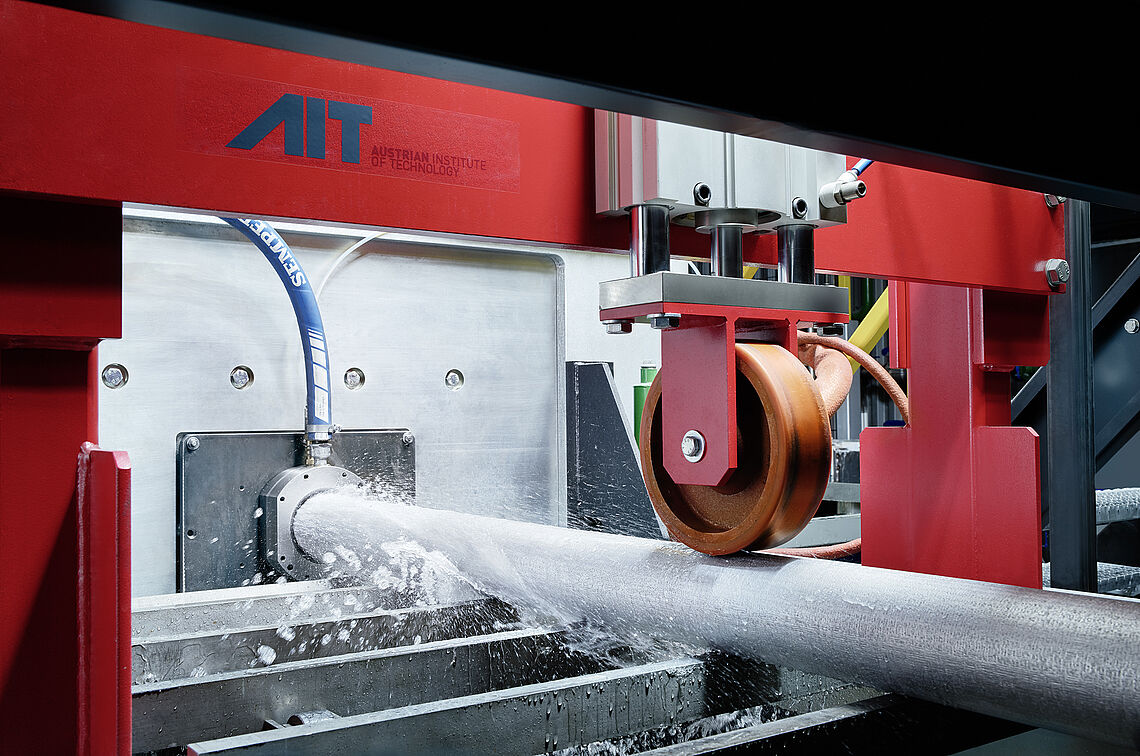
The “Advanced Forming Processes and Components” division focuses in particular on innovative solutions for the resource- and energy-efficient processing of light metals. The goals are, on the one hand, more efficient, stable, productive, and cost-effective forming processes and, on the other hand, the optimal use of modern materials. To address these challenges, the division maintains a highly specialized research infrastructure for processes such as extrusion, forging, and deep drawing on semi-industrial equipment, as well as for upstream heat treatment. This is complemented by material characterization, damage assessment, and numerical simulation of forming processes.
- A current project focuses on titanium, a highly interesting lightweight material. As part of the “Titania” project, the LKR has achieved a technological breakthrough in the forming of titanium sheets (Ti-6Al-4V): A novel deep-drawing process conducted below 500 °C enables significant energy and time savings. A corresponding patent is about to be granted.
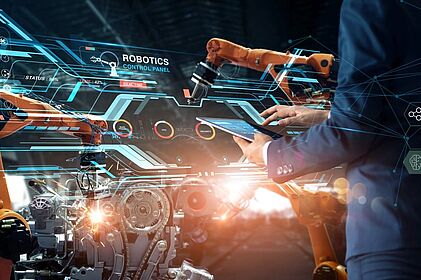
- The digitization of metallurgical processes is at the heart of the COMET project “ProMeTheus” (Production and processing of metals for high performance, energy efficiency, environmental protection, and sustainability). Under the leadership of the LKR, a broad-based consortium of research and industry partners is conducting research on the holistic integration of digital tools—such as automated image processing and hybrid modeling—to solve metallurgical challenges. The focus is on increasing the efficiency, sustainability, and robustness of processes in the metal and plastics processing industries.
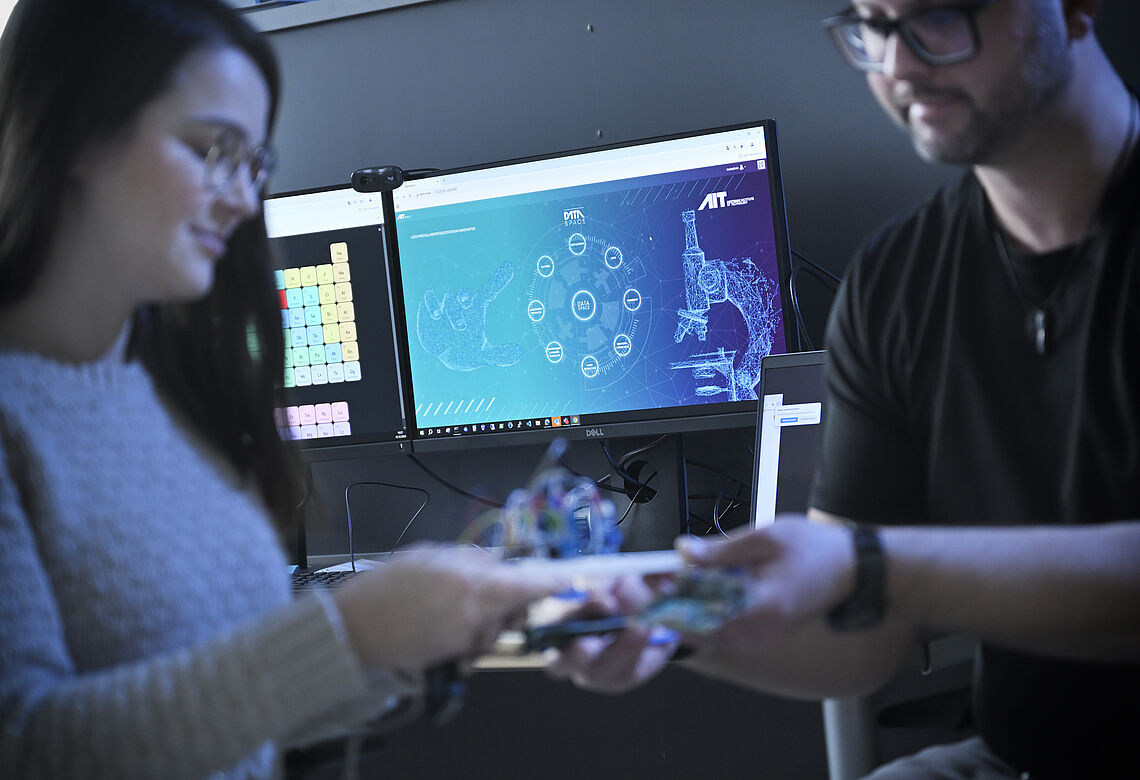
- The DATA BRATA system has already demonstrated the new possibilities that digitalization opens up. It is a kind of “digital sensory system for production”—a mobile data and AI platform that makes quality visible early on and enables measurable process efficiency. The modular system integrates data analysis and machine learning directly into industrial processes. As a Function-as-a-Service (FaaS) and Research-as-a-Service (RaaS), DATA BRATA is designed to enable small and medium-sized enterprises (SMEs) in particular to achieve data-driven improvements in quality and efficiency without significant implementation costs.

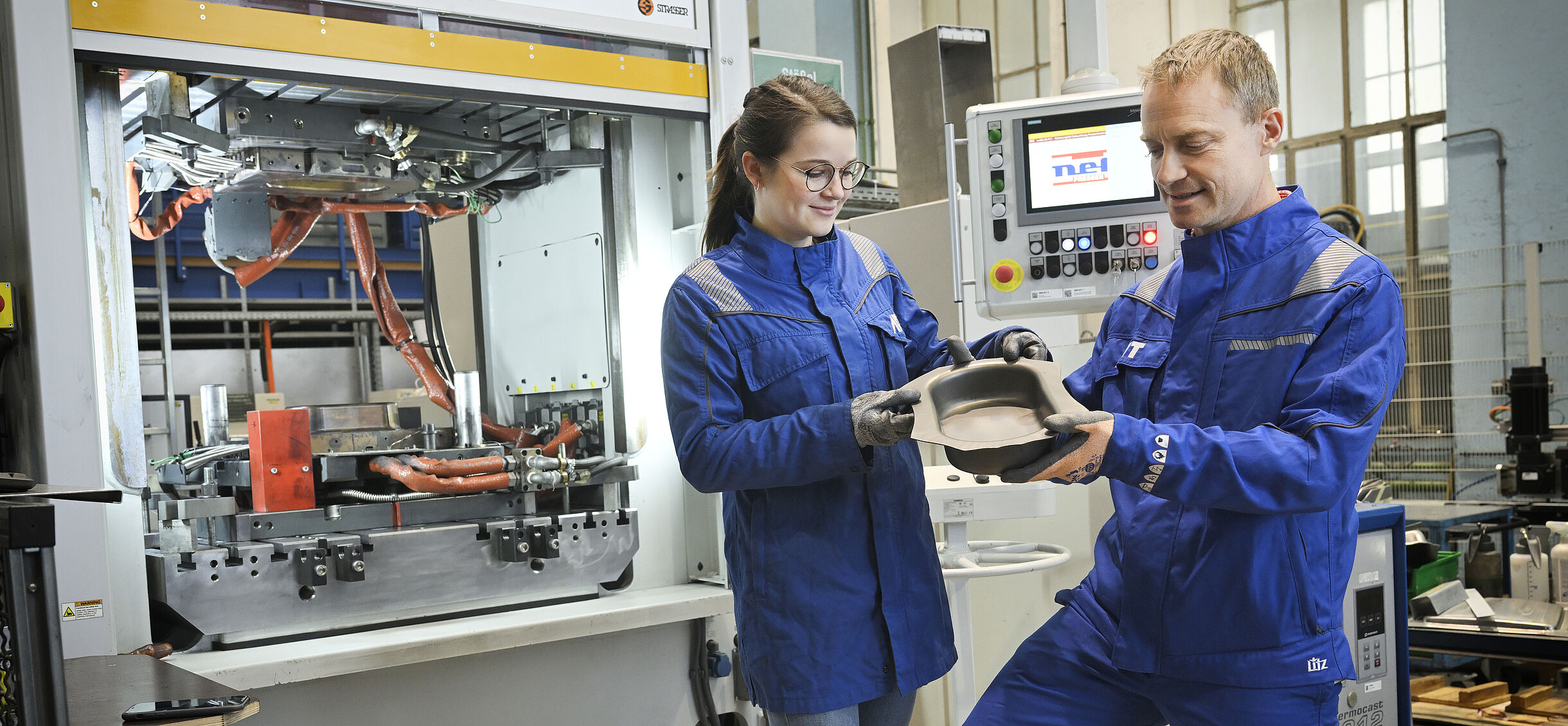
Deep drawing of titanium below 500 °C
In the Titania project, the LKR achieved a breakthrough in the forming of titanium sheets.
Casting Technologies
The research area “Casting Processes for High-Performance Materials” focuses on cost-effective casting processes for light metals. For over 25 years, the LKR has been conducting research on the development of new aluminum and magnesium alloys and their processing in various casting processes—such as continuous casting, die casting, and sand casting. In material and process development, every processing step—from the initial concept to the production-ready component—is examined to develop cost-effective solutions that meet high-quality standards. This ranges from application-oriented alloy development, through property characterization and metallographic analysis, to component development, process development (including simulation), and tooling development.
- One promising technology is so-called “semi-solid casting.” In this process, an aluminum alloy is not processed in a completely liquid state—as in conventional die casting—but rather in an intermediate state: partly solid, partly liquid—with a paste-like consistency. The lower temperature reduces turbulence during mold filling, resulting in improved casting quality and lower porosity. In addition, the process minimizes energy consumption and further reduces costs by lowering the thermal load on the dies.
- As part of the large-scale EU project RecAL (Recycling technologies for circular ALuminium), LKR researchers are working on innovative recycling technologies for aluminum as well as a digital platform for a circular aluminum economy in Europe. Aluminum recycling requires only five percent of the energy used in primary production. Since aluminum scrap is currently alloyed with a wide variety of elements that are practically impossible to separate from one another, current practices inevitably lead to downcycling and fewer usable raw materials. A digital cockpit, the RecAL Hub, is intended to connect suppliers, buyers, and technology service providers in the future, thereby enabling recycled material streams with significantly higher purity levels. In addition, alloys with higher tolerance for impurities are being developed without compromising their properties.
- A major step toward a circular economy in the automotive industry is the EU project Digi4Circular: data-driven simulation platforms support the entire process chain, from the selection of recycled materials through alloy development to component design. This allows recyclability to be taken into account as early as the initial development phase—without compromising on quality or safety. Depending on the composition of the scrap, suitable alloys are optimally utilized. And rapid life-cycle and cost analyses reveal both environmental and economic impacts. Central to this is the introduction of digital product passports, which document material flows along the value chain and ensure transparency and traceability.

Die-Cast Aluminum
From alloy design to production-ready components: every step of the manufacturing process is researched at the LKR.
Wire-Based Additive Manufacturing
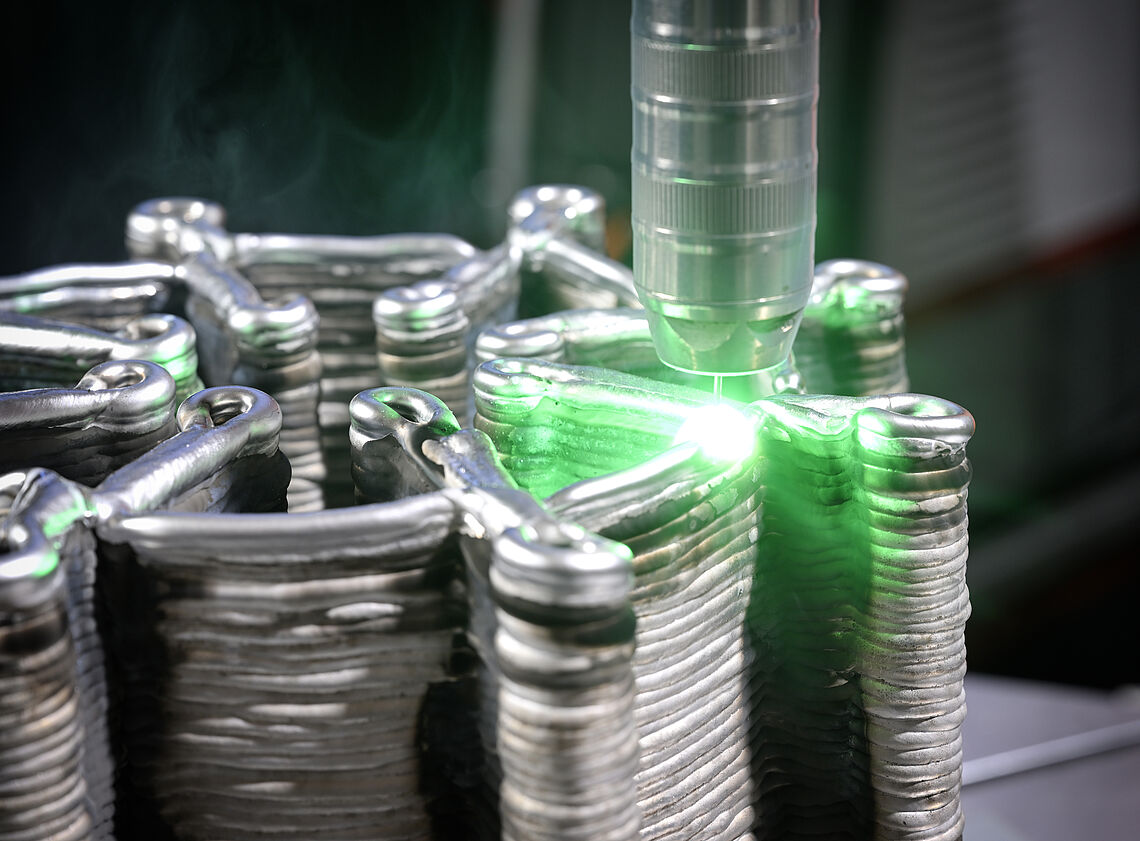
The LKR has recently taken on a leading international role in what is known as “wire-based additive manufacturing”—or WAM for short. This is a specialized technique for 3D printing with metals. In wire-based additive manufacturing, conventional standard welding equipment is adapted to enable the production of components through the direct, layer-by-layer deposition of metal from welding wires at comparatively high build rates.
- In the new WAM Prototyping Lab, large 3D components can be manufactured from welding wires based on metal alloys—such as aluminum and magnesium alloys—in a manner that is material- and energy-efficient, high-quality, and cost- and time-efficient. Both standard aluminum- and magnesium-based welding consumables and special wires manufactured in-house are processed.
- The “We3D” project, part of the Austrian COMET Competence Center Program (total budget: approximately 5.3 million euros), is advancing wire-based additive manufacturing in many ways. The goal is to further develop WAM technology for new applications across a wide range of industrial sectors—such as the automotive sector, aerospace, and mechanical engineering.
- One specific application involves lightweight aluminum tanks for liquid hydrogen in the aviation industry. Stainless steel is too heavy to be used as a tank material for this purpose—aluminum is a suitable structural material for reducing weight. In the “LH2-WAM-Tank” research project, critical components are being investigated and a flawless functional prototype is being produced. The goal is to demonstrate the potential of WAM, showcase the possibilities for functional integration within the tank, and achieve a significantly increased storage density for the LH2 tank.

WAM Prototyping Lab
Standard welding equipment, adapted for 3D printing of large metal components.
Process and Component Modeling
Simulations can help us understand processes and component behavior, thereby reducing or even eliminating the need for costly experiments. The expertise of LKR researchers in the field of “Numerical Simulations of Lightweight Components” ranges from application-oriented simulations to the development of new simulation methods and the exploration of fundamental approaches —always with a focus on and in coordination with the processes and components of end users.
- One example is the metaFacturing project, which aims to transform the production of metal parts through the complete digitization of the process chain. It aims to create more resilient production processes through optimized process parameters, to support staff in complex processes, and to reduce production costs and scrap by proactively avoiding components with specification deviations. At the heart of the project is a “digital twin” developed in collaboration with industry partners, which effectively utilizes process data to improve plant efficiency and product quality. By integrating all available data streams, metaFacturing promotes smart manufacturing processes and strengthens the competitiveness of its partners.
- The opt1mus project focuses on process optimization in aluminum continuous casting through digital assistance systems. Cyber-physical systems (CPS) can significantly improve the energy efficiency of these processes. Until now, finding the right process parameters for high-quality components has required many years of experience and time-consuming trials—but with digital twins of production facilities, these can be conducted virtually. This saves time and energy and avoids hazardous working conditions when testing new alloys or processes. At the same time, assistance systems support foundry workers by providing intelligent suggestions directly at the Human-Machine Interface (HMI), making the process simpler, more efficient, and ultimately better.

Simulation Meets Reality
A direct comparison of a simulated and an actual formed part on the deep-drawing press.
Cross-cutting topics: Alloy development and materials testing
In addition to these four research areas, there are two more areas that fall under the category of interdisciplinary topics:
In the field of alloy development, LKR teams are working on new aluminum, magnesium, and titanium alloys that meet the demands of rapid technological advancements in mobility. This involves, on the one hand, material properties such as strength, corrosion resistance, joinability, and crash behavior, and, on the other hand, the formability of the alloys through processes such as extrusion and deep drawing.
- One example is the development of fire-resistant magnesium alloys. Magnesium is even lighter than aluminum, but due to its tendency to oxidize and its high flammability, it was previously unsuitable or prohibited for many applications. In several research projects, researchers are working on alloys with particularly high oxidation resistance—with the goal of finding a general approach that allows all alloys to be improved through targeted modification of their chemical composition. As a result, flame-retardant alternatives to the classic casting alloys AZ91 and AM60 have already been found that meet current aviation regulations regarding fire resistance.
- Another focus at the LKR is on custom-designed metallic alloys for wire-based additive manufacturing (WAM). Although the process resembles welding, its characteristics differ significantly from conventional welding—particularly in terms of heat input, temperatures, exposure times, and cooling rates. Consequently, methodologies have been developed that enable process-specific screening of novel alloys for their processability while ensuring optimal mechanical properties. Based on this, promising alloy candidates can be selected.
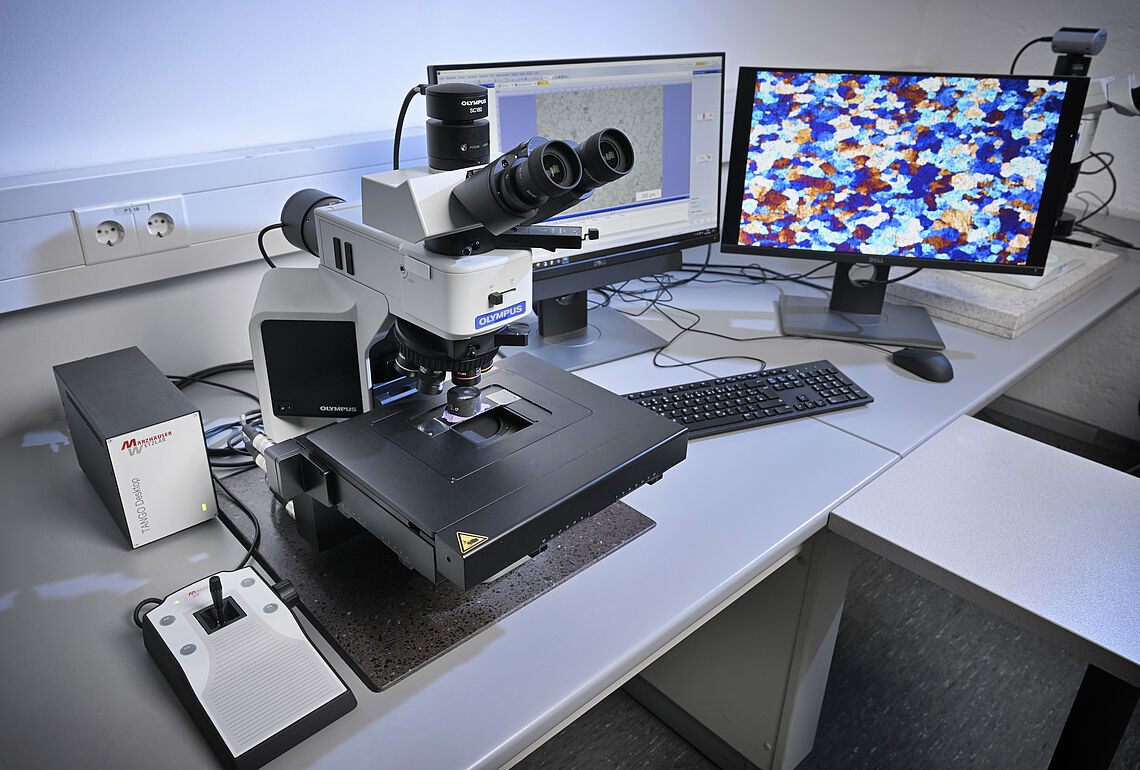
Furthermore, the LKR operates a materials testing facility: Using modern methods, it offers a comprehensive range of techniques for microstructural, material, and process characterization. This includes, in particular, mechanical material testing, differential scanning calorimetry (DSC), fatigue testing, macroscopic and microscopic microstructural analyses, field-emission scanning electron microscopy, and surface characterization.

Materials Testing Laboratory
Mechanical Materials Testing: Part of the full range of services offered at the LKR.