In 2015, the UN adopted 17 Sustainable Development Goals (SDGs) aimed at improving people’s lives and promoting sustainable development worldwide. In response, the European Union has set itself ambitious targets, including halving pesticide use and nutrient loss in soil by 2030, as well as expanding organic farming to 25 per cent. These targets are extremely ambitious – particularly in view of the threat to agricultural yields posed by plant diseases, novel pathogens and extreme weather events. Furthermore, the high energy requirements for the production of mineral fertilisers make alternative solutions indispensable.
AIT is developing innovative microbial applications based on the complex interactions between plants and their microbiome – the totality of all microorganisms (bacteria, fungi, archaea, viruses, etc.) living on and within plants. The aim is to strengthen plants’ resilience to stress factors, repel pests or better supply the plant with essential nutrients by introducing specific natural microorganisms.
In recent years, researchers at AIT have successfully identified such microbial strains and licensed them to international companies, including the market-proven biointrinsic™ W10 from Indigo Ag and the biopesticide strain KLA5-2 currently under development at RovensaNext. Beyond individual microbial strains, AIT offers comprehensive services to support companies in product development and registration.
Based on patented AIT innovations for incorporating microbial products into seeds, the spin-off company Ensemo GmbH was founded (https://www.ensemo.com/), which successfully launched its first product in 2024 (see also p. 57).

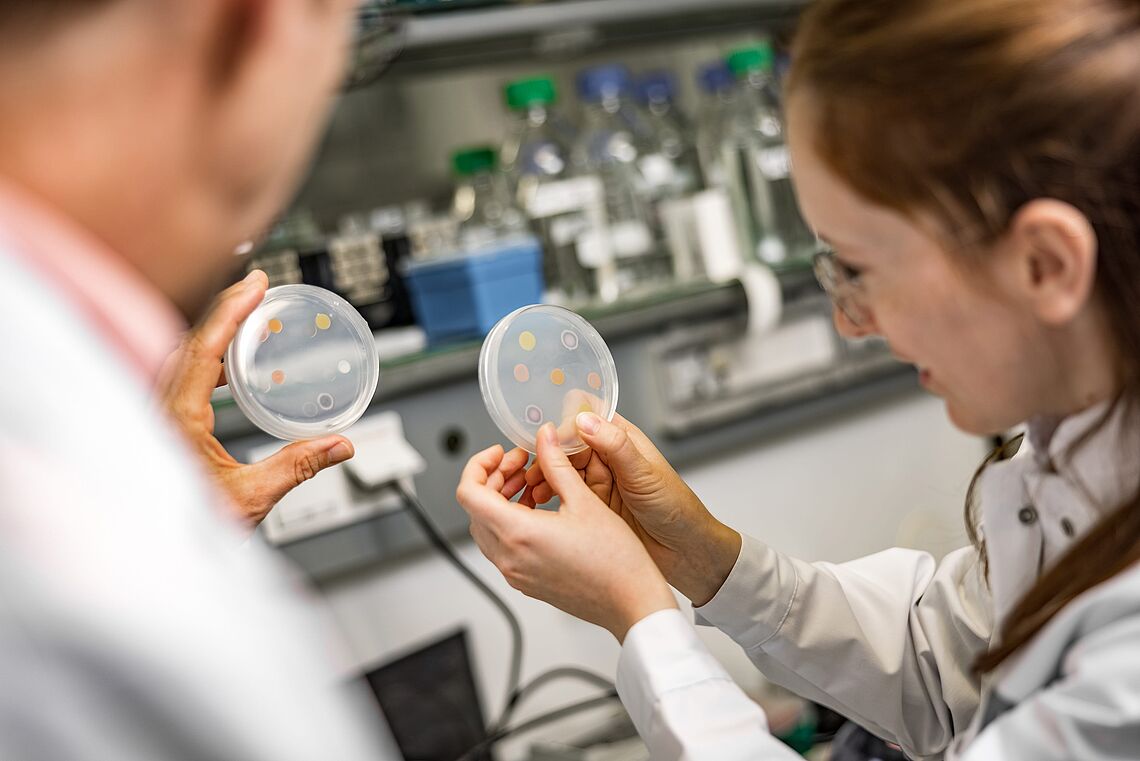
AIT researchers are investigating the interactions between plants and microorganisms and applying this knowledge in a targeted manner.