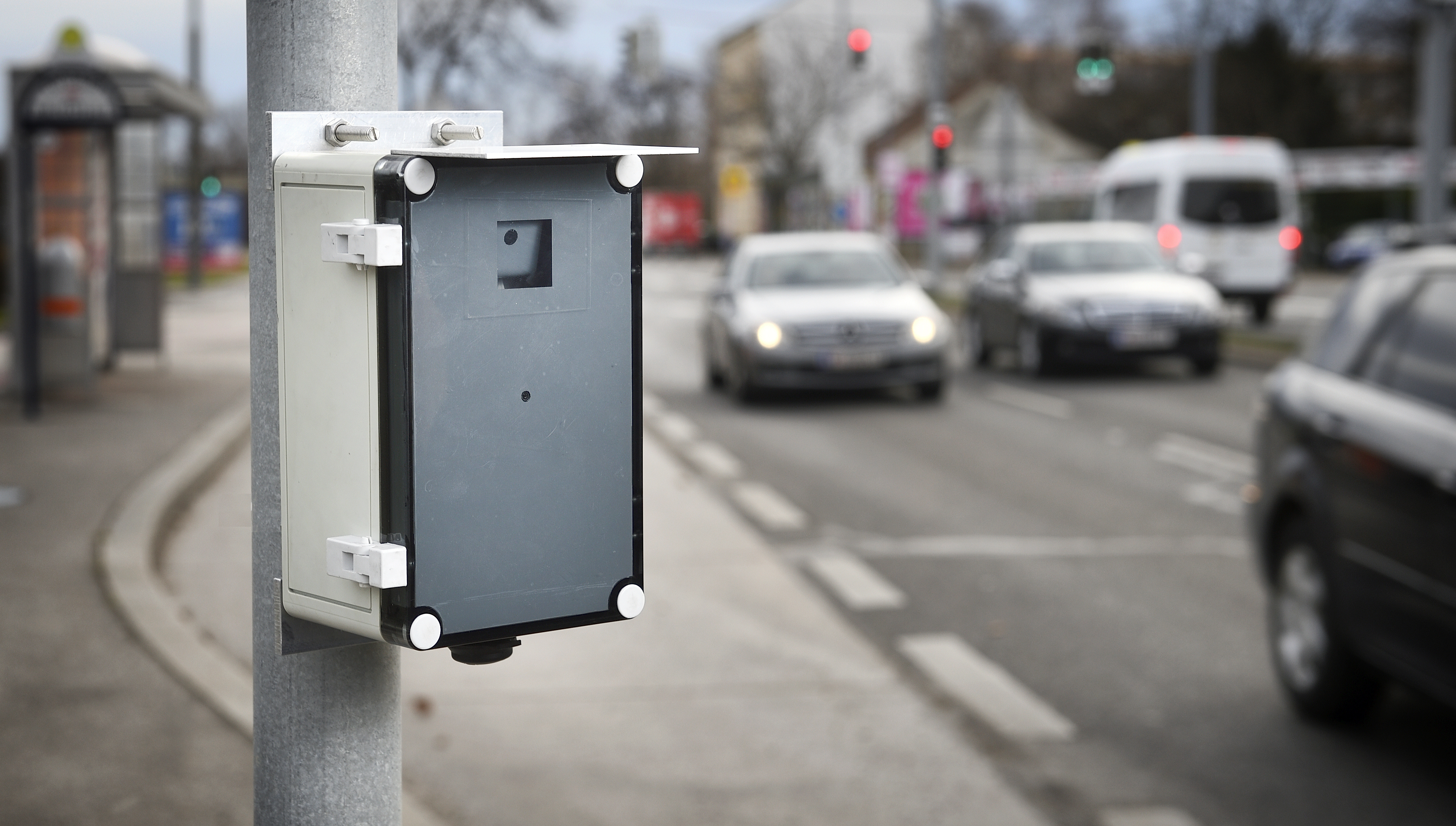
Road safety through precise analysis of risks and conflicts
Measures to increase road safety or to optimise traffic behavior are often only taken after accidents have already occurred. The main reason for this is that the risk of accidents on specific road sections is difficult to quantify in advance. While serious traffic accidents are statistically relatively rare, critical traffic situations such as near-miss accidents or risky driving manoeuvres occur far more frequently and serve as a clear indicator of an increased accident risk.
The Mobility Observation Box (MOB) is an innovative, video-based traffic monitoring system that enables objective conflict and behaviour analyses. The MOB replaces previous manual and subjective surveys with precise, continuous observation of traffic behaviour. Thanks to its compact design and battery operation, it is flexible in use and can collect high-resolution traffic data anonymously for up to ten days. Automatically classified pedestrian and vehicle interactions can be analysed over defined periods of time without affecting traffic flow.
Trajectories and road safety indicators are generated from the video data using artificial intelligence. The privacy of road users remains protected at all times. All processing is carried out in strict compliance with data protection regulations, the image data is only stored temporarily in a secure area of the AIT network and the sensor information is encrypted throughout.
The versatility of the MOB has already been successfully trialled in various projects. For example, the system has been used at several school locations in Austria to identify and assess high-risk traffic situations. The findings were discussed with schools. Targeted measures to improve road safety in front of schools were recommended to cities and municipalities. In this context, the ÖAMTC emphasises: “An apparently quiet location does not mean that it is safe, especially when it comes to children!”
In addition, the MOB was used in Austria, Germany and Switzerland for comprehensive interaction analyses with a focus on e-scooters. The data obtained is incorporated into guidelines and legal regulations, which are discussed, for example, in the Austrian Road Safety Advisory Board of the Federal Ministry for Innovation, Mobility and Infrastructure. The system also helps to optimise traffic lights by analysing traffic flows in order to reduce traffic jams and the associated economic losses and environmental pollution. This combination of traffic data collection and safety assessment was successfully applied for the first time in Vienna.
The MOB technology has been honoured with several international awards. These included the DEKRA Award 2021 in the “Road Safety” category, the Ö3 Verkehrsaward 2022 in the “Idea of the Year” category and the European Excellence in Road Safety Award 2023 from the European Commission in the “Data” category. In addition to its use in research and road safety, the MOB will increasingly be used to analyse internal traffic flows in the future, for example to evaluate occupational safety on company premises. Further development for use in poor lighting conditions, for example in tunnels or at night, is currently being planned.