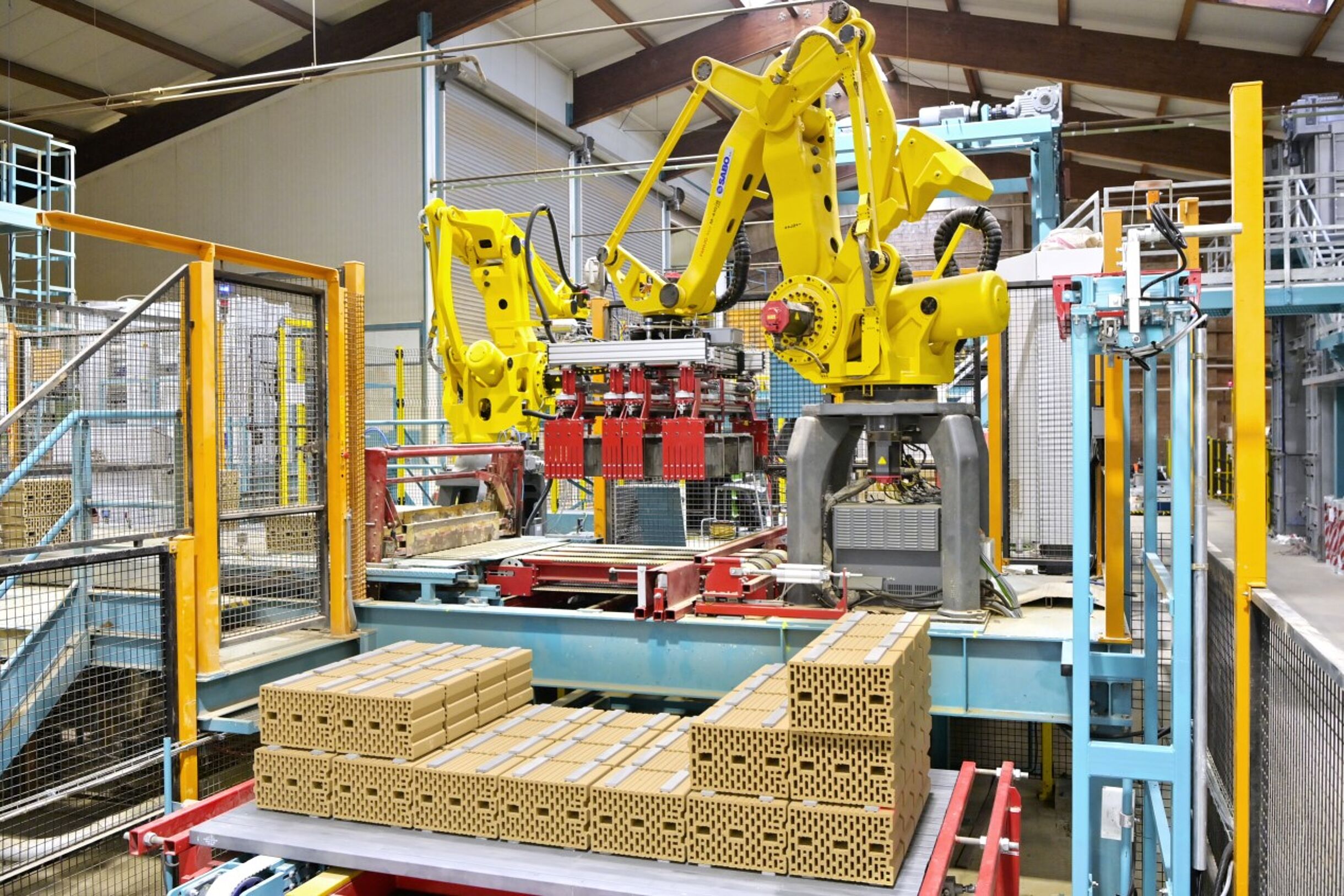
A revolution for the building materials industry
The brick and tile industry faces the challenge of drastically re ducing its high CO2 emissions in order to fulfil increasing environ mental requirements and remain competitive in the long term. Gas-fired high-temperature kilns and the process-related emis- sions caused by chemical reactions during production are particu larly energy- and CO2-intensive. In view of stricter climate targets and rising energy costs, the pressure on the industry to develop sustainable alternatives is growing.
The GreenBricks project, funded by the Climate and Energy Fund as part of the NEFI innovation network, is the first to realise a concept for virtually CO2-neutral brick production. The core of the innovation is the electrification of the production process using the world‘s largest tunnel kiln powered purely by green electricity. This is supplemented by CO2-neutral clay mixtures and optimised waste heat utilisation. Digital process control and heat pump tech nology have significantly increased energy efficiency. As a result, CO2 emissions can be reduced by 90% and energy consumption by 30% – a decisive advantage for the industry in times of volatile energy prices.
The industrial production of virtually CO2-neutral bricks opens up new market segments and enables brick manufacturers to prepare for future environmental regulations at an early stage. Construction companies that rely on sustainable building materials benefit from increasing demand and can secure their competitiveness in the long term. The technology also contributes to the qualification of skilled workers in the industry, as new production processes and digital control systems are integrated.
The scientific dimension of the project is reflected in the close collaboration with research institutions and industrial partners. Two master‘s theses and one dissertation have already been successfully completed as part of the GreenBricks project. The knowledge gained from this is directly incorporated into the fur ther development of sustainable production methods and helps to adapt innovative solutions for other energy-intensive industries.
The success of the project has a signalling effect for the entire industry: the practical demonstration operation at the Wienerberger site in Uttendorf will proof the scalability of the concept so that it can be transferred to other production sites and other energy- intensive industries such as the refractory industry.