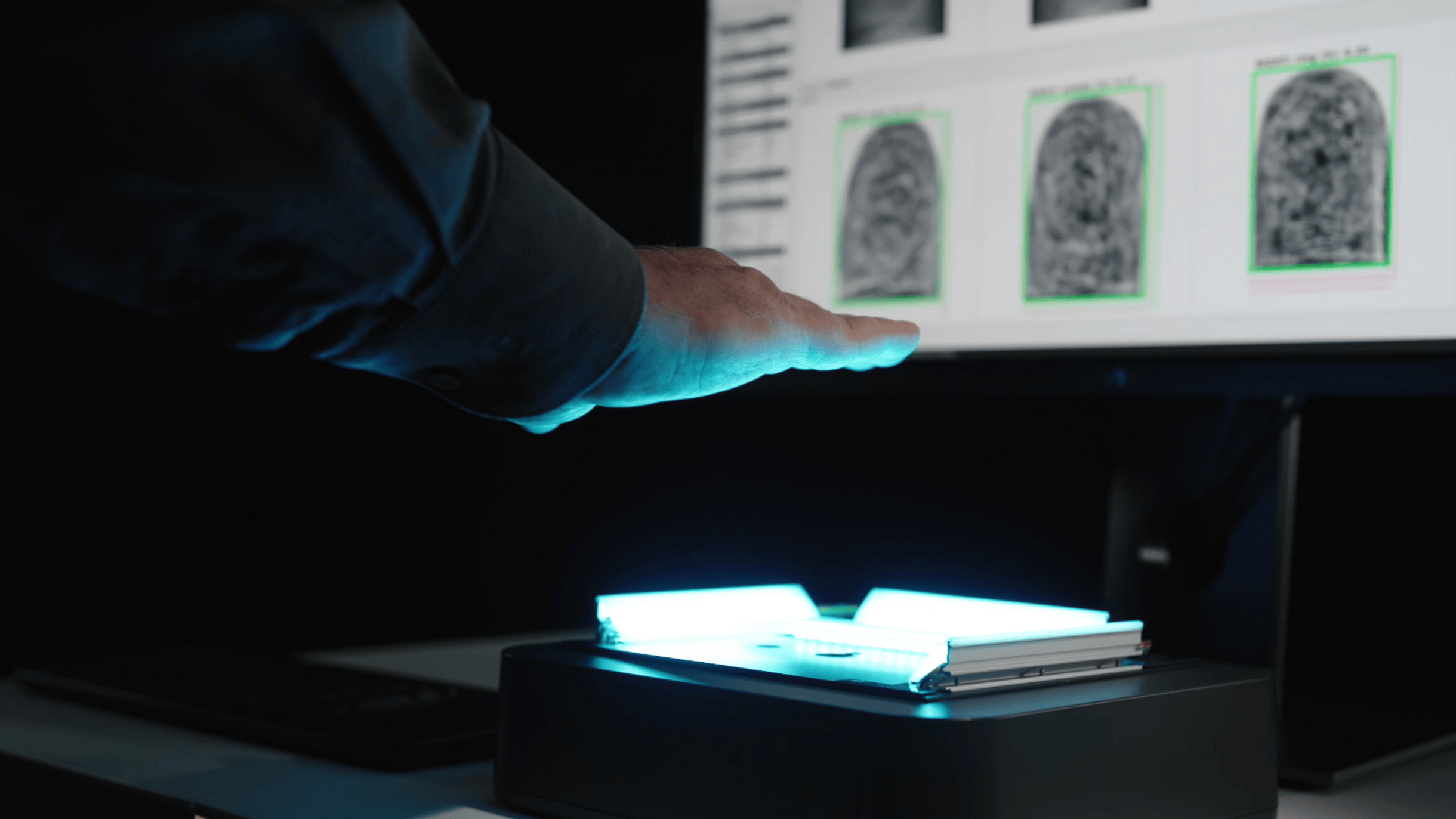
Traditional biometric systems, such as contact-based fingerprint sensors, are increasingly reaching their limits, particularly in security-critical areas such as airports, border controls and public institutions. This is because contact-based systems are susceptible to tampering, are unhygienic and often not user-friendly. At the same time, there is a growing need for contactless, secure and data protection-compliant solutions that meet both user requirements and strict security standards. Both the EU and international organisations such as the United Nations (UN) support the establishment of secure system solutions and the responsible handling of sensitive biometric data.

A key aspect of the development is strict compliance with data protection regulations and legal requirements.
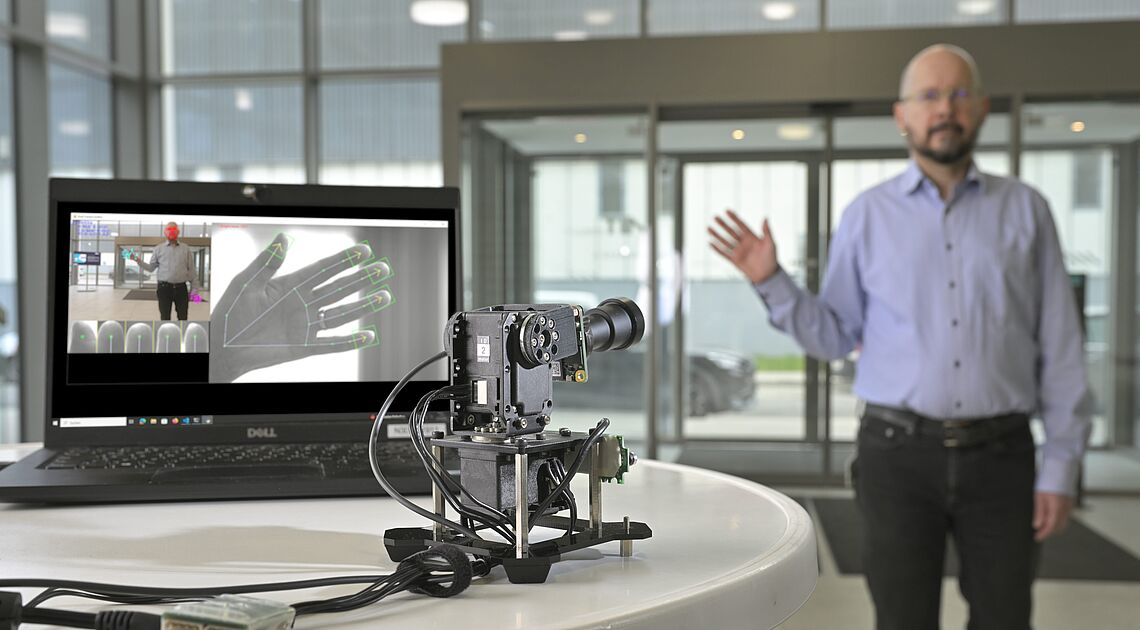
In recent years, AIT has established state-of-the-art biometric sensor technology for the contactless verification of digital identities. For example, BioCapture technology was developed and brought to market in collaboration with the Austrian start-up T3K. This enables police officers to scan the fingerprints of individuals contactlessly using their service smartphone, and to cross-reference them against various databases. This allows wanted criminals and individuals residing illegally to be clearly identified on the spot. There is no longer any need for additional devices or – as has been the norm until now – for detainees to be transported to police stations. Decisions on further police action can be taken immediately on the spot – quickly, efficiently and in compliance with the law. The roll-out across Austria, so that the application can be used by all police officers on their service mobile phones, is planned for completion by the end of 2026.
This international technological leadership is evidenced by several licence agreements with solution providers, including an international global provider of airport security systems. AIT has thus played a key role in the global market launch of this new technology. Furthermore, AIT provides certification expertise and tools to the German Federal Office for Information Security (BSI) and, through the global information platform www.responsible-biometrics.org, cooperates with the United Nations Office on Counter-Terrorism (UNOCT). AIT holds around 15 patents in the fields of sensor fusion and next-generation sensor technology.
Through this ‘Made in Austria’ technological development, AIT is making a significant contribution to the EU’s digital sovereignty and to the global security infrastructure.