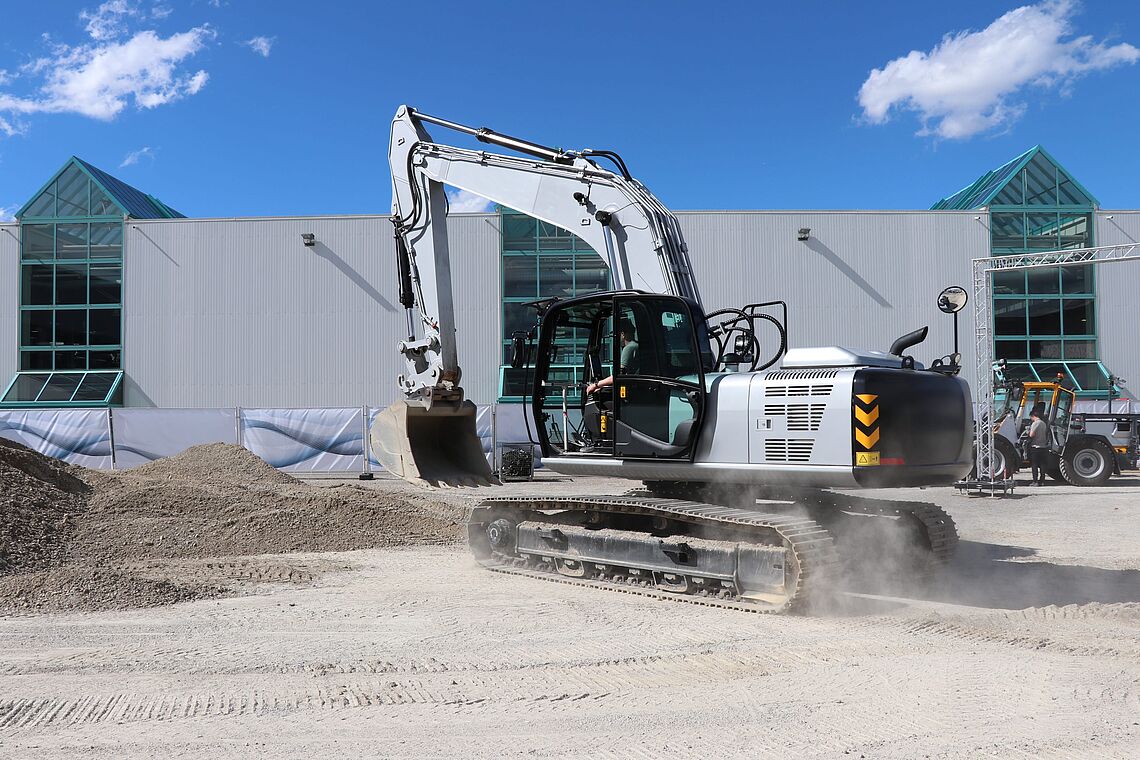
Hydraulic excavators are key machines in the construction industry – yet to this day they are still predominantly operated manually. The reason: hydraulic systems are highly complex, and machine behaviour can vary significantly depending on the load, ground conditions or operating mode. As a result, automation solutions have so far often been severely limited, machine-specific and associated with a high calibration effort.
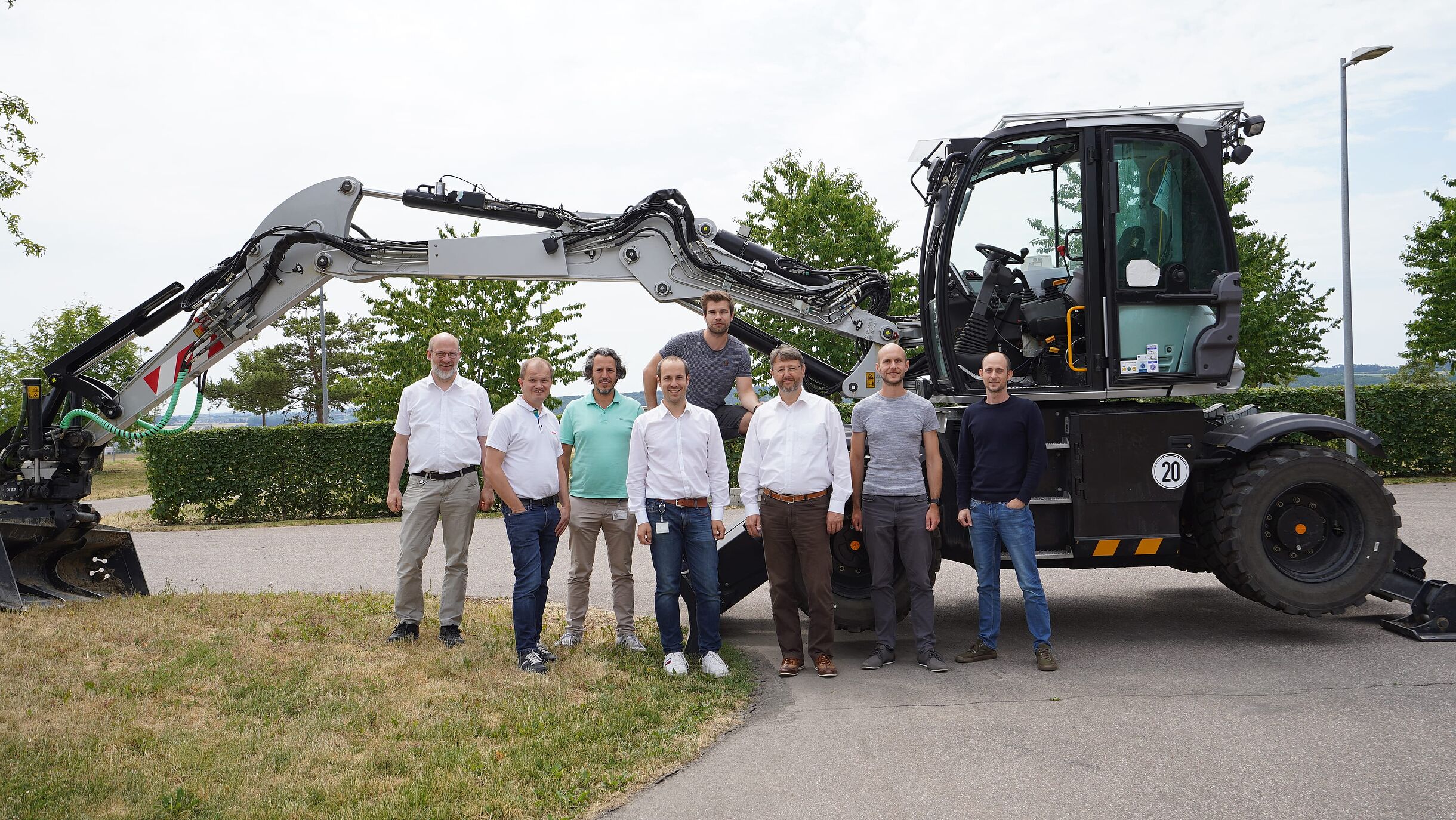
A joint research project by AIT, Bosch Rexroth AG and Robert Bosch GmbH addresses this challenge with a new approach to controlling hydraulic excavators. The aim is to develop standardised, machine-independent functional software for assistance and automation functions in hydraulic excavators.
The core idea is a uniform interface that ‘translates’ the manufacturer-specific characteristics of the hydraulics, such as the interaction of oil, pressure and valves, into a common format. This creates a kind of common language for motion commands, in which assistance systems and autonomous functions can access the same clearly defined interface. This abstraction is a decisive step towards scalability: autonomous functions and automated motion sequences can be more easily transferred to different machine types and, in the long term, deployed across entire machine fleets.
The technical foundation is a hybrid, physics-informed AI architecture. A physics-based base model describes machine behaviour using minimal data and ensures stability as well as predictable and traceable system behaviour. This is supplemented by an online learning AI model that compensates for deviations in real time and continuously adapts to changing operating conditions – such as varying loads, ground conditions or component wear.

“The smart hydraulic excavator is a key building block for the next stage of development in construction machinery automation.”
Dr Adrian Trachte, Bosch Research Group Leader – Adaptive Systems