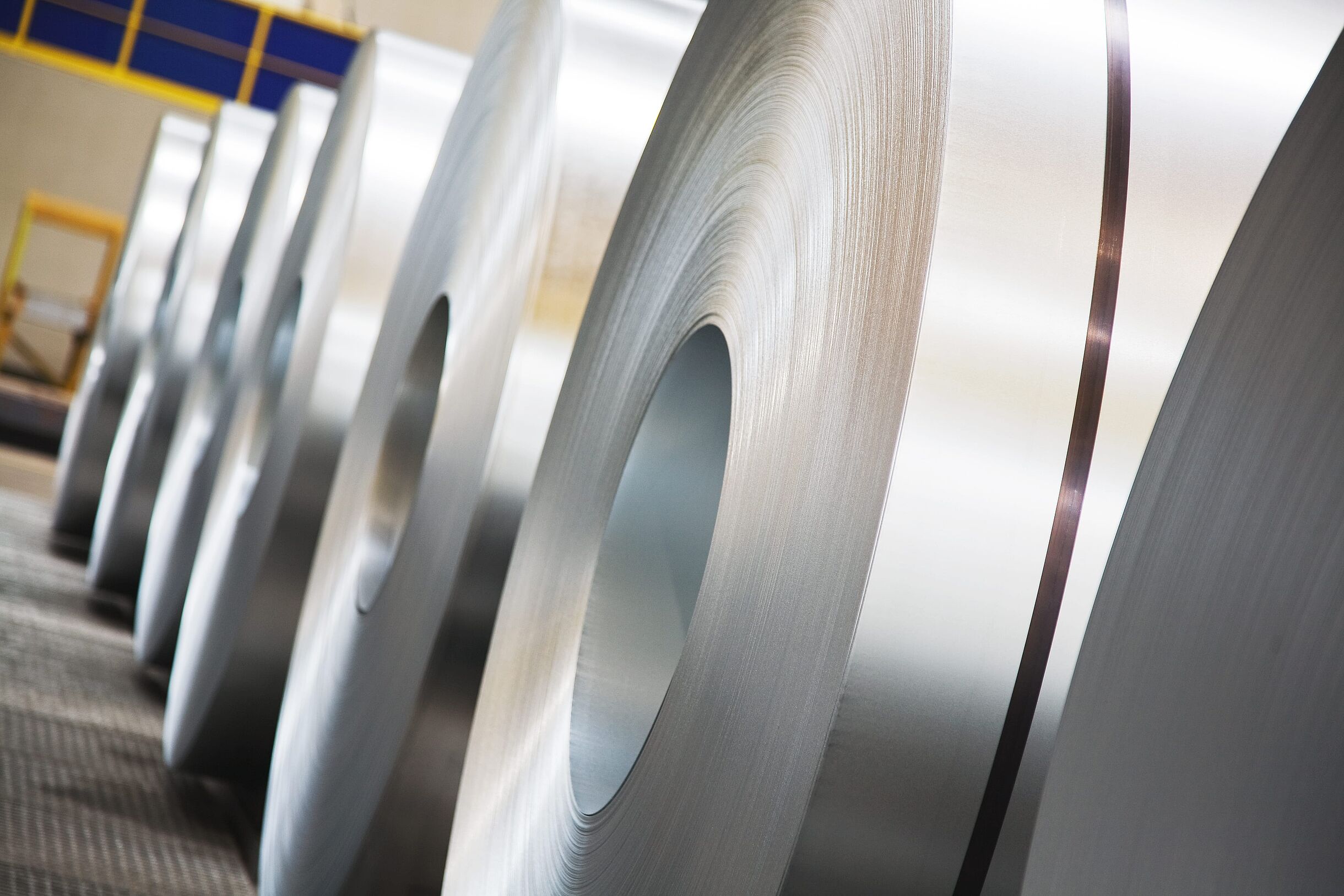
Steel is a key material for European industry – from the automotive and mechanical engineering sectors to the energy and construction industries. Its performance depends crucially on its microstructure, which is precisely controlled during heat treatment. Even slight temperature deviations can lead to quality variations, scrap or increased energy consumption.
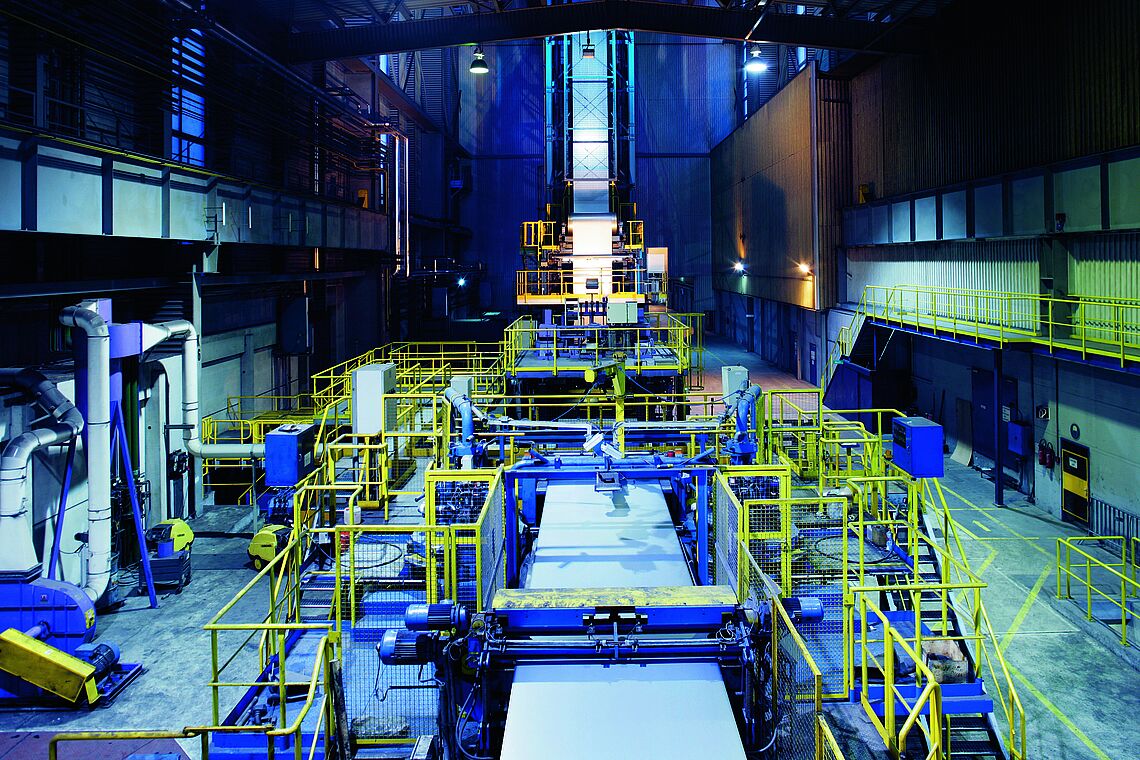
In a finishing mill, the steel strip is first heated so that a phase transformation to austenite takes place. In the subsequent cooling zone, the strip is cooled in a controlled manner to achieve the desired microstructure (phase composition) through what is known as austenite decomposition. As the microstructure is crucial for the mechanical properties of the steel strip, cooling represents a critical process step for the quality and performance of steel products.
As part of a successful collaboration, experts from AIT, TU Wien and voestalpine at the Linz site have implemented a modern control concept for strip temperature in the cooling zone: a non-linear model predictive control (NMPC) system for strip temperature, which enables a significant increase in temperature control accuracy compared to the state of the art. The basis for this is a real-time mathematical model that takes into account both the temperature development and the phase transformations in the steel strip. Using a bespoke algorithm, the controller calculates optimal control variables in real time, such as the fan speeds for cooling, in order to precisely control the temperature of the steel strip along specified setpoints.

The new process control system combines in-depth process knowledge with state-of-the-art control engineering algorithms.