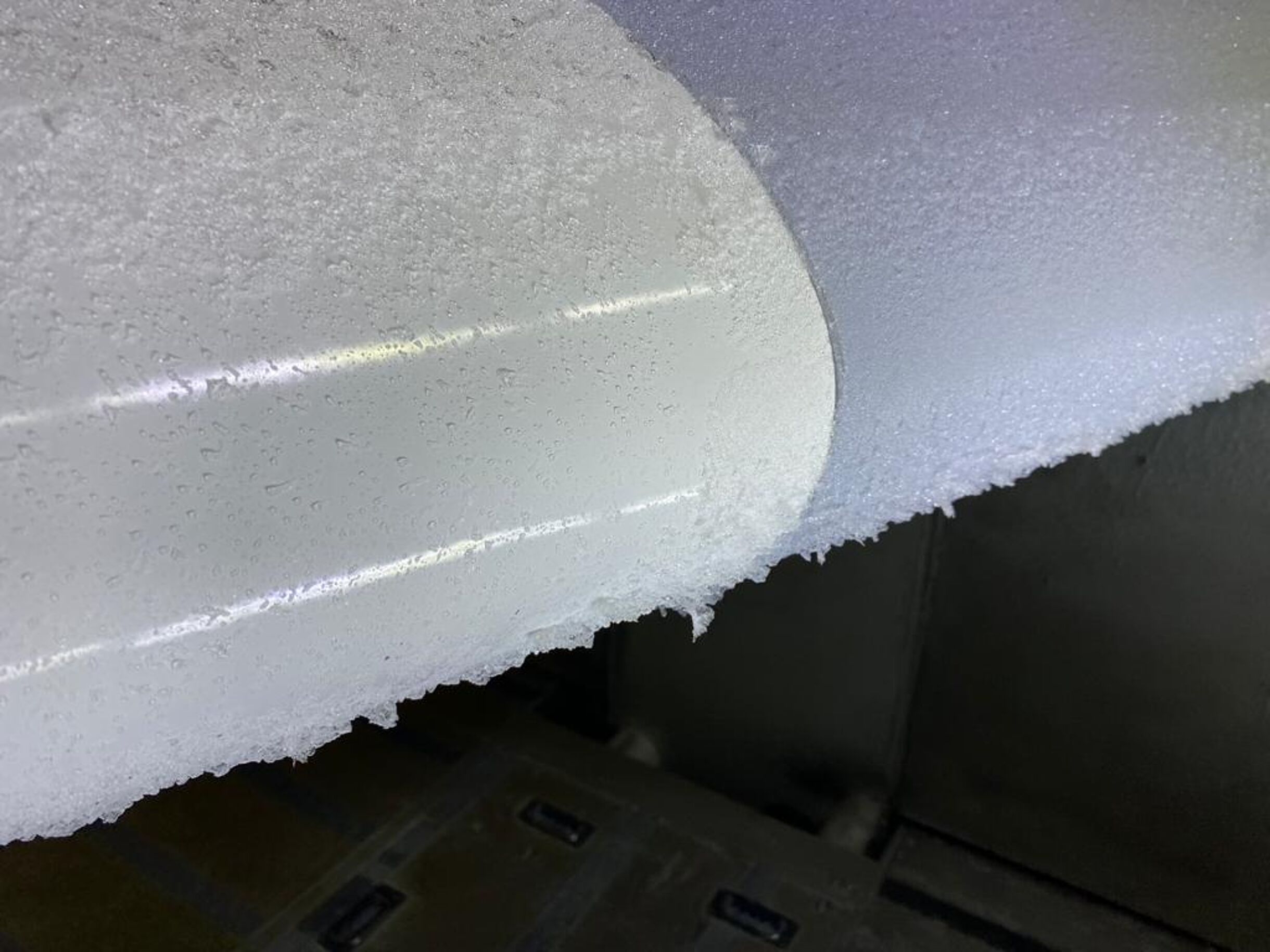
Icing during flight must be taken into account in the design, configuration and operation of aircraft. This is because ice formation on wings, tail surfaces, rotors or engine inlets affects fluid dynamics, lift and controllability, whilst simultaneously increasing the energy requirements of anti-icing systems.
With new aircraft architectures, electrified propulsion systems and stricter efficiency and sustainability targets, established design approaches are increasingly reaching their limits. At the same time, regulatory requirements for realistic, verifiable evidence of icing effects are increasing – ideally as early as the initial development phases. The key challenge lies in striking a balance between physical accuracy, computational effort and industrial applicability.
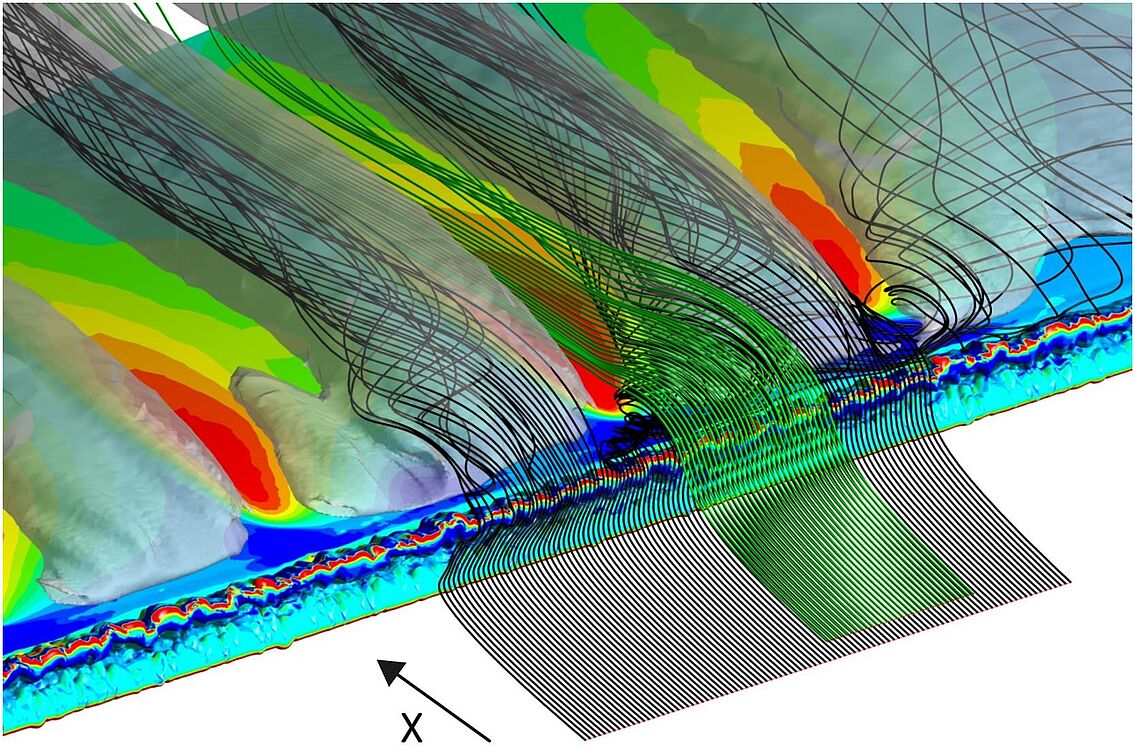
In the field of in-flight icing, AIT pursues an integrated approach that systematically combines numerical simulation, experimental validation and data-driven methods. This is based on high-resolution three-dimensional simulations of ice accretion under realistic atmospheric conditions, coupled with aerodynamic analyses of iced configurations. These are validated through measurement campaigns in international icing wind tunnels as well as through proprietary optical measurement and evaluation methods.
Building on this physical foundation, AI-supported methods are employed. Physics-based neural networks and data-driven surrogate models make it possible to predict key icing parameters – such as droplet fields, impingement zones, ice forms or aerodynamic performance changes – with high accuracy and significantly reduced computational effort. This makes it possible, for the first time, to efficiently integrate complex icing effects into design and optimisation processes. This allows for a reduction in computation times by several orders of magnitude whilst maintaining the accuracy required for safety-critical applications.

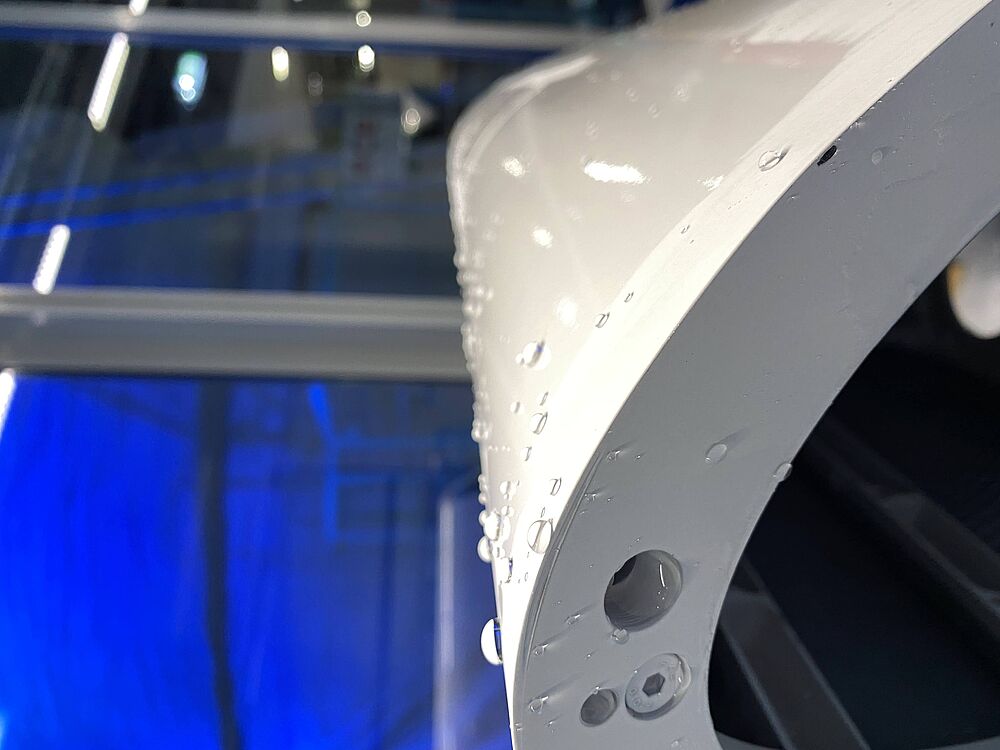
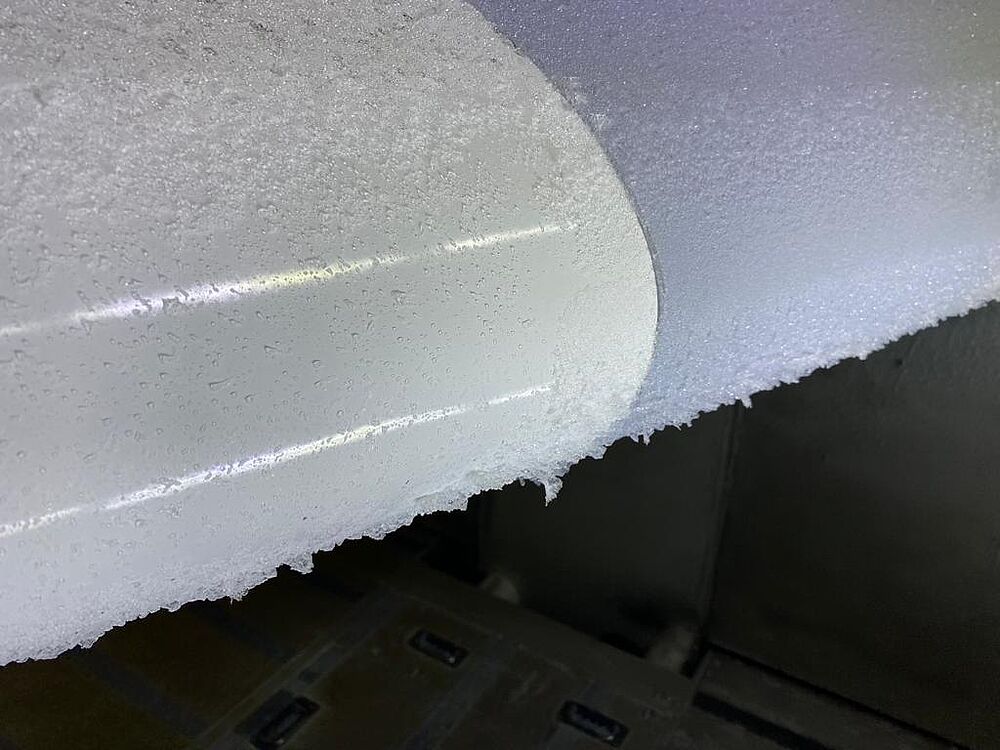
AIT experts conduct icing tests in the climate-wind tunnel, which are linked to simulations and AI models.
For industry, this results in shorter development cycles and reduced testing costs, as well as new degrees of freedom in the design of energy-efficient anti-icing and de-icing systems – a key aspect particularly for electric and hybrid aircraft.
AIT’s expertise in the field of in-flight icing is recognised internationally and underpinned by numerous scientific publications, conference papers and collaborations with leading industry and research partners. International awards, including an EREA Best Paper Award, confirm the scientific quality and level of innovation.
Future activities will focus on scaling AI-supported methods towards integrated digital workflows, modelling complete aircraft configurations, linking with digital twins, and incorporating passive and hybrid protection concepts. Robust digital chains of evidence for icing will make a significant contribution to safe, efficient and regulatory-compliant next-generation aviation systems.

Ice formation on wings, tail surfaces, rotors or engine inlets affects the flow mechanics, lift and controllability of aircraft.