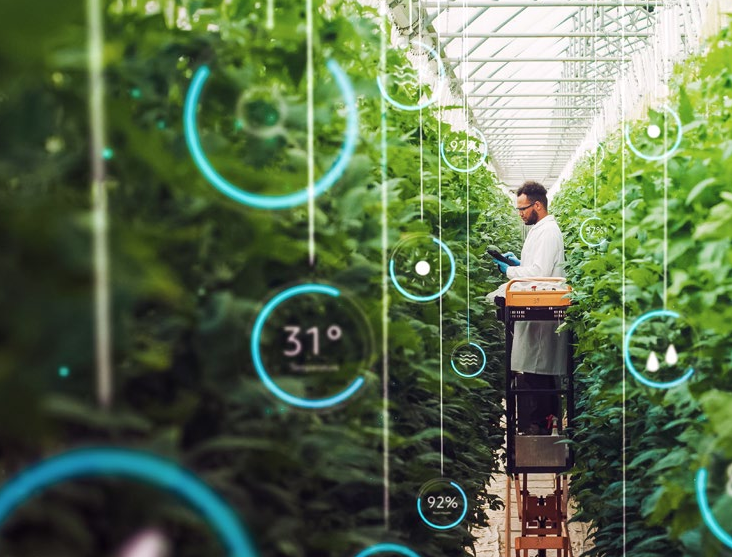
Digital technologies play a key role in the sustainable transformation of agriculture: they help to preserve soil quality and biodiversity while offering economically viable solutions.
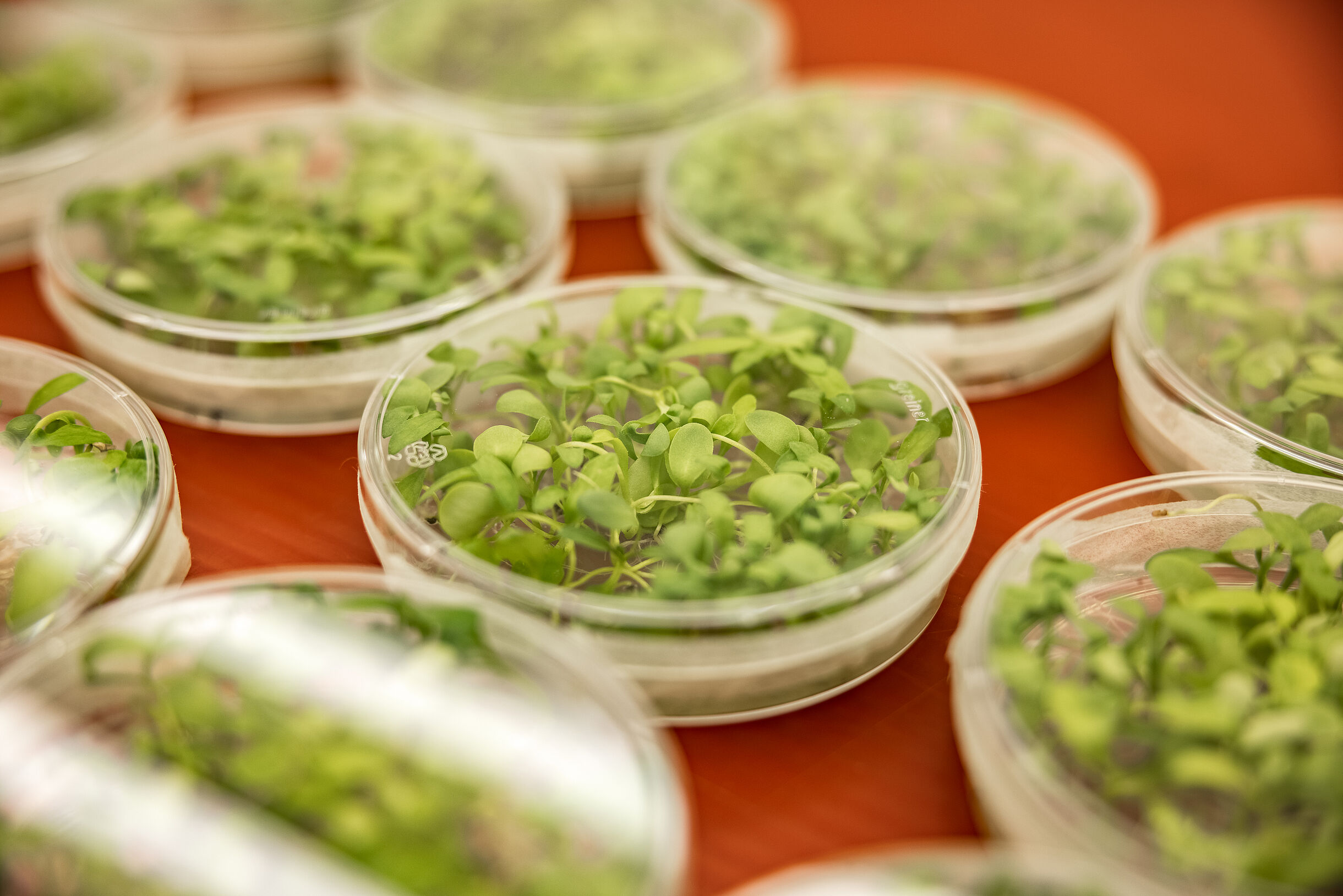
Advancing digitalisation is leading to an exponential increase in biological and agricultural data, which requires powerful bioinformatics tools for precise analysis and interpretation. With HOLOMICS, the AIT has developed an innovative tool that allows researchers with limited prior knowledge of bioinformatics to efficiently integrate and analyse complex biological data (multi-omics data). HOLOMICS is already being used for agronomic questions, such as analysing the storage capacity of sugar beet, and thus supports data-driven decisions in research.
Advances in the fields of sensor technology, robotics and the Internet of Things (IoT) are making it possible to scale up agroecological methods and improve their economic efficiency. In the EU project PATH2DEA, coordinated by AIT, these technologies are being integrated into digital marketplaces, allowing small farms in particular to benefit from innovative solutions. AIT is also supporting the analysis of microbial genomes with the BioFlux suite, which is currently undergoing further development, thus opening up new fields of application for bioscientific research and agricultural innovations.
The use of digital analysis and decision-making systems promotes both sustainable food production and resource-conserving agriculture. The integration of bioinformatics methods strengthens the resilience of the global food system and increases the efficiency of agricultural research approaches. In this way, agricultural production processes can be optimised in the long term.