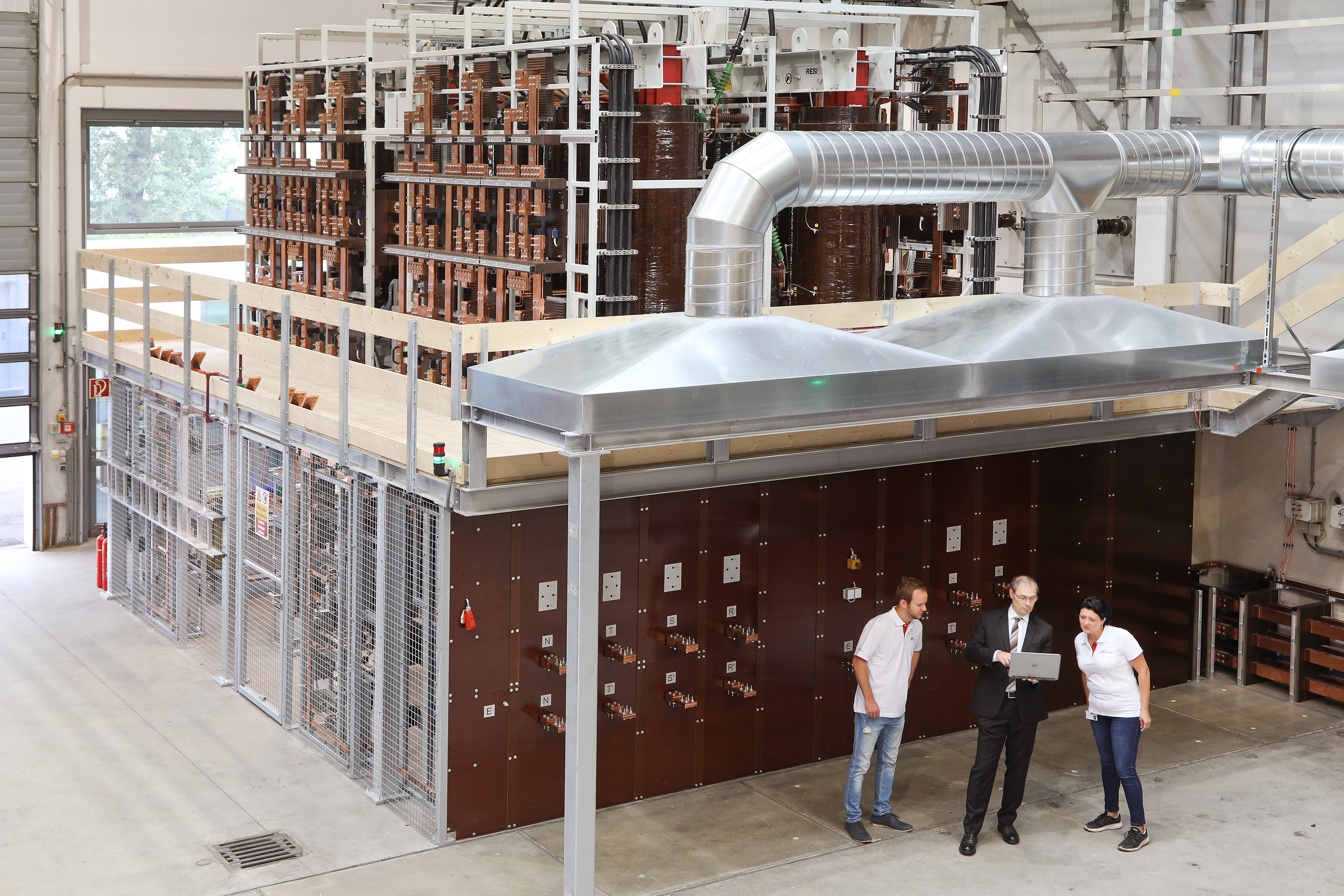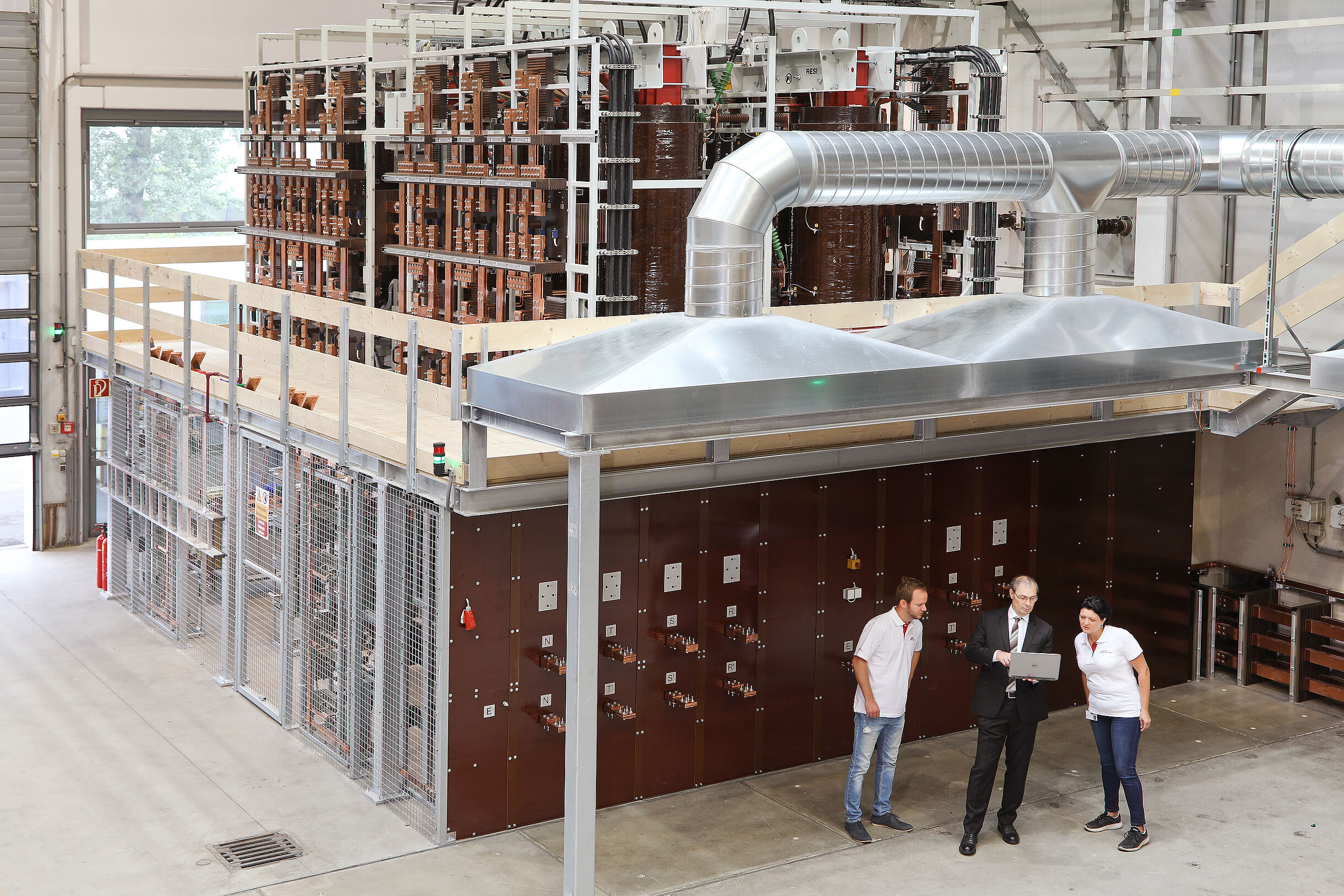
The AIT DC Lab is a specialised research and test environment for direct current (DC) technologies that plays a central role in the further development of innovative energy systems. It enables the validation and optimisation of DC components that are used in renewable energy systems, vehicle wiring systems and industrial power supply systems.
An outstanding advantage of the DC Lab is its ability to carry out high-performance test scenarios under real operating conditions. These include short-circuit tests, surge current measurements and long-term tests of DC components with currents of up to 100 kA. These comprehensive testing capabilities are crucial to ensure the safety and reliability of DC switches, power converters and protection systems.
The laboratory makes a significant contribution to the development of new DC technologies that are essential for the energy infrastructure of the future. DC technology is playing a growing role, particularly in the integration of renewable energies and grid stabilisation. In the field of electromobility, the DC Lab enables the validation of high-voltage charging systems and DC grids for vehicles, which makes an important contribution to the further development of efficient and powerful charging infrastructures.
Industrial companies and research partners use the lab to test and further develop their products under realistic conditions. In this way, the AIT DC Lab actively contributes to the market maturity of innovative energy technologies and supports the introduction of efficient and sustainable direct current systems in various application areas.
Thanks to its state-of-the-art testing infrastructure and close collaboration with industry, energy suppliers and research institutions, the AIT DC Lab is an essential part of the European innovation landscape in the field of direct current technologies and makes a decisive contribution to the safe, reliable and sustainable power supply of the future.
AIT‘s direct current technologies are also increasingly being used in practice. For example, as part of the European HYPERRIDE project, the first public direct current distribution grid was set up that integrates photovoltaic systems, battery storage and bidirectional charging stations for electric vehicles with 700 V direct voltage.