The precise analysis of metallic structures is an essential part of quality assurance in the aerospace and automotive industries. Increased efficiency in metallography enables accelerated quality testing, a reduction in production costs and a faster response to production errors, so that corrective measures can be initiated at an early stage.
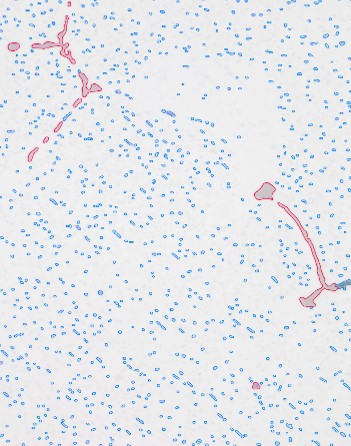
Until now, microscopic material characterisation has been carried out by experts, but this process is time-consuming, requires high expertise and does not always lead to identical results. One particularly complex method that is widely used in the aluminium industry is PoDFA (Porous Disc Filtration Analysis) evaluation: this analysis provides comprehensive information on melt quality and impurities, but can take specialists up to half a day to complete. At the same time, there are fewer and fewer experts in this field, which poses major challenges for the industry.
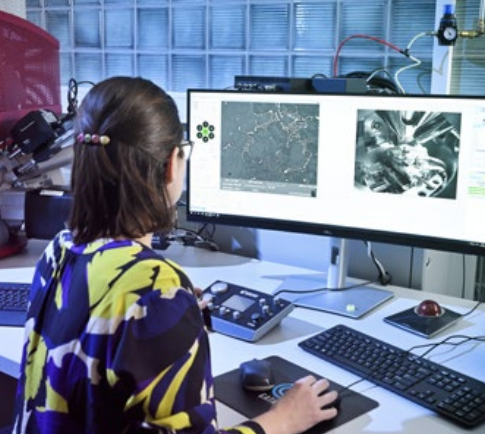
Together with industry partners, the AIT Leichtmetallkompetenzzentrum Ranshofen (Light Metals Competence Centre; LKR) has developed an innovative AI solution for automated image segmentation that significantly accelerates these analysis processes. The application, which is already being used in production, enables precise grain detection, phase evaluation and other important analyses in material testing. The system integrates seamlessly into existing workflows and is specially optimised for production environments. The core of the technology is an AI model that delivers excellent results requiring only 50 annotated images for effective training.
The economic benefits of this solution are manifold: it reduces the costs of production and material analysis, alleviates the shortage of skilled labour, increases product quality through objective results and enables more efficient, automated metal analysis directly in production. In addition, it supports workers in quality testing and promotes the circular economy by allowing quick statements on melt quality. The technology also has academic significance, as it contributes to the further development of automated image processing and provides employees with further qualifications in this area.
The development was carried out both in co-financed research (for example in the Data-T-Rex project funded by the state of Upper Austria) and in contract research, which was tailored to specific customer requirements with industrial partners such as Hammerer Aluminium Industries. The positive feedback from users confirms a high level of practicality.
The method is currently being further developed in other contract projects and adapted for additional use cases. The next strategic step is to establish a partnership in order to further professionalise the software and the user interface and establish the technology more broadly in the industry.