

The TAP Water project (Transformation Acceleration Platform for Water Splitting) introduces the idea of an innovative, modular, and automated laboratory infrastructure to accelerate the development and commercialization of catalytic materials for sustainable hydrogen production. TAP Water will support the decarbonization and sustainability of industries by advancing the whole development process chain for water splitting technologies.
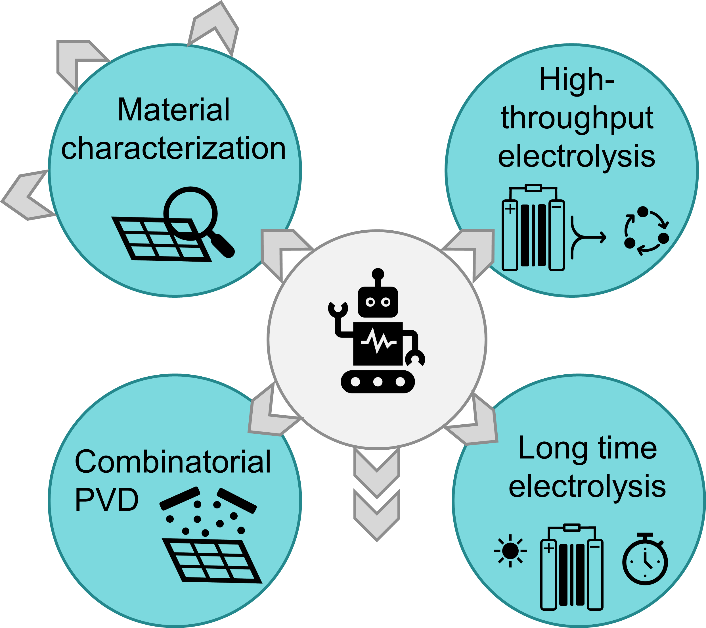
The platform incorporates interconnected modules for material deposition, characterization, and in-operando electrolyzer testing to streamline the transition from laboratory-scale experiments to market-ready technology. By employing techniques such as combinatorial Physical Vapor Deposition (PVD), high-throughput characterization and AI-driven analytics, the TAP enhances resource efficiency, reduces testing times, and facilitates scalability. Additionally, the design of a dedicated high-throughput electrolysis module with in-line analytics enables rapid evaluation of catalyst performance and stability, supporting efficient, sustainable hydrogen solutions for large-scale adoption. This approach aligns with Austria’s climate-neutrality targets and industry transformation goals, aiming to reduce dependency on critical raw materials while promoting resource efficiency and operational flexibility.
Through a detailed sustainability and market impact assessment, TAP Water aims to evaluate the viability and potential of the proposed infrastructure. The platform will be a unique endeavor, promoting Austria’s role as a center for cutting-edge research and industry innovations and potentially serving as a blueprint for future automated laboratories and manufacturing environments.
Project goals
The goal of TAP Water is to assess the feasibility of setting up an automated, modular laboratory platform to accelerate the process of discovering new materials and bringing their applications for water splitting to the market.
This includes:
(a) creating a viable design of a flexible, modular TAP infrastructure which integrates high-throughput material deposition, characterization, and electrolysis cell testing into a seamless, unified platform and assessing the requirements for the technical components and their costs as well as for the automated control and machine learning integration.
(b) evaluate the system’s potential to accelerate the transformation of new materials for water splitting from the lab to industrial applications by defining the platform’s scalability to required sample sizes, technological readiness level (TRL) and market needs.
(c) exploring strategies to significantly shorten catalyst performance and stability testing to less than 8 hours through a high-throughput electrolysis module with in-line analytics to speed up the development of sustainable hydrogen production systems.
(d) quantifying how the platform will optimize resource usage by reducing material, energy, and time consumption while ensuring interoperability of technologies.
(e) exploring promising partnerships with industry for knowledge and technology transfer and assessing the long-term impact of the platform on Austria’s technology innovation and climate neutrality strategies.
Project results
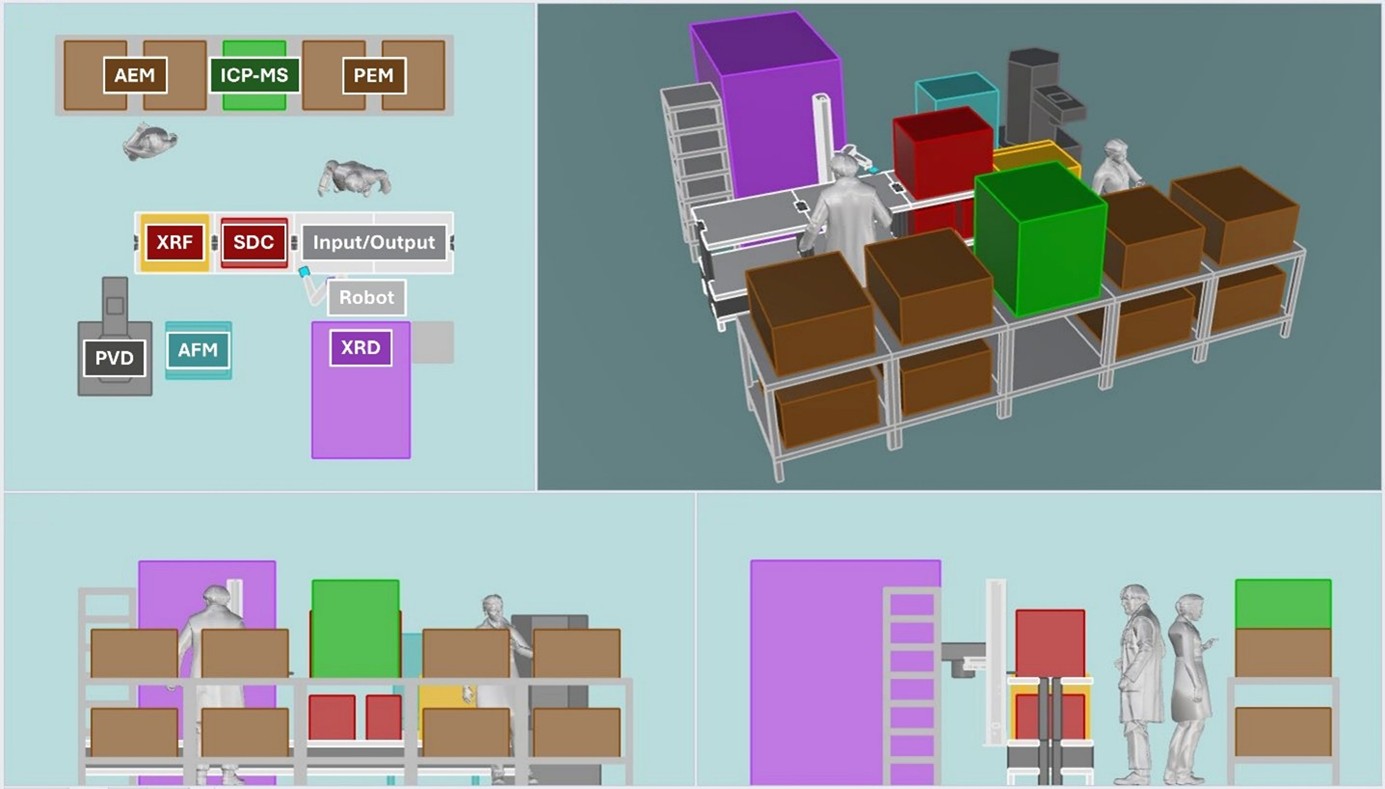
The TAP Water project demonstrated the feasibility and impact of an automated, modular laboratory platform for accelerating materials discovery and deployment in water-splitting technologies. A key result is a scalable platform design integrating high-throughput deposition, characterization, and electrolysis testing into a unified automated workflow, with three modular configurations (“core,” “full,” and “maxi”).
The project identified promising high-throughput electrolysis testing concepts, including parallelized test stands and point-wise testing of combinatorial samples, addressing a major bottleneck in catalytic materials evaluation. Quantified acceleration factors ranged from 4.2 to 122 compared to manual experimentation, with electrolyzer materials development potentially accelerated by up to 29-fold through autonomous and parallel operation.
Market analysis highlighted the urgency of such acceleration, given Austria’s projected electrolyzer capacity growth to over 500 MW and potentially 1 GW by 2030. Overall, the project confirms that automated, high-throughput platforms are essential for faster, more efficient innovation in green hydrogen and climate-neutral technologies.
Funding
This project is funded by the Climate and Energy Fund as part of the RTI Initiative for Transforming Industry 2024.